How to Protect Your Family from Voice-Cloning Scams is becoming an important digital safety skill in 2026. Scammers can now use AI-generated audio to imitate a parent, child, spouse, or close friend and create convincing fake emergencies designed to trigger fear, urgency, and fast decisions. The FTC warns that criminals may only need a short voice sample to build believable impersonation scams, making family awareness and verification habits more important than ever.
If your household already cares about online safety, that is a strong start. Habits like How to Keep Your Personal Data Safe Online 2026, How to Set Up Two-Factor Authentication 2026, and Protect Your Phone from Scam Calls Fake OTPs Online Fraud 2026 make it harder for scammers to get the information they need in the first place. But voice-cloning scams add a new layer of pressure, because they attack emotion before logic.
Why voice-cloning scams work so well
These scams work because they feel urgent and personal. A caller may claim to be a family member in trouble, a friend who lost a phone, or a child needing help right away. The FTC has specifically described family emergency scams in which a scammer pretends to be a loved one and uses AI voice cloning to make the story sound real.
In real-world situations, this can happen in seconds. Someone hears a familiar voice, panics, and stops thinking carefully. That is the point. The scammer wants speed, secrecy, and emotional pressure before anyone can verify the story. The FBI has warned that AI-generated voice and video impersonation are being used to deceive people into sharing sensitive information or authorizing fraudulent transactions.
Build family habits before a scam happens
The best defense is not a perfect app or a magical filter. It is a family routine that makes impersonation harder to pull off. Families that already follow How to Create a Family Online Safety Plan in 2026 are usually better prepared, because everyone knows what to do when a suspicious message arrives.
A useful starting point is to agree on a few rules:
- No money is sent on the basis of one urgent call.
- No one shares verification codes, passwords, or banking details over the phone.
- Every emergency message gets checked through a second channel.
- Any unusual request gets verified with a known number or a different family member.
This is not paranoia; it is a practical response to a scam trend that the FTC and FBI both say is growing. The FTC’s voice-cloning guidance stresses that scammers use these tools to make their requests feel believable, while the FBI has warned that trusted relationships are being exploited through AI impersonation.
What to do when a suspicious call comes in
The most important rule is simple: do not act immediately.
If someone claims to be a family member in trouble, hang up and verify the request yourself. Call the person back using a number you already trust, or contact another relative who can confirm what is happening. The FTC explicitly recommends calling the person back using a phone number you know is theirs, and if needed, checking through another family member or a friend.
Do not rely on caller ID alone. Do not trust a voice just because it sounds familiar. Do not let the caller keep you isolated while they pressure you. If they insist on secrecy, that is a warning sign. If they demand money through gift cards, wire transfers, crypto, or unusual payment methods, that is another red flag. The FTC’s scam guidance repeatedly emphasizes that urgency and unusual payment requests are classic signs of fraud.
Teach children, parents, and older relatives the same rule
A family is only as safe as its least-informed member. That is why voice-cloning scam protection should be a shared conversation, not a private concern handled by one tech-savvy person.
Older relatives may be especially vulnerable because the scam often uses respect, fear, or family responsibility to trigger a fast response. Children and teenagers may be vulnerable because they are used to quick replies and voice messages. Adults may be vulnerable because they assume they can “just tell” when something is real. All of those assumptions can fail. The FTC’s family emergency scam examples exist for exactly this reason.
If your family already reads about Recognize Emotional Manipulation in Online Scams, How to Spot Phishing Emails and Scam Links 2026, and Spot Online Scams Before It Is Too Late in 2026, this topic fits naturally into the same safety routine: slow down, verify, and never let urgency do the thinking for you.
Reduce the amount of voice data you expose
Scammers need raw material. The less voice content they can find, the harder cloning becomes.
That does not mean disappearing from the internet, but it does mean being more deliberate about what you post publicly. Short videos, voice notes, livestream clips, and public reels can all create usable samples. The FTC has said a scammer may only need a short audio clip to imitate a person’s voice.
Common-sense steps include:
- Keeping social videos limited to trusted audiences where possible.
- Avoiding public voice messages that reveal full names, habits, or routine details.
- Reviewing privacy settings on apps that share audio or video.
- Being cautious about what children post, since family voices can be collected indirectly.
For broader privacy hygiene, How to Keep Your Personal Data Safe Online 2026 and Delete Your Personal Information from the Internet are useful companions, because voice scams often work better when scammers already know family names, relationships, and routines.
Protect the accounts scammers try to exploit next
Voice-cloning fraud often does not end with the first call. Once a scammer gets a response, they may push victims toward account compromise, payment fraud, or identity theft.
This is why account security matters. Strong passwords, multi-factor authentication, and device security reduce the chance that a scam escalates into a full account takeover. You can pair this with How to Use a Password Manager in 2026, How to Set Up Two-Factor Authentication 2026, and Protect Your Email Account from Hackers 2026.
The FBI’s public warnings about impersonation scams show that attackers often try to move conversations to another app or channel after the first contact. That shift is not harmless. It is often designed to reduce scrutiny and push the target into a controlled environment.
Common mistakes families make
The same few mistakes show up again and again:
1. Believing the voice is enough
People trust what they hear, even when they should verify it.
2. Acting before checking
Once a family member sends money or shares a code, the damage is often hard to undo.
3. Letting the caller control the conversation
Scammers try to keep victims on the line and prevent outside verification.
4. Assuming only older adults are targeted
Anyone with a public footprint, a family, or a financial account can be targeted.
5. Not talking about the risk in advance
Families often wait until after a close call to create a plan.
The FTC has repeatedly stressed that scammers use voice cloning to make deception sound familiar and emotionally convincing. That is why “common sense” alone is not enough. Families need a routine.
Best practices that actually help
A few habits make a real difference:
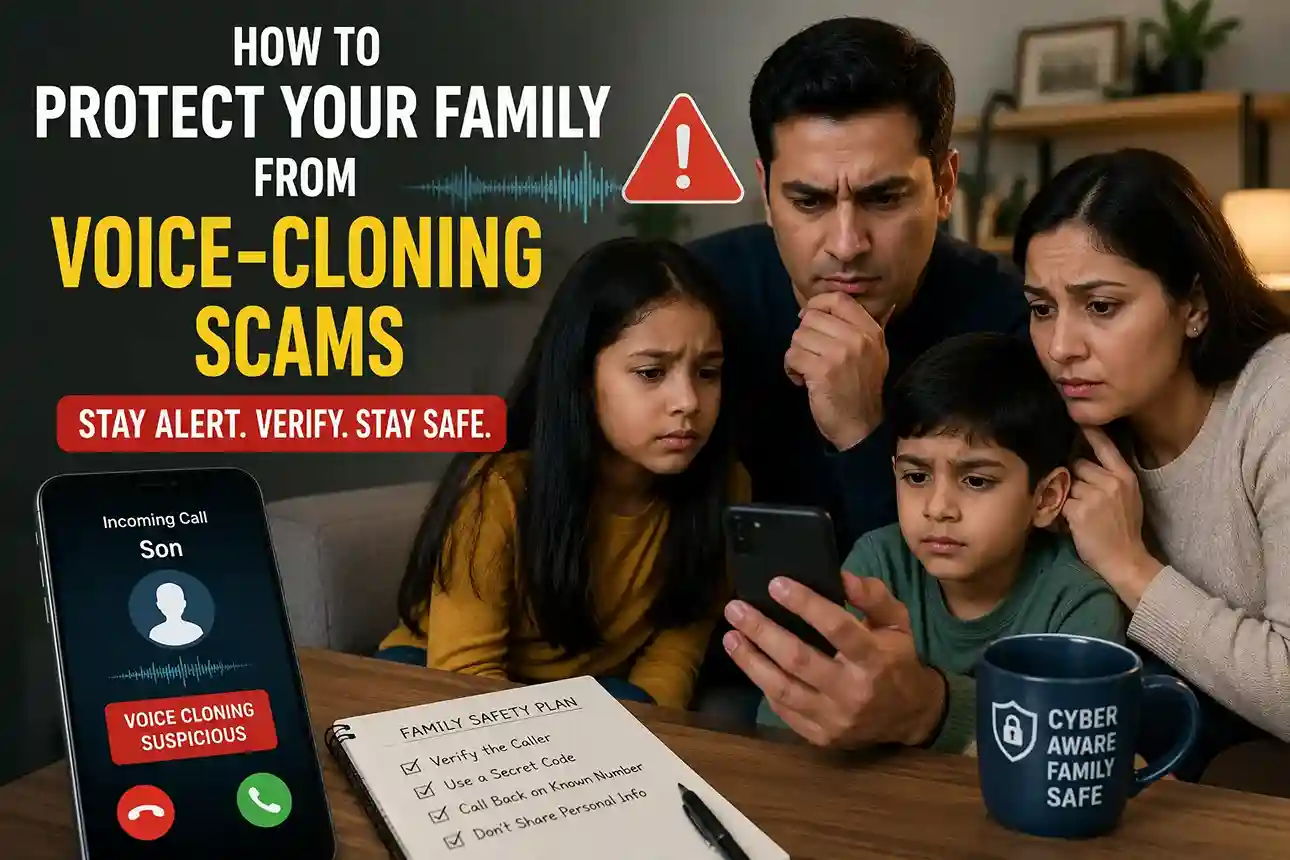
- Create a family verification rule for emergencies.
- Use a callback number stored in your contacts, not one given in the suspicious message.
- Keep a private family code phrase for urgent situations.
- Tell children and older relatives never to share one-time passwords or bank details.
- Report suspicious attempts quickly so the pattern is documented.
If your household is already working on How to Create a Family Online Safety Plan in 2026, add voice-cloning scams to the checklist. It is one of the clearest examples of how AI is changing everyday scam tactics. For a broader view of that shift, How AI Is Changing Everyday Life in 2026 and Deepfake Scams in 2026 and How to Stay Safe fit naturally into the conversation.
What to do after a suspected scam
If someone in your family already responded to a voice-cloning scam, act quickly.
First, stop any further communication with the scammer. Second, contact your bank or payment provider if money was sent or account details were shared. Third, change passwords and enable stronger authentication on important accounts. Fourth, document the messages, numbers, and payment details. The FTC encourages consumers to report scams, and the FBI’s IC3 guidance exists for exactly this kind of fraud reporting and awareness.
If the scam involved banking or payment apps, it is worth reviewing Common Online Banking Scams 2026 and How to Tell If a Website Is Safe Before Entering Personal Details, because voice fraud often leads to broader online fraud.
FAQ: How to Protect Your Family from Voice-Cloning Scams
How do scammers clone a voice?
The FTC says a short audio clip can be enough for voice cloning technology to imitate a person’s voice. That means public videos, voice notes, and social media clips can be risky if they expose recognizable speech.
What should I do if my parent or child gets such a call?
Hang up and verify the story independently using a trusted number or another family member. Do not send money or share codes during the first call. The FTC specifically recommends calling the person back using a number you know is theirs.
Are voice-cloning scams only a problem for older adults?
No. Anyone can be targeted if scammers can find a voice sample and enough personal context. The FBI has warned that AI impersonation can target family members, co-workers, and business partners.
Can two-factor authentication stop a voice-cloning scam?
Not by itself, but it can reduce damage if the scam moves from voice fraud to account fraud. It is one layer of defense, not the whole solution. That is why it belongs alongside stronger family verification habits.
What is the single best protection?
A family rule that says, “We always verify urgent requests through a separate channel before acting.” That one habit removes the scammer’s biggest advantage: speed.
Conclusion
The most effective way to protect your family from voice-cloning scams is to replace trust-by-sound with trust-by-verification. AI voice cloning can make a scam feel personal, but it cannot make a scam true. Families that use clear rules, privacy habits, account security, and call-back verification are far harder to fool. That is why topics like How to Create a Family Online Safety Plan in 2026, Protect Your Parents from AI Phone Scams in 2026, and Deepfake Scams in 2026 and How to Stay Safe belong together: they build a practical safety net around the people who matter most. The FTC and FBI both warn that AI-driven impersonation is real, and the safest response is steady, shared, and boring in the best possible way: pause, verify, and then act.

Shiva S writes about AI, cybersecurity, online safety, Google Discover, and digital trends. His focus is creating practical, easy-to-understand guides that help readers stay informed and safer online.