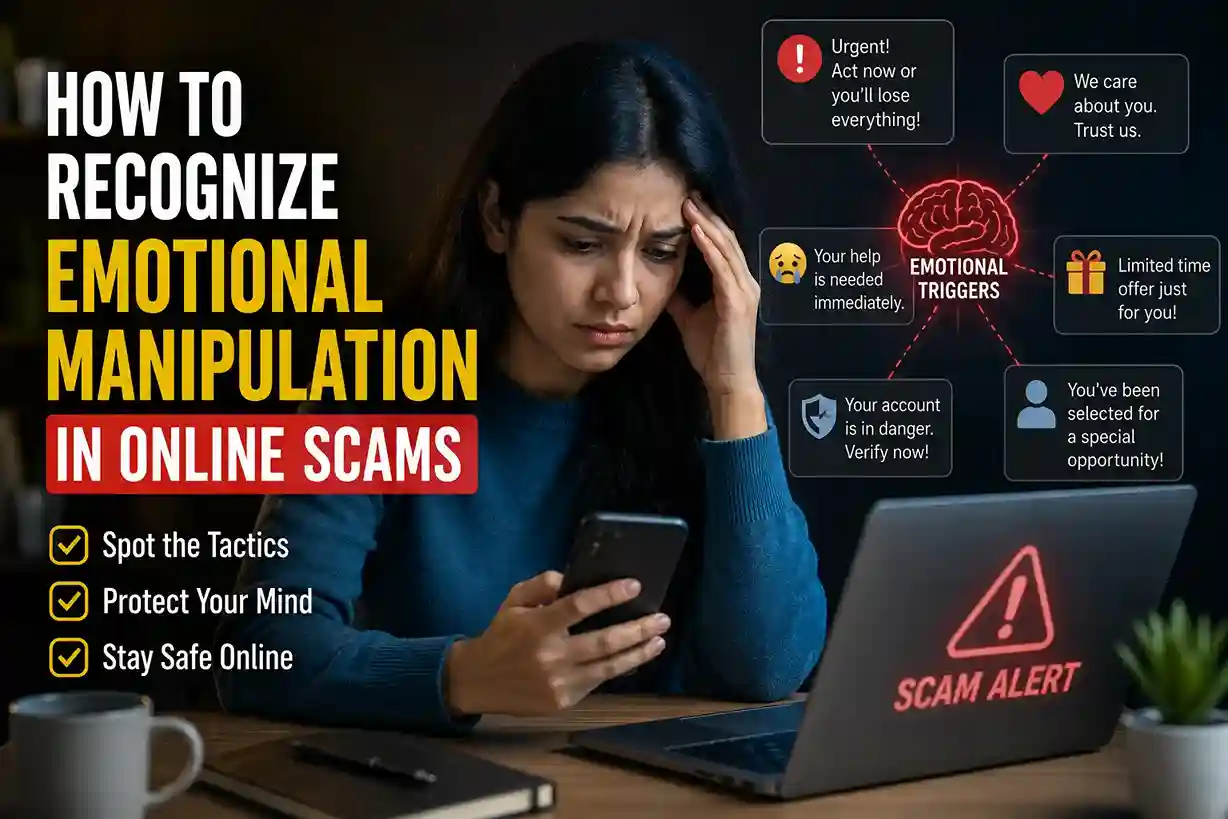
Understanding emotional manipulation in online scams is becoming one of the most important digital safety skills in 2026. Modern scams are no longer only about fake emails or suspicious links. Many online scams now rely heavily on psychology, urgency, fear, sympathy, and emotional pressure to influence victims before they have time to think clearly.
In many real-world situations, scammers succeed because they create emotional reactions first and logical thinking second.
For example:
- a fake emergency call creates panic,
- a fake investment opportunity creates excitement,
- a fake romance scam creates emotional attachment,
- and a fake warning message creates fear.
A common mistake people make is assuming online scams only target people who are inexperienced with technology. In reality, emotional manipulation can affect almost anyone when the situation feels urgent, personal, or emotionally overwhelming.
This is one reason why practical awareness matters more than ever. Readers who already explored How to Protect Your Parents From AI Phone Scams in 2026 will recognize how scammers use fear and urgency to push victims into fast decisions.
The U.S. Federal Trade Commission (FTC) regularly warns consumers that scammers use emotional pressure tactics to manipulate people into sending money, sharing information, or acting quickly without verification.
Source: https://consumer.ftc.gov/articles/how-avoid-scam
What Is Emotional Manipulation in Online Scams?
Emotional manipulation in online scams happens when scammers intentionally trigger emotions to influence decisions.
Instead of relying only on technical tricks, scammers often target:
- fear,
- trust,
- loneliness,
- excitement,
- sympathy,
- or urgency.
The goal is simple:
make people react emotionally before they verify the situation logically.
This technique is closely connected to social engineering, which is discussed frequently in cybersecurity awareness training. Organizations like the Cybersecurity & Infrastructure Security Agency (CISA) warn that social engineering attacks often rely more on human psychology than technology itself.
Source: https://www.cisa.gov/news-events/news/avoiding-social-engineering-and-phishing-attacks
Why Emotional Manipulation Works So Well
Humans naturally react emotionally to situations involving:
- family,
- money,
- emergencies,
- fear,
- relationships,
- or authority.
Scammers understand this extremely well.
For example:
- a fake bank alert creates panic,
- a fake hospital call creates fear,
- a romance scam creates emotional trust,
- and a fake investment offer creates excitement.
These reactions reduce critical thinking temporarily.
This emotional decision-making pattern is similar to the misinformation tactics discussed in How to Spot Fake News Before You Share It, where urgency and emotion often spread misleading content faster than facts.
Common Emotional Manipulation Tactics Used in Online Scams
Understanding scam psychology makes scams easier to recognize.
1. Fear-Based Manipulation
Fear is one of the strongest emotional triggers scammers use.
Examples include:
- fake legal threats,
- account suspension warnings,
- fake virus alerts,
- fake arrest notices,
- or emergency family situations.
A scammer may say:
“Your bank account has been compromised.”
or:
“Your relative is in danger.”
The emotional goal is immediate panic.
In real-world situations, fear often pushes people into fast decisions they would normally question.
The FBI regularly warns consumers about scams involving urgent threats and emotional manipulation.
Source: https://www.ic3.gov/
2. Urgency and Time Pressure
Many scams intentionally create artificial deadlines.
Examples:
- “Act within 10 minutes.”
- “Your account will be deleted.”
- “Payment required immediately.”
- “Limited-time investment opportunity.”
A common mistake people make is assuming urgency means legitimacy.
In reality:
legitimate organizations rarely pressure people into instant decisions without verification.
Readers familiar with How to Verify an Image or Video Before Sharing It Online already understand why slowing down before reacting is extremely important.
3. Sympathy and Emotional Stories
Some scammers create emotional stories designed to trigger compassion.
Examples include:
- fake charity campaigns,
- fake medical emergencies,
- disaster fundraising scams,
- or fake crowdfunding appeals.
These scams often become more convincing during:
- natural disasters,
- public tragedies,
- or global crises.
A practical safety habit is verifying whether the organization actually exists before donating money.
The Better Business Bureau’s Scam Tracker also warns consumers about emotional donation scams that appear during emergencies.
Source: https://www.bbb.org/scamtracker
4. Fake Authority and Trust Signals
Scammers frequently pretend to represent:
- banks,
- government agencies,
- police,
- hospitals,
- tech companies,
- or well-known brands.
People naturally trust authority figures.
For example:
- fake Microsoft support calls,
- fake tax department notices,
- fake package delivery warnings.
This trust manipulation works because the scammer sounds official and confident.
5. Excitement and “Too Good To Be True” Offers
Excitement is another powerful emotional trigger.
Examples:
- fake crypto investments,
- lottery scams,
- giveaway scams,
- unrealistic discounts,
- fake job offers.
A common mistake people make is focusing only on potential rewards instead of checking whether the opportunity itself makes sense.
This is why scam awareness requires emotional control, not just technical knowledge.
Real-World Online Scam Scenarios
Recognizing scam patterns becomes easier with practical examples.
Fake AI Voice Emergency Calls
AI voice cloning scams often imitate:
- children,
- parents,
- grandchildren,
- or close relatives.
The caller sounds emotional and urgently requests money.
This connects directly with the family safety habits discussed in How to Protect Your Parents From AI Phone Scams in 2026.
Romance Scams
Scammers may spend:
- weeks,
- months,
- or even years
building emotional trust before requesting money.
In many real-world situations, victims ignore warning signs because emotional attachment becomes stronger than skepticism.
Fake Technical Support Scams
Victims may see:
- pop-up warnings,
- fake virus alerts,
- or urgent security messages.
The scammer then pressures the victim to:
- install software,
- provide passwords,
- or pay for fake support services.
This emotional manipulation combines fear with fake authority.
Warning Signs of Emotional Manipulation in Online Scams
Learning these warning signs can significantly reduce risk.
Watch for:
- extreme urgency,
- emotional pressure,
- secrecy requests,
- guilt manipulation,
- unrealistic rewards,
- pressure to act immediately,
- requests for money or sensitive information.
A common mistake people make is focusing only on whether a message looks professional.
The more important question is:
Why is the sender trying to create emotional pressure?
How to Protect Yourself From Emotional Manipulation Online
Practical habits matter more than complicated technical solutions.
Pause Before Reacting
One of the safest online habits is:
pause before taking action.
Even a short delay can help reduce emotional pressure.
Before:
- clicking links,
- sending money,
- sharing passwords,
- or responding emotionally,
stop and verify independently.
Verify Through Another Source
If a message claims:
- an emergency,
- account problem,
- suspicious transaction,
- or urgent warning,
verify directly through:
- official websites,
- saved phone numbers,
- or trusted contacts.
This verification process is similar to the methods discussed in How We Verify News Before Publishing, where independent confirmation is essential before trusting information.
Discuss Scams Openly With Family
Families that discuss scams openly are usually much safer.
Parents, teenagers, and older adults all benefit from:
- discussing scam tactics,
- practicing verification habits,
- and learning emotional warning signs together.
Reduce Public Personal Information
Oversharing personal information online helps scammers personalize emotional manipulation.
Safer privacy habits from How to Keep Your Personal Data Safe Online can reduce exposure significantly.
Why Emotional Awareness Is Becoming More Important in 2026
Artificial intelligence is making scams more convincing.
AI-generated:
- voices,
- videos,
- messages,
- and fake identities
can now appear surprisingly realistic.
However, even advanced scams still rely heavily on emotional manipulation.
That means:
emotional awareness remains one of the strongest digital safety defenses.
Organizations like Google continue emphasizing scam prevention and safer online behavior because online fraud increasingly combines technology with psychological manipulation.
Source: https://blog.google/technology/safety-security/how-were-keeping-people-safe-online/
Frequently Asked Questions
What is emotional manipulation in online scams?
Emotional manipulation happens when scammers intentionally trigger fear, urgency, sympathy, excitement, or trust to influence decisions quickly.
Why do scammers create urgency?
Urgency reduces critical thinking and increases emotional reactions, making victims more likely to act impulsively.
Are emotional manipulation scams common now?
Yes. Modern online scams increasingly use emotional pressure and social engineering techniques rather than only technical deception.
What is the safest response to emotional scam messages?
Pause, verify independently, and avoid acting immediately under pressure.
Can intelligent people still fall for emotional scams?
Yes. Emotional manipulation affects people psychologically, especially during stressful or emotionally overwhelming situations.
How can families improve scam awareness?
Families should openly discuss scam tactics, practice verification habits, and encourage slower decision-making during suspicious situations.
Conclusion
Understanding emotional manipulation in online scams is becoming an essential online safety skill in 2026.
Modern scammers do not rely only on technology. They rely heavily on:
- fear,
- urgency,
- trust,
- excitement,
- and emotional pressure.
The safest protection is not paranoia.
It is:
- awareness,
- emotional control,
- verification,
- and slowing down before reacting.
People who learn to recognize emotional manipulation patterns are far less likely to become victims of modern online scams.

Shiva S writes about AI, cybersecurity, online safety, Google Discover, and digital trends. His focus is creating practical, easy-to-understand guides that help readers stay informed and safer online.