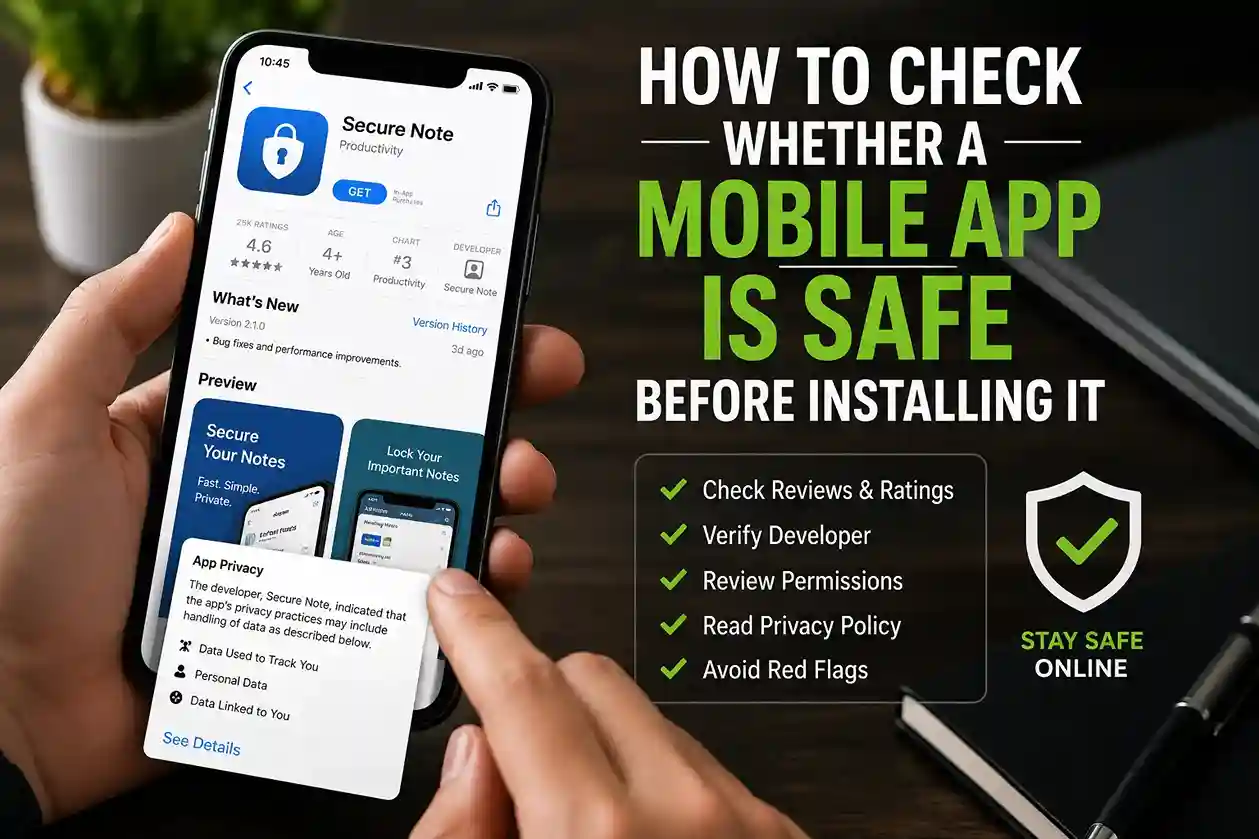
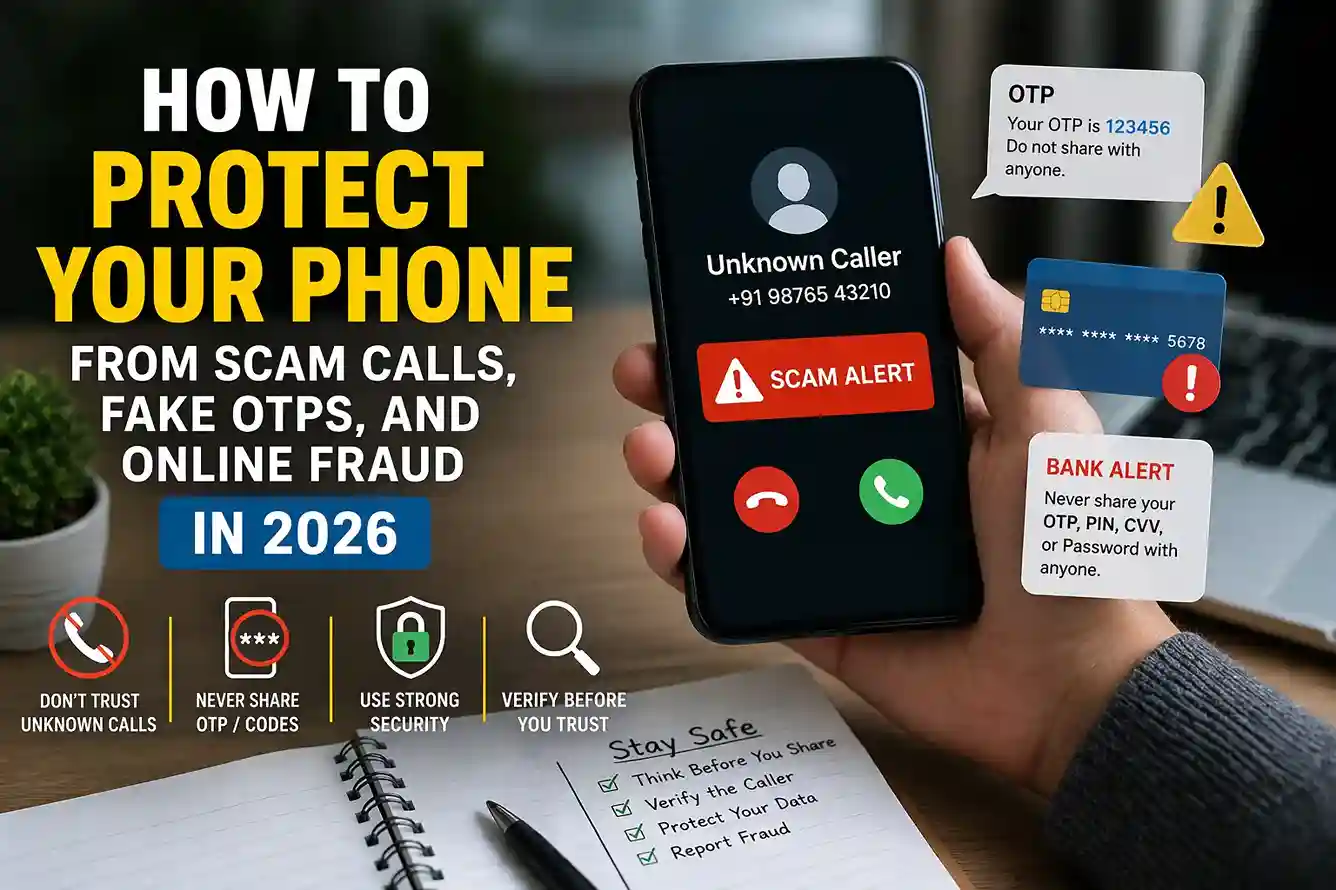
Scam calls, fake OTP requests, and mobile fraud are still among the easiest ways criminals try to reach everyday users in 2026. One of the most common tricks is caller ID spoofing, where a caller deliberately falsifies the number or identity shown on your screen to make the call look legitimate. Another common trick is to ask for a verification code or OTP, which the FTC says should never be shared with anyone because it is meant only for you. In India, the Reserve Bank of India also reminds users not to share OTPs, PINs, CVVs, or UPI PINs with anyone. If you want a broader phone-safety baseline, our related guide, Cybersecurity in 2026: How to Protect Your Personal Data, covers the core habits that protect phones and laptops every day.
This article explains how to protect your phone from scam calls, fake OTPs, online fraud in 2026 using simple habits that are easy to remember and realistic to follow. The goal is not to turn you into a security expert. The goal is to help you avoid the most common traps, spot warning signs earlier, and respond correctly if someone tries to pressure you into acting fast.
Why phone scams keep working
Phone scams work because they use urgency, fear, and trust. A caller may pretend to be from a bank, delivery service, telecom company, government office, or support team. The FCC says caller ID spoofing is a real tactic used to disguise the caller’s identity, which is why the number you see on the screen is not proof that the caller is genuine. The FTC also warns that scammers often ask for verification codes, then use them to break into your account.
In other words, the scam is usually less about technology and more about psychology. The caller wants you to act before you think. They may say your account will be blocked, your parcel will be returned, your payment failed, or your identity needs immediate confirmation. That pressure is the warning sign. If a message or call creates panic and asks for a code, password, or payment, you should stop and verify through an official channel.
Step 1: Never trust the caller ID alone
The first habit is simple: do not trust the number on the screen by itself. Caller ID spoofing can make a fake call appear to come from a bank or government office. The FCC explains that spoofing happens when a caller deliberately falsifies caller ID information to disguise identity. That means the number may look local, official, or familiar, even when it is not.
A practical example: you may receive a call that looks like it is from your bank’s customer-care number. The person on the line says your card is blocked and asks you to verify a code they just sent. The number looks real, but the request is not. The safest move is to hang up and call the bank back using the official number on the app, card, or website, not the one provided by the caller. That is also the basic approach recommended by FTC consumer guidance on phone scams.
If you want a practical security mindset across your devices, our article Smart Home Security 2026: Affordable Devices That Actually Improve Home Safety also shows why you should verify device and app permissions rather than trusting whatever appears on the screen. The same habit protects your phone, your home devices, and your accounts.
Step 2: Treat OTPs and verification codes like cash
An OTP is not a harmless number. In many systems, it is the final step that confirms a login, transfer, password reset, or account change. The FTC says if someone asks for your verification code, you should not engage, because that code is only for you. The RBI likewise says users should not share passwords, PINs, OTPs, CVVs, or UPI PINs with anyone.
This matters because scammers often sound convincing. They may say they are “verifying” your account, “canceling” an unauthorized transfer, or “fixing” a failed KYC update. In reality, they want the code so they can use it before you do. If the person on the phone asks for an OTP, that is not a support call; that is a warning sign.
A strong rule to remember in 2026 is this: if you did not initiate the action, do not share the code. If you did initiate it, enter the OTP yourself in the official app or website. Never read it out loud to a caller or paste it into a random link sent over SMS or WhatsApp.
Step 3: Do not click on verification links sent during a call
A fake support agent may send you a link and ask you to “confirm” your identity, “finish KYC,” or “secure your account.” That link may lead to a phishing page, a fake support portal, or malware. The FTC’s phone-scam guidance and the broader FCC consumer fraud resources both point toward the same principle: don’t let urgency push you into using an unofficial link or number.
A safer workflow is simple. End the call. Open the official banking app yourself. Or type the company’s known website address manually. Or call the number printed on your card, statement, or official app. If the caller says the issue is urgent, that is exactly why you should slow down.
Step 4: Secure your phone settings before fraud starts
Phone fraud is easier when your phone is loosely configured. A strong phone setup includes a screen lock, biometric login if available, OS updates, and strong account passwords. Our related article Cybersecurity in 2026: How to Protect Your Personal Data covers habits such as keeping devices updated, turning on 2FA where possible, avoiding unknown links, and reviewing alerts regularly. Those small habits are exactly the kind of prevention that stops scams from becoming losses.
It also helps to review app permissions. Many fraud attempts succeed after a user grants access to SMS, notifications, screen-sharing, or accessibility features without thinking. If an app asks for something unusual, pause and check whether that permission is truly necessary. The same principle applies to new payment apps, unknown QR codes, and “customer support” tools that are not from the official source.
Step 5: Be careful with fake delivery, job, and refund calls
Scammers do not only impersonate banks. They also impersonate courier services, e-commerce support, telecom providers, tax offices, ticketing desks, and even employers. The trick is to make the message sound routine enough that you stop questioning it. FCC guidance on robocalls and scam calls, along with FTC phone-scam advice, makes clear that pressure and urgency are common scam patterns.
For example, a caller may say a parcel is stuck and requires an OTP “just to confirm delivery.” Another may say a refund has been approved and needs a code to process it. Another may claim a job application is ready and asks for a security code from your phone. In each case, the correct answer is the same: verify through the official app or website, not through the caller.
Our job-search guides, such as How to Write a Resume That Gets Interviews and How to Write a Winning Cover Letter in 2026, can help readers recognize real job-related communication from fake outreach, because legitimate employers do not ask for OTPs to “verify” your application.
Step 6: Keep your banking and UPI activity under control
The RBI’s safety guidance is clear: never share OTPs, PINs, CVVs, or UPI PINs, and avoid banking transactions through insecure public Wi-Fi. A safe habit is to keep your financial apps updated, check notifications quickly, and use only the official app for transactions. If a caller claims to be from your bank, do not perform the action during the call; confirm it separately inside the app or on the bank’s official website.
It is also wise to review transaction alerts daily. A tiny unauthorized debit is sometimes a sign that a bigger fraud attempt is underway. If you spot anything suspicious, the right move is to contact your bank immediately, because the FTC says that unauthorized card or bank transfers should be reported to the bank or card issuer as soon as possible.
This is also one reason a basic money buffer matters. If fraud ever does hit your account, a small emergency reserve can help you stay afloat while the bank reviews the issue. Our finance guide How to Build an Emergency Fund in 2026 is a practical next read if you want a stronger fallback plan.
Step 7: What to do the moment you suspect fraud
If you think a scam call, fake OTP, or phishing link has already reached your phone, act immediately. First, cut off the conversation or disconnect from the suspicious link. Then change the relevant passwords if any login details may have been exposed. If money may have moved, contact your bank or card issuer at once; the FTC says unauthorized charges and transfers should be reported quickly. In India, the National Cybercrime Reporting Portal and helpline 1930 are the official channels for reporting financial cyber fraud.
The sooner you report, the better your chances of limiting damage. The Indian government portal specifically covers hacking, identity theft, online fraud, and cyberbullying, and it allows victims to upload evidence and track complaints. That makes it a practical first stop if a scam has already happened.
If the scam involved a verification code, the FTC says you should not engage further, block the number, and report the incident. That advice is useful even if you were caught off guard, because quick action matters more than embarrassment.
Real-world example: how a fake OTP scam usually unfolds
Imagine this: you receive a call that looks like it is from customer support. The caller says your account will be frozen unless you verify a code they have just sent. A message arrives. The caller keeps talking fast and tells you to read the code aloud. The call appears urgent, and the number looks official. This is exactly how spoofing and verification-code scams are designed to work. The FCC says caller ID can be spoofed, and the FTC says verification codes should never be shared with anyone.
The correct response is simple. Do not read the code. Do not click any link. Hang up. Then open the official app or call the organization back using a verified number from the website, bank card, or official support page. That small pause is often all it takes to stop the fraud before it begins.
User-intent FAQs
1. What is the safest way to respond to a scam call?
Hang up, do not share any code or password, and call the organization back using an official number from its website or app. The FCC says caller ID can be spoofed, so the number on the screen is not proof.
2. Should I ever tell someone my OTP over the phone?
No. The FTC says verification codes are only for you, and the RBI says not to share OTPs, PINs, CVVs, or UPI PINs with anyone.
3. What should I do if I clicked a suspicious link?
Stop using the link, change relevant passwords, review your accounts, and contact your bank if any payment or login may have been affected. If money was lost in India, report it through the National Cybercrime Reporting Portal or 1930.
4. How do I know if a call is fake?
If the caller creates panic, asks for an OTP or password, pushes you to act immediately, or asks you to move to a link or app outside the official service, treat it as suspicious. Caller ID alone is not enough to verify identity.
5. What if the caller claims to be from my bank?
End the call and use the bank’s official app, statement, or website to contact support. Never use the number or link provided by the caller if you are uncertain.
6. Where can I report cyber fraud in India?
You can report financial cyber fraud through the National Cybercrime Reporting Portal and the helpline 1930, which the government uses for quick reporting and complaint tracking.
7. What is the best long-term protection?
Use strong passwords, turn on 2FA, keep your phone updated, avoid unknown links, review bank alerts regularly, and never share OTPs. Our related Cybersecurity in 2026: How to Protect Your Personal Data guide covers those habits in more detail.
Final thoughts
How to protect your phone from scam calls, fake OTPs, and online fraud in 2026 comes down to a few habits that are simple but powerful: never trust caller ID alone, never share verification codes, verify everything through official channels, and report fraud immediately if something goes wrong. The FCC, FTC, RBI, and India’s cybercrime portal all point in the same direction: slow down, verify, and protect your access codes.

Shiva S writes about AI, cybersecurity, online safety, Google Discover, and digital trends. His focus is creating practical, easy-to-understand guides that help readers stay informed and safer online.