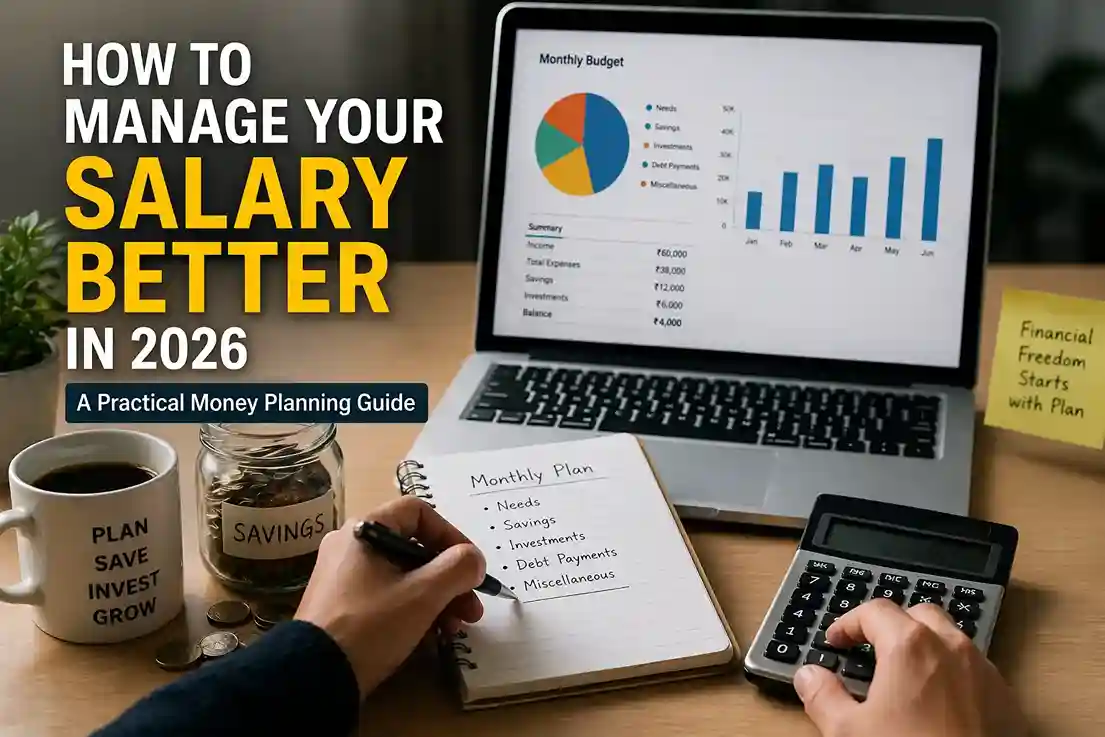
Managing salary well is not about earning more and spending more at the same time. It is about making a clear plan for the money that already comes in, so each part of your income has a purpose. The Consumer Financial Protection Bureau says making and sticking with a budget is a key step toward controlling debt and working toward savings goals, while consumer.gov explains that a budget helps you make sure you have enough money each month and can also support goals and emergencies.
This guide explains how to manage your salary better in 2026 with a simple, practical system that works for beginners, salaried workers, and anyone who wants more control over monthly spending. If you are already trying to improve your finances, you may also find How to Build an Emergency Fund in 2026 useful because salary management and emergency savings go hand in hand.
Why salary management matters more than people think
A salary can disappear quickly when it is not assigned before the month starts. Rent, food, bills, transport, subscriptions, family expenses, debt payments, and lifestyle spending can eat away at income before you realize it. A good salary plan helps you stay ahead of those expenses instead of reacting to them after the money is gone. That is one reason budgeting is often the first step in building financial stability.
A salary plan also makes it easier to save consistently. The CFPB says automatic saving is one of the easiest ways to make savings consistent, and it recommends recurring transfers from checking to savings so saving happens before the money gets spent. That idea is especially useful when your salary arrives on a fixed date every month.
Step 1: Start with your take-home salary, not the gross number
The first rule in how to manage your salary better in 2026 is to work with the amount that actually reaches your bank account. Your gross salary may look larger on paper, but your real monthly budget should be based on take-home pay after deductions, taxes, and other mandatory items. Budgeting resources from consumer.gov and other financial education sources emphasize using the money you actually have available each month.
For example, if your monthly salary is ₹45,000 on paper but only ₹39,800 reaches your account after deductions, then ₹39,800 is the number that matters for budgeting. Planning from the bigger figure usually leads to overspending and shortfalls.
Step 2: Divide your salary into clear categories
Once you know your real income, divide it into simple categories. A salary is easier to manage when every rupee has a job. Consumer.gov explains that a budget shows how much money you make and how you spend it, which is exactly why category planning works.
A simple split can look like this:
Needs: rent, groceries, transport, electricity, internet, medicine
Wants: eating out, entertainment, shopping, subscriptions
Goals: emergency fund, debt repayment, investments, skill-building
This is also where a basic budget becomes a salary-management tool. If you already read How to Create a Monthly Budget That Actually Works in 2026, this article is the salary-focused version of the same idea. The budget tells you where the money should go; salary management tells you how to make that system work every month.
Step 3: Pay yourself first
One of the strongest habits you can build is to move savings out of your salary the moment it arrives. The CFPB says recurring automatic transfers are one of the easiest ways to build savings consistently. That means your savings should not depend on whatever is left at the end of the month.
A practical example: if your salary is ₹40,000, you might decide that ₹4,000 moves automatically into savings on payday. After that, you work with the remaining ₹36,000. This approach feels stricter at first, but it prevents the common problem of “saving later” and never actually saving.
If you are still building your cushion, our article How to Build an Emergency Fund in 2026 is a helpful companion because salary planning becomes much easier when emergency money is already separated from spending money. The CFPB says emergency savings should be reserved for unplanned expenses and financial emergencies, and the FDIC recommends keeping emergency savings in a separate FDIC-insured savings account to reduce temptation and improve accessibility.
Step 4: Keep essential expenses fixed and visible
One reason salary planning fails is that people do not track fixed expenses properly. Your salary should first cover the costs you cannot avoid. These usually include rent, groceries, commute, utilities, phone bills, EMI payments, and family support if applicable. Budgeting guidance from consumer.gov and the CFPB emphasizes that knowing where your money goes is the core of a realistic budget.
A useful trick is to write your fixed expenses in the same place every month. That way, you always know how much of your salary is already committed before you think about discretionary spending.
Example:
If your salary is ₹50,000 and fixed expenses total ₹28,000, then you immediately know you have ₹22,000 left for savings, variable expenses, and goals. That clarity alone can reduce stress.
Step 5: Build an emergency buffer before lifestyle spending expands
A salary feels bigger when it arrives, and that is exactly why people overspend early in the month. Before you increase shopping, eating out, or entertainment, set aside a small emergency buffer. The FDIC says many financial experts recommend several months of living expenses for emergencies, and the CFPB explains that automatic saving is one of the easiest ways to build savings steadily.
If a full emergency fund feels impossible right now, start with a mini buffer. Even ₹10,000 to ₹25,000 can make a real difference when a medical bill, repair, or urgent travel expense appears. Our article How to Build an Emergency Fund in 2026 breaks that goal into stages so it feels less overwhelming.
Step 6: Use a flexible ratio that matches your reality
Some people like the 50/30/20 rule because it is simple. The California Department of Financial Protection and Innovation, summarizing CFPB guidance, says a flexible budgeting approach can allocate about 50 percent to needs, 30 percent to wants, and 20 percent to savings and debt repayment. But that ratio is not mandatory. It is only a starting point.
If your rent is high, your ratio may need to shift. If your income is smaller, your savings percentage may begin lower and grow gradually. The important part is not the exact formula. The important part is that your salary is planned intentionally instead of being spent randomly.
A practical version for many salaried workers in 2026 might look like this:
60 percent needs
20 percent wants
20 percent goals
Or, if costs are tight:
70 percent needs
15 percent wants
15 percent goals
The best plan is the one you can repeat every month without quitting.
Step 7: Reduce money leaks that drain salary quietly
Salary often disappears through small leaks rather than one big mistake. These leaks might include unused subscriptions, frequent food delivery, impulse shopping, convenience purchases, or repeated “small” payments that add up fast. Budgeting guidance from consumer.gov exists for exactly this reason: a budget helps you see how you spend your money so you can make better choices.
A simple monthly review can reveal problems quickly. Ask yourself:
Did I spend too much on convenience?
Did I forget any recurring charges?
Did I buy things I do not really use?
Did I stick to my plan for the first two weeks and then drift later?
Even cutting one or two leaks can free up a meaningful amount of salary each month.
Step 8: Use salary growth wisely, not emotionally
When your salary increases, it is tempting to upgrade everything at once. That usually creates a new spending habit before your financial base is ready. A better approach is to decide in advance what part of a raise will go to lifestyle, what part will go to savings, and what part will go to debt reduction.
If you want to grow salary over time, Top 10 High Income Skills to Learn Online in 2026 is a useful internal read because salary management is easier when your earning power improves too. The site’s career content also includes How to Write a Resume That Gets Interviews and How to Write a Winning Cover Letter in 2026, which are practical next steps if salary growth depends on job growth.
A raise should improve your financial position before it improves your spending habits.
Step 9: Review your salary plan every month
A salary plan should not be frozen forever. Income changes, expenses change, and goals change. Review your plan once a month and ask three questions:
What went well?
What overspent?
What should change next month?
This monthly review is a key reason budgets work. The CFPB says making and sticking with a budget helps you understand where your money is going and supports debt reduction and savings goals. Consumer.gov also says a budget helps you make sure you will have enough money each month and can help you save for goals or emergencies.
If you are serious about long-term financial stability, this review should become a habit, not a one-time project.
Real-world example: a ₹45,000 salary plan
Here is a simple example for a worker earning ₹45,000 per month:
₹20,000 for rent and household bills
₹8,000 for groceries and transport
₹4,000 for emergency savings
₹3,000 for debt repayment
₹5,000 for wants and personal spending
₹5,000 for longer-term goals, skill development, or buffer
That plan is not perfect for everyone, but it shows how salary becomes manageable when it is assigned before the month starts. The exact numbers can change, but the system stays the same.
User-intent FAQs
1. What is the best way to manage salary every month?
The best way is to budget from your take-home salary, save automatically, cover fixed expenses first, and review the plan monthly. CFPB and consumer.gov both emphasize budgeting as the base for savings and financial control.
2. Should I save before spending?
Yes. The CFPB says automatic savings are one of the easiest ways to build savings consistently, which is why “pay yourself first” works so well.
3. How much salary should go to savings?
There is no one perfect number. Many people use a flexible ratio such as 50/30/20, but the CDPFI summary of CFPB guidance says you can adapt the ratio to your needs.
4. What if my salary is not enough?
Start with the basics. Cover essential spending, create a small emergency buffer, and reduce money leaks. Even small savings matter if they are consistent.
5. How can I stop overspending after salary day?
Set up automatic transfers on payday, separate savings from spending, and pre-assign each category before the month begins. That approach is aligned with CFPB and FDIC guidance on automatic savings and separate emergency accounts.
6. What should I do after a salary increase?
Increase savings and long-term goals first, then lifestyle spending later. That prevents every raise from disappearing into a more expensive routine.
7. How does salary management connect to emergencies?
A salary plan is much stronger when emergency savings already exist. The FDIC recommends emergency savings in a separate insured account, and the CFPB says emergency funds should be used for unexpected expenses and financial emergencies.
Final thoughts
How to manage your salary better in 2026 comes down to a few repeatable habits: budget from take-home pay, save automatically, separate needs from wants, protect emergency savings, and review the plan every month. The CFPB, FDIC, and consumer.gov all point in the same direction: consistent budgeting and automatic saving are simple, practical ways to create financial stability.

Shiva S writes about AI, cybersecurity, online safety, Google Discover, and digital trends. His focus is creating practical, easy-to-understand guides that help readers stay informed and safer online.