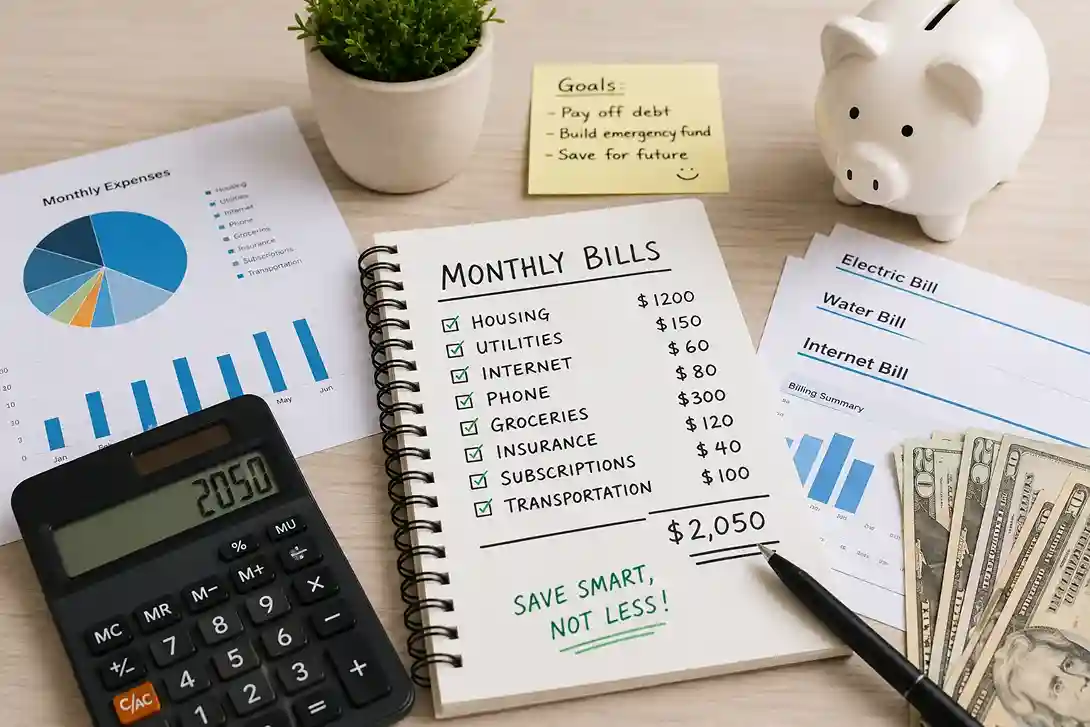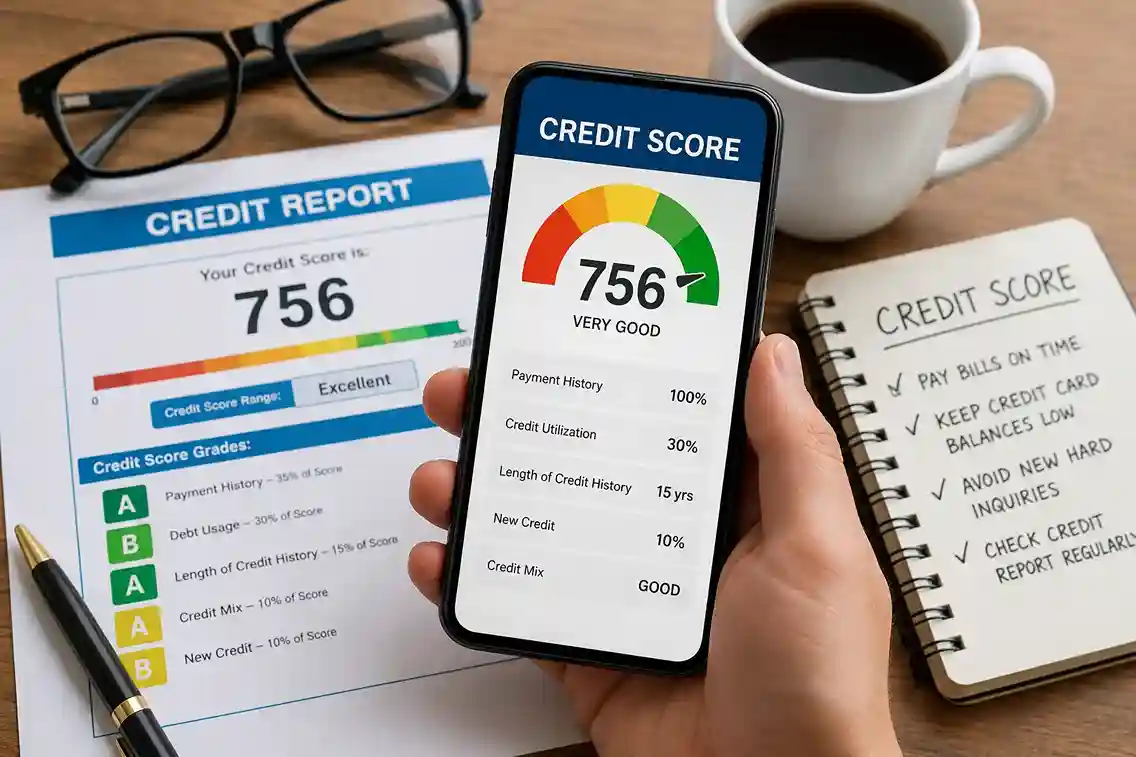
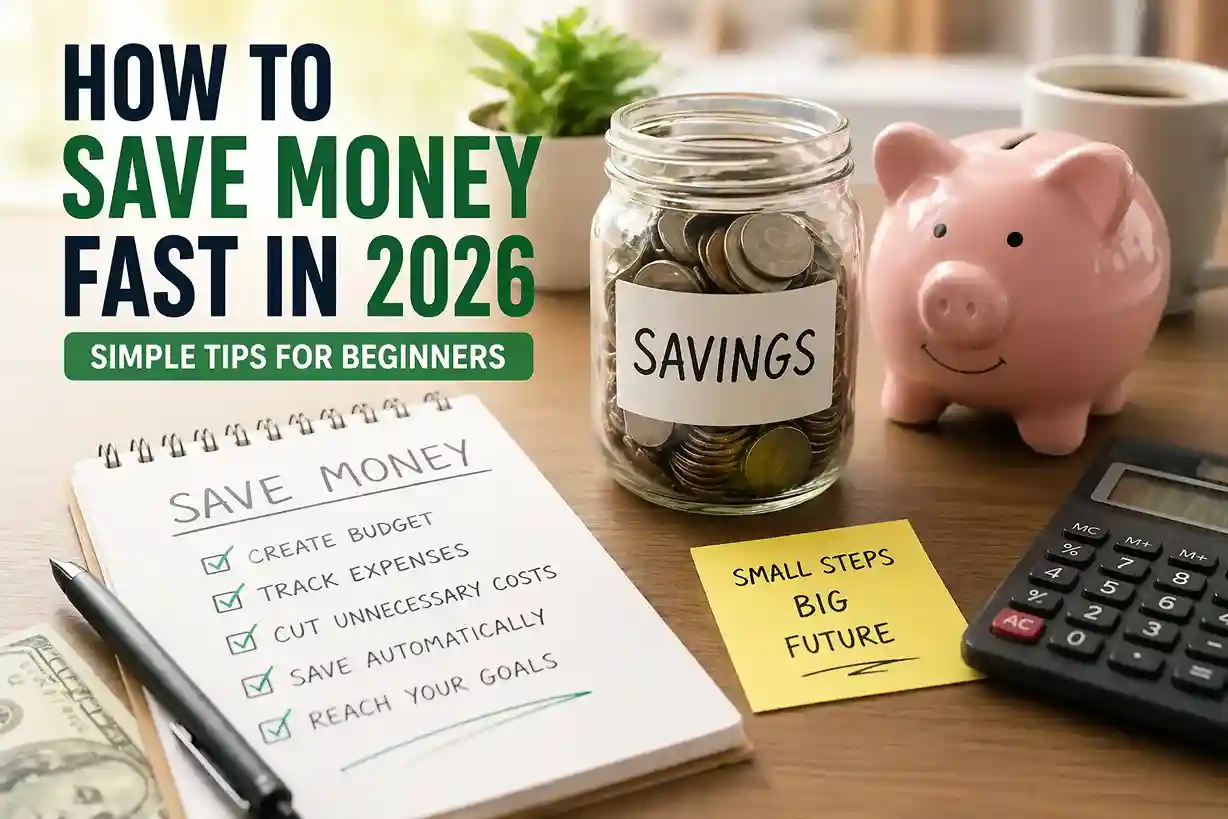
Saving money is easier when you stop treating it like a vague goal and start treating it like a system. A budget is simply a plan for how your income will be used over a given period, and consumer finance guidance consistently points readers toward tracking spending, setting goals, and using automatic savings tools to make progress more reliable. The CFPB’s budgeting guidance and glossary both describe budgeting as a practical spending plan, and the FDIC recommends simple savings habits such as regular deposits and keeping emergency money in a separate account.
This guide explains how to save money fast in 2026 using simple, realistic steps that do not require a high income or a complicated spreadsheet. The goal is to help you keep more of what you already earn, build confidence, and create room for bigger goals later.
Why saving fast matters
A lot of people think saving is only for people who already have extra money. In reality, fast saving is often about reducing waste, creating rules, and moving money before you have time to spend it. Consumer.gov’s budgeting guidance says a budget helps you make sure you have enough money each month and can also support savings goals and emergencies. That is exactly why quick saving is useful: it creates breathing room before stress builds up.
Fast savings also help when life becomes unpredictable. The FDIC says financial experts generally recommend enough emergency savings to cover about six months of living expenses in a federally insured product, and its guidance also stresses keeping emergency savings separate so you are less tempted to spend it. That does not mean everyone needs a perfect emergency fund immediately, but it does mean the money you save should be protected, not blended into daily spending.
Step 1: Decide exactly what you are saving for
“Save money” is too broad to be useful. A clear goal changes behavior faster than a vague one. You might be saving for an emergency cushion, a laptop, rent security, a course, a short trip, or simply to reduce financial stress. The CFPB’s savings guidance encourages people to set up consistent contributions and choose specific savings goals instead of saving randomly.
A realistic target could be:
- ₹10,000 in 30 days for a starter cushion.
- ₹25,000 in 60 days for a stronger buffer.
- One month of essential expenses as a first emergency milestone.
If your main goal is to build a durable savings habit, our article on How to Build an Emergency Fund in 2026 is the next logical step because it shows how small savings turn into a real safety net over time.
Step 2: Know your take-home income
The most common mistake is trying to save from your gross salary instead of the amount that actually reaches your account. If your take-home income is lower than expected, your savings plan will fail before it starts. Budgeting tools from consumer.gov and the CFPB both emphasize working from actual available money, not a hopeful number.
For example, if your take-home pay is ₹38,000, your saving plan should be based on ₹38,000, not ₹45,000 or ₹50,000. That sounds basic, but this one adjustment makes the rest of your money decisions more realistic. When income varies, use a conservative average from the last few months instead of your best month.
If you are already trying to improve your salary flow, our post How to Manage Your Salary Better in 2026 pairs well with this one because salary planning and fast saving are two sides of the same habit.
Step 3: Track every expense for seven days
You do not need a month-long study to find savings. A single week of honest tracking often reveals the biggest leaks. Consumer finance guidance repeatedly emphasizes tracking spending because you cannot improve what you do not notice.
Write down or log every expense for seven days:
coffee
food delivery
transport
snacks
subscriptions
online shopping
small app purchases
A person who thinks they spend “a little” on delivery often finds that delivery is quietly costing a lot. Someone who says they do not overspend may discover three or four unused subscriptions. That is where fast money-saving begins: not with sacrifice, but with visibility.
Step 4: Use automatic savings before you can spend the money
One of the fastest ways to save is to automate it. The CFPB says setting up automatic recurring transfers is often one of the easiest ways to save consistently, and the FDIC also highlights automatic savings programs as a practical way to build an emergency fund or future savings.
A simple approach:
- Set a transfer for payday.
- Move a fixed amount to savings first.
- Never wait until the end of the month.
For example, if you save ₹2,000 every payday and you get paid twice a month, you can build ₹4,000 monthly without needing daily willpower. That may seem small, but the habit is what matters. FDIC guidance also notes that starting with a small regular amount and increasing it later is a smart way to build momentum.
Step 5: Separate savings from everyday spending
A savings account works better when it is not sitting next to your daily spending money. The FDIC recommends keeping emergency savings in a separate FDIC-insured savings account instead of a checking account so you can resist the urge to spend it. It also advises developing a plan to replenish the money if you ever need to withdraw it.
This matters because money that feels close is easier to touch. Money that is separated feels more intentional. If you are serious about how to save money fast in 2026, separate accounts can do part of the discipline work for you.
A practical setup is:
- one account for income,
- one account for spending,
- one account for savings.
That simple structure helps many beginners avoid accidental overspending.
Step 6: Cut one major leak, not ten tiny ones
People often try to save by changing everything at once, and then they quit. A better method is to remove one major leak first. Maybe that leak is daily food delivery, expensive rides, impulse shopping, or a subscription stack you barely use. Consumer.gov’s budgeting guidance is built around exactly this idea: know where your money goes so you can make better choices.
For example, if you spend ₹150 per day on snacks and drinks, that is around ₹4,500 in a 30-day month. Cutting that in half can create a meaningful savings boost without making life miserable. The goal is not to become extreme. The goal is to make one real improvement that you can maintain.
Step 7: Use the salary-day rule
Fast saving is easiest when you save before the month gets noisy. The day salary arrives is your strongest financial moment because that is when your options are widest. If you delay saving until later, the money gets eaten by everyday spending. The CFPB says recurring transfers make saving easier, and that advice fits perfectly here.
Try this rule:
- Salary arrives.
- Savings transfer happens immediately.
- Bills are scheduled.
- Spending happens from what remains.
That order is a huge improvement over “spend first and save whatever is left.” If you want a deeper planning framework for this step, How to Create a Monthly Budget That Actually Works in 2026 will help you assign every part of your salary before it disappears.
Step 8: Use windfalls wisely
Unexpected money is the fastest way to accelerate savings, but only if you do not spend it instantly. A tax refund, bonus, small freelance payment, or gift money can make a huge difference when you direct it to savings instead of lifestyle inflation. The CFPB and FDIC both note that irregular extra money is a good opportunity to strengthen savings habits.
A good rule is simple:
- Save at least half of any unexpected income.
- Use the rest only after your savings transfer is complete.
This works well because it speeds up progress without making you feel deprived.
Step 9: Build the first emergency cushion
Saving fast is not only about a target number. It is also about creating a buffer that stops one small problem from becoming a bigger crisis. The FDIC says many financial experts recommend roughly six months of living expenses in emergency savings, while CFPB materials also note that even a starter amount can help with short-term emergencies.
If six months feels too large, begin with a smaller target:
- first ₹5,000,
- then ₹10,000,
- then one month of essentials.
That method is more realistic for most beginners. The point is to get momentum, not perfection. Our guide on How to Build an Emergency Fund in 2026 breaks that process into stages if you want to continue from here.
Step 10: Make a 30-day savings sprint
A savings sprint is a short challenge that helps you move quickly. It works because you are not trying to change your whole life forever in one week. You are just trying to make one month highly focused.
Your 30-day plan can look like this:
- no unnecessary delivery orders,
- no impulse shopping,
- no late-night checkout pages,
- automatic savings on payday,
- one weekly review of spending,
- one account kept separate for savings.
This style of intentional saving matches CFPB and FDIC advice on automatic deposits, small repeated contributions, and separate savings accounts.
If you are interested in increasing the amount you can save long term, our article Top 10 High-Income Skills You Can Learn Online in 2026 is a useful next step because faster savings become much easier when income grows too.
A real-world example
Imagine a beginner earning ₹40,000 per month. They decide to save fast for 30 days.
They automate ₹5,000 on payday.
They cut delivery spending by ₹2,000.
They stop two unused subscriptions worth ₹600.
They use one freelance payment of ₹3,000 to boost savings.
By the end of the month, they have added ₹10,600 without needing a major income increase. That is the real power of fast saving: structure creates results.
FAQs
1. What is the fastest way to save money in 2026?
The fastest way is to automate savings, cut one major spending leak, and move money on payday before you spend it. The CFPB says automatic recurring transfers are one of the easiest ways to save consistently.
2. How much should I save first?
Start with a small target you can actually reach, like ₹5,000 or ₹10,000, then grow from there. FDIC guidance supports starting small and building up over time.
3. Should I keep my savings in the same account as my salary?
No. The FDIC recommends a separate FDIC-insured savings account for emergency money so it is easier to resist spending it.
4. Is it better to save or pay debt first?
For many beginners, doing both is best. Save a small starter cushion while also paying down expensive debt. The CFPB and FDIC both emphasize regular saving as a habit that supports long-term stability.
5. What if my salary is low?
Use a smaller goal, automate a tiny amount, and remove one expense at a time. Even small regular savings can grow into a meaningful buffer.
6. What should I do with bonus money?
Save at least part of it immediately. CFPB guidance encourages using extra money to accelerate savings and goals rather than letting it disappear into everyday spending.
7. How does this connect to budgeting?
Budgeting tells you where the money goes; saving tells you what to keep. If you need a stronger structure, read How to Manage Your Salary Better in 2026 and How to Create a Monthly Budget That Actually Works in 2026.
Final thoughts
How to save money fast in 2026 becomes much easier when you stop relying on motivation and start using a system. Set one clear goal, automate savings, separate the money, remove one major leak, and use salary day as your starting point. That is the simple pattern behind fast, realistic savings. CFPB, consumer.gov, and the FDIC all point toward the same habits: track spending, save automatically, and protect savings in a separate account.

Shiva S writes about AI, cybersecurity, online safety, Google Discover, and digital trends. His focus is creating practical, easy-to-understand guides that help readers stay informed and safer online.