
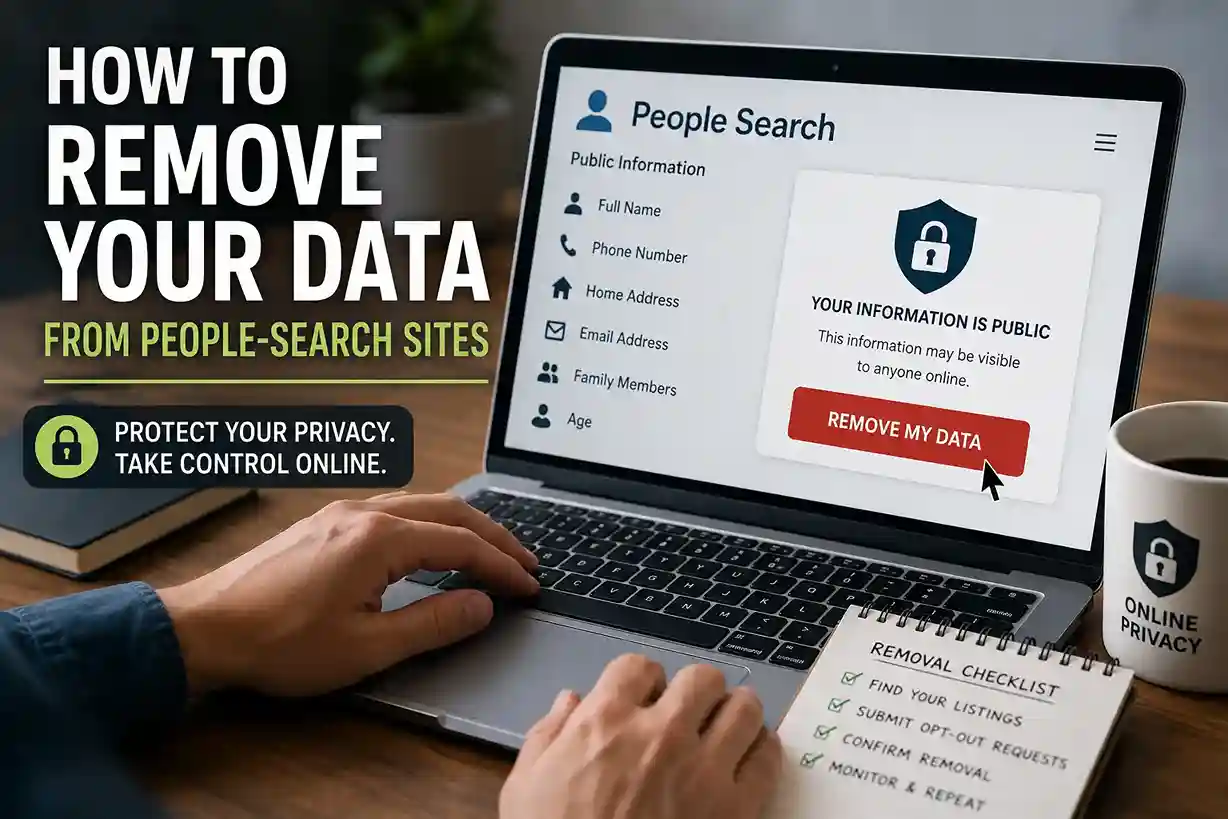
How to remove your data from people-search sites is one of the most practical privacy projects you can do in a single afternoon, especially if your name, phone number, home address, or relatives are showing up in public search results. The FTC explains that people-search sites often collect and sell details such as current and previous addresses, phone numbers, age, marital status, employment history, relatives’ names, and even criminal or civil record information. If you are already working on broader privacy cleanup, How to Delete Your Personal Information From the Internet in 2026 and How to Strengthen Your Digital Privacy Habits in 2026 fit naturally alongside this process.
People-search sites matter because they make it easy for strangers, spammers, scammers, and sometimes abusive contacts to find a lot more than a basic name lookup. The FTC says these sites usually offer opt-out paths, but the process can be time-consuming and may need to be repeated over time because information can reappear. In practice, that means privacy cleanup is not a one-and-done task; it is a routine, much like checking your passwords or reviewing your accounts.
How people-search sites collect your information
Most people-search sites do not invent your data. They usually gather it from public records, commercial sources, and other online data trails, then package it into searchable profiles. The FTC notes that even after you opt out, your information may still appear in records tied to relatives, neighbors, or associates, and public records themselves do not disappear just because a listing is removed from a people-search site. That is why removing a listing is useful, but reducing your overall digital footprint is even better. How to Strengthen Your Digital Privacy Habits in 2026 is a good follow-up if you want to shrink the amount of information these services can find in the first place.
In real-world situations, this becomes a problem fast. Someone may search your name after finding your phone number, a marketing message, or a social media profile. The result can include your address history, relatives, and other details you never intended to share publicly. That is one reason privacy cleanup and scam awareness belong together, especially if you also follow guides like How to Spot Online Scams Before It Is Too Late in 2026 and How to Avoid Fake Customer Support Scams in 2026.
Step 1: How to Remove Your Data from People-Search Sites Step by Step
Start by searching your own name, phone number, old addresses, and email variations on the major people-search sites. The FTC recommends beginning with identifying information like a phone number or address, because those often return the fastest and most complete results. Make a simple list of every site that shows your profile, along with the exact name, URL, and any verification steps the site asks for.
This list matters because each site has its own process. Some use a search form, some use an email verification link, and some ask for identity confirmation. If you already use How to Create a Personal Cybersecurity Checklist in 2026, add a “people-search opt-outs” section to it so you can track where you have already removed your data and where you still need to follow up.
Step 2: Submit opt-out requests one by one
The FTC says most people-search sites have a way to stop selling your information, and you can usually do that either yourself for free or through a paid removal service. The manual process is slower, but it gives you more control and helps you understand what each company is doing with your data. If a site does not make the opt-out link obvious, the FTC recommends searching the site name plus phrases like “opt out” or “remove my information.”
A useful habit is to keep one private email address just for these requests and account confirmations. If you are also tightening other parts of your online life, How to Create Strong Passwords People Actually Remember in 2026 and How to Protect Your Email Account From Hackers in 2026 make a strong security pair with this cleanup work. Removing your data is useful, but only if the email account you use for the process is well protected too.
Step 3: Verify each removal and check again later
After a site says your record has been removed, do not assume it will stay gone forever. The FTC warns that data can reappear if public records change or if your information is tied to other people’s records. That means you should revisit the major sites from time to time and repeat the opt-out when needed.
This periodic check is where many people stop too early. In practice, a reappearance does not mean you failed; it means the data ecosystem is messy. A strong digital hygiene routine, similar to How to Delete Your Personal Information From the Internet in 2026, helps you keep pressure on the problem instead of treating privacy as a single project.
Step 4: Reduce the public sources that feed these sites
Opting out removes a listing, but it does not remove the underlying sources that keep feeding these profiles. CISA recommends reducing your digital footprint by limiting what you share and by minimizing identifiers that can be linked back to you. It also notes that some data brokers may be legally obligated to remove your information, depending on the platform and the law that applies.
That means you should also look at the places where your information gets reused: social media bios, public directory listings, old accounts, shopping sites, and apps you no longer use. If you are cleaning up that broader trail, How to Strengthen Your Digital Privacy Habits in 2026 and How to Protect Your Phone From Malware and Fake Apps in 2026 are practical next steps, because privacy leaks often start with everyday app use.
Step 5: Use your legal rights where they apply
Privacy rights vary by location, but in some places there are stronger deletion mechanisms than people realize. California’s privacy regulator says the Delete Act created an accessible deletion mechanism called DROP, and by 2026 data brokers doing business in California must process consumer deletion requests through that platform every 45 days once the relevant requirements take effect. That does not erase every public record, but it does give consumers a more structured deletion path in that jurisdiction.
If you live outside California, the exact rights may differ, but the overall idea is the same: know what your local law allows, then use it. The FTC’s general advice still applies because it reminds consumers that many people-search sites have opt-out processes, even when state-specific rights are not involved. This is one reason How to Create a Personal Cybersecurity Checklist in 2026 is so helpful—it gives you a place to track legal requests as well as website opt-outs.
Step 6: Watch for re-listings and related profiles
One of the most frustrating parts of this process is that a listing can come back under a slightly different format, or your information can appear on a related profile tied to a family member or past address. The FTC specifically notes that data may show up again and that opt-outs do not delete public records. In other words, removal is often a maintenance task, not a final victory.
A sensible way to handle this is to schedule a quick monthly or quarterly search of your name, phone number, and city. If a profile reappears, resubmit the removal request immediately. If the listing seems tied to broader scam exposure, How to Spot Online Scams Before It Is Too Late in 2026 and How to Protect Your Email Account From Hackers in 2026 help reinforce the rest of the safety chain.
Common mistakes people make
The biggest mistake is assuming one opt-out request covers everything. It does not. The FTC says you need to repeat the process across different people-search sites, and that is exactly why a list is so important. Another common mistake is using the same weak email password or recovery setup on the account used for removal requests. If that account is compromised, the cleanup process can become a new privacy problem.
A second mistake is stopping after a site removes the current profile. The FTC makes clear that data can reappear and that public records still exist elsewhere. A third mistake is forgetting to reduce the source of the data. If your personal details are still public on social platforms or old accounts, the removal work becomes much harder than it needs to be. How to Delete Your Personal Information From the Internet in 2026 is useful here because it helps you think beyond one website and toward the whole footprint.
Best practices that make the process easier
A simple system usually works best. Use one spreadsheet or note with the site name, profile URL, date submitted, verification method, and follow-up date. Save screenshots of confirmation pages. Keep one secure email account for opt-out messages. And when possible, remove old or unused accounts that may be feeding data into broker databases in the first place. CISA’s digital footprint guidance and the FTC’s privacy advice both support this kind of layered cleanup approach.
It also helps to connect this privacy work to your broader online safety habits. If you are already improving passwords, reviewing scam risk, and tightening account recovery settings, you are much harder to profile. That is why How to Create Strong Passwords People Actually Remember in 2026, How to Avoid Fake Customer Support Scams in 2026, and How to Strengthen Your Digital Privacy Habits in 2026 work so well together.
FAQ
Can I remove my data from every people-search site?
Usually not permanently. You can often remove or suppress listings, but the FTC says public records still exist and your data can reappear. The goal is to reduce visibility and make the cleanup harder for brokers to maintain.
Is it better to use a paid removal service?
Sometimes, but not always. The FTC says paid services can handle the opt-outs for you, but you should check how many sites they cover, whether they provide reports, and how often they rescan for reappearing data.
Why does my information keep coming back?
Because people-search sites often update from public records and other sources. The FTC notes that if public records change, your information may reappear, so periodic checks are necessary.
What is the most effective long-term strategy?
Combine opt-outs with footprint reduction. CISA recommends limiting what you share and minimizing your digital footprint, while the FTC recommends repeated opt-outs and continued monitoring. That combination is more durable than either step alone.
Conclusion
How to remove your data from people-search sites is not about one perfect request form. It is about building a repeatable process: search for yourself, submit opt-outs, verify the removals, reduce the data sources feeding the sites, and check again later. The FTC’s guidance makes clear that people-search listings can contain a surprising amount of personal information, while CISA and California’s privacy regulator both show that digital footprint reduction and deletion rights are becoming more important in 2026. If you want to keep the momentum going, How to Delete Your Personal Information From the Internet in 2026, How to Strengthen Your Digital Privacy Habits in 2026, and How to Create a Personal Cybersecurity Checklist in 2026 are the natural next reads.

Shiva S writes about AI, cybersecurity, online safety, Google Discover, and digital trends. His focus is creating practical, easy-to-understand guides that help readers stay informed and safer online.