Fake news is no longer limited to obvious hoaxes. In 2026, misleading stories can look polished, carry a convincing screenshot, or copy the tone of a real news outlet. That is why learning how to spot fake news before you share it is now a basic online safety skill, not just a media-literacy lesson. A fast share can push a false claim into group chats, social feeds, and comment sections before anyone checks whether it is true.
Why fake news spreads so quickly
False or exaggerated stories spread because they are built to trigger emotion. Fear, anger, shock, and curiosity can make people click without checking the details. A dramatic headline, a cropped screenshot, or a short video clip can create the impression that something is confirmed even when it is not.
The problem becomes worse when a post mixes a real event with a misleading interpretation. For example, a genuine policy update can be shared with an old date, a real celebrity photo can be attached to an unrelated claim, or a legitimate alert can be turned into a panic-driven rumor. The more visual and urgent the message looks, the faster it tends to travel.
What search engines and ad networks expect from trustworthy content
For publishers, trust matters because content quality affects both readers and platform review. Google’s Search Essentials emphasize helpful, reliable, people-first content, and its Creating Helpful, Reliable, People-First Content guide encourages content made for people rather than rankings alone. Google’s Get on Discover documentation also explains that content is eligible for Discover only when it is indexed and follows Discover content policies.
That is important for AdSense as well. Google’s AdSense Program policies and related policy pages make it clear that publishers need high-quality, original, useful pages. A site that teaches readers how to identify misinformation looks more credible than one that republishes shallow or recycled content.
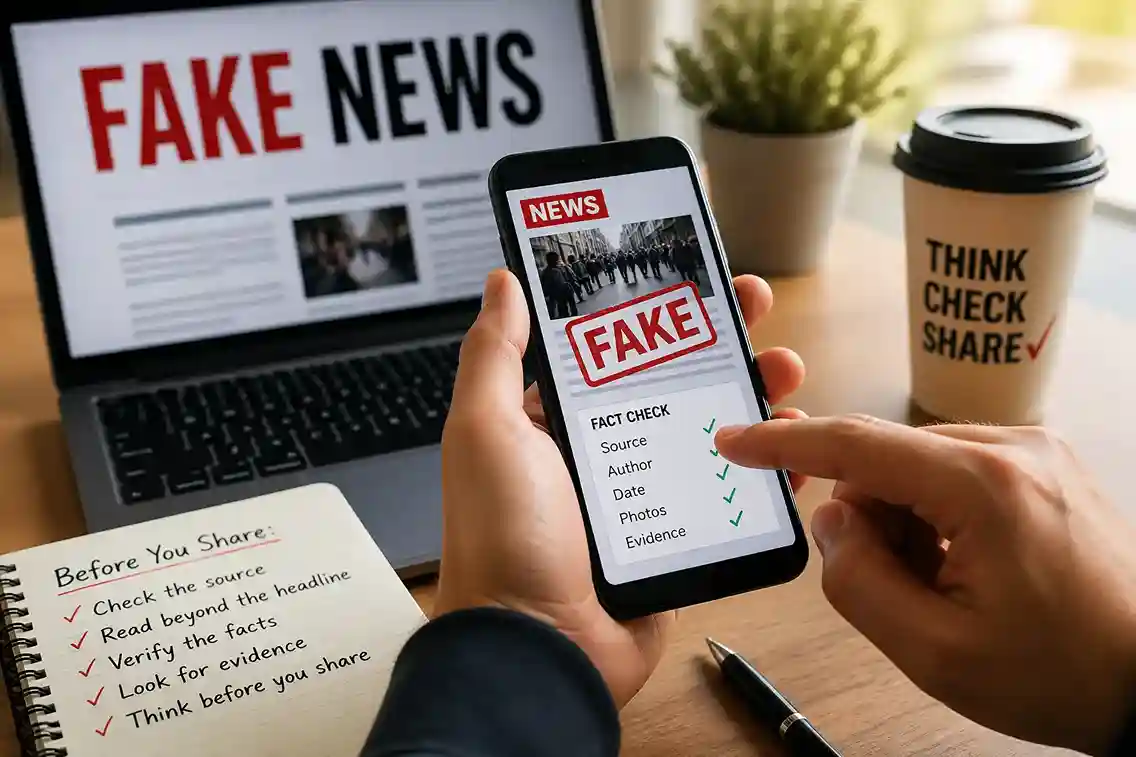
A simple 7-step checklist to spot fake news before you share it
1. Read past the headline
Many people share articles after reading only the headline. That is risky because headlines are designed to attract attention, not always to explain the full story. Open the article, read the first few paragraphs, and check whether the details match the title.
2. Look for the original source
A trustworthy report usually points to an official statement, a direct quote, public record, or first-hand reporting. If the story only cites anonymous posts, recycled screenshots, or vague “reports say” language, slow down and check further.
3. Check the date and context
Old content can be reposted as if it happened today. That creates confusion, especially during elections, policy changes, weather events, and health scares. Check when the story was first published and whether the event is actually current.
4. Compare it with other reliable outlets
One source is rarely enough for an important claim. Search for confirmation from a second reputable outlet or an official page. If the story is real, you should be able to find supporting coverage or a clear source trail.
5. Watch for emotional manipulation
Fake news often uses extreme language such as “shocking,” “urgent,” “leaked,” or “they do not want you to know.” Those phrases are not proof. They are signals to verify more carefully before you believe or share anything.
6. Inspect images, screenshots, and videos
A cropped screenshot can hide the full context. Images can be old. Videos can be edited or taken from a different event. Reverse-image search tools and simple source checks can prevent mistakes. If a post relies on a visual, make sure the visual is real and relevant.
7. Decide whether you would still share it after checking
The final test is simple: after doing a quick verification, would you still feel comfortable sharing the post with your name on it? If the answer is no, do not forward it as fact.
Real-world examples readers see every day
A common fake-news pattern in 2026 is a viral post about a platform or app “changing everything overnight.” It may use a real logo, a real interface screenshot, and a headline that sounds technical. But when readers check the official blog or help center, the claim is often exaggerated or taken out of context.
Another example is scam content that borrows the style of legitimate warnings. The FTC’s phishing guidance shows how scammers use fake urgency to push people into clicking links or sharing personal information. That same urgency is often present in misinformation posts: they try to make you react first and verify later.
A third example is a post that claims a news event happened in a specific city or on a specific day, but the image attached is from an unrelated past event. The photo might be genuine, but the caption is false. This is exactly why readers should verify both the claim and the visual before sharing.
How this article supports latestnewss.com’s content strategy
This topic works well for AdSense approval and for long-term site quality because it is evergreen, useful, and easy to understand. It also connects naturally with the existing content cluster on latestnewss.com. A reader who starts with How We Verify News Before Publishing: Fact-Checking Process for Readers can continue into articles about Discover traffic, headline writing, and editorial trust without feeling like they are jumping between unrelated topics.
That matters because Google evaluates whether content is helpful and original, and it also rewards clear page structure. The more your articles connect logically, the easier it is for readers and search engines to understand what the site is about. In practice, that means one article about verification can support another about How to Write a Resume That Gets Interviews: Step-by-Step Guide for Freshers in 2026, another about How to Create a Monthly Budget That Actually Works in 2026, or a practical guide like How to Manage Your Salary Better in 2026: A Practical Money Planning Guide without the site feeling repetitive.
Good sharing habits that protect readers and your reputation
Before you forward any news item, pause for ten seconds. Ask who posted it first, what proof they gave, whether the timing makes sense, and whether the same claim appears elsewhere. Those few seconds can save other people from believing a rumor and save you from helping misinformation spread.
If the post affects money, health, safety, elections, or a public emergency, be even stricter. These are the topics where fake news can cause real harm. In those cases, prefer official sources, established outlets, and directly documented evidence over screenshots and reposts.
User-intent FAQs
What is the easiest way to spot fake news quickly?
Read beyond the headline, identify the original source, check the date, and compare the claim with at least one reliable outlet. If the post depends on emotion more than evidence, treat it carefully.
Why do fake news posts look so convincing?
Because they often copy the design language of real news, use strong visuals, and create urgency. A polished appearance is not proof. Verification still matters.
Should I trust a screenshot if it looks official?
Not automatically. Screenshots can be cropped, edited, or taken out of context. Always look for the original source page or official announcement.
How can I check whether an image is real?
Search for the image online, compare it with trusted sources, and look for signs that it belongs to another event or date. If the image is the only proof offered, be cautious.
Does sharing unverified news affect my reputation?
Yes. Repeatedly sharing false or misleading content can reduce trust in your profile, group, or page. People remember who spreads accurate information and who does not.
Why is this topic good for AdSense approval?
It is original, useful, evergreen, and clearly written for readers. Google expects helpful, reliable content, and a practical fact-checking article shows that the site is built for real value rather than thin content.
Conclusion
Learning how to spot fake news before you share it is one of the simplest ways to become a smarter reader in 2026. You do not need advanced tools to begin. You only need a habit of pausing, checking, and asking a few basic questions before you pass information to someone else.

Shiva S writes about AI, cybersecurity, online safety, Google Discover, and digital trends. His focus is creating practical, easy-to-understand guides that help readers stay informed and safer online.