Learning how to teach children safe internet habits in 2026 is becoming one of the most important responsibilities for modern families. Children now grow up surrounded by smartphones, gaming apps, AI-powered tools, social media platforms, video content, and online communication from an early age.
In many real-world situations, children understand how to use technology faster than adults, but they may not understand how to recognize manipulation, scams, privacy risks, or unsafe behavior online.
A common mistake people make is assuming children are automatically “internet smart” simply because they know how to use apps and devices. In reality, digital safety requires:
- critical thinking,
- privacy awareness,
- scam recognition,
- and healthy online habits.
Families already working on stronger household safety routines through How to Create a Family Online Safety Plan in 2026 usually find it easier to teach children safer digital behavior consistently.
The FTC also encourages parents to help children think carefully before clicking links, sharing information, or interacting with strangers online.
Source: https://consumer.ftc.gov/
Why Children Need Safe Internet Habits Early
Children often trust online environments more easily because they are still learning how to separate entertainment from risk.
For example:
- a fake giveaway may look exciting,
- a stranger in a game chat may appear friendly,
- or a misleading video may seem believable.
Without guidance, children may:
- overshare personal information,
- click suspicious links,
- or trust people too quickly online.
Teaching safer habits early helps children develop:
- skepticism,
- patience,
- and healthier digital judgment over time.
This is increasingly important because online manipulation is becoming more sophisticated. Families who already understand How to Recognize Emotional Manipulation in Online Scams will recognize that emotional pressure can influence children just as easily as adults.
The National Center for Missing & Exploited Children also provides family-focused internet safety resources for children and parents.
Source: https://www.ncmec.org/
How to Teach Children Safe Internet Habits in 2026
The best internet safety lessons are:
- simple,
- practical,
- and repeated consistently.
Children learn best through short conversations and everyday examples.
1. Start With Simple Online Safety Rules
Children do not need complicated cybersecurity explanations.
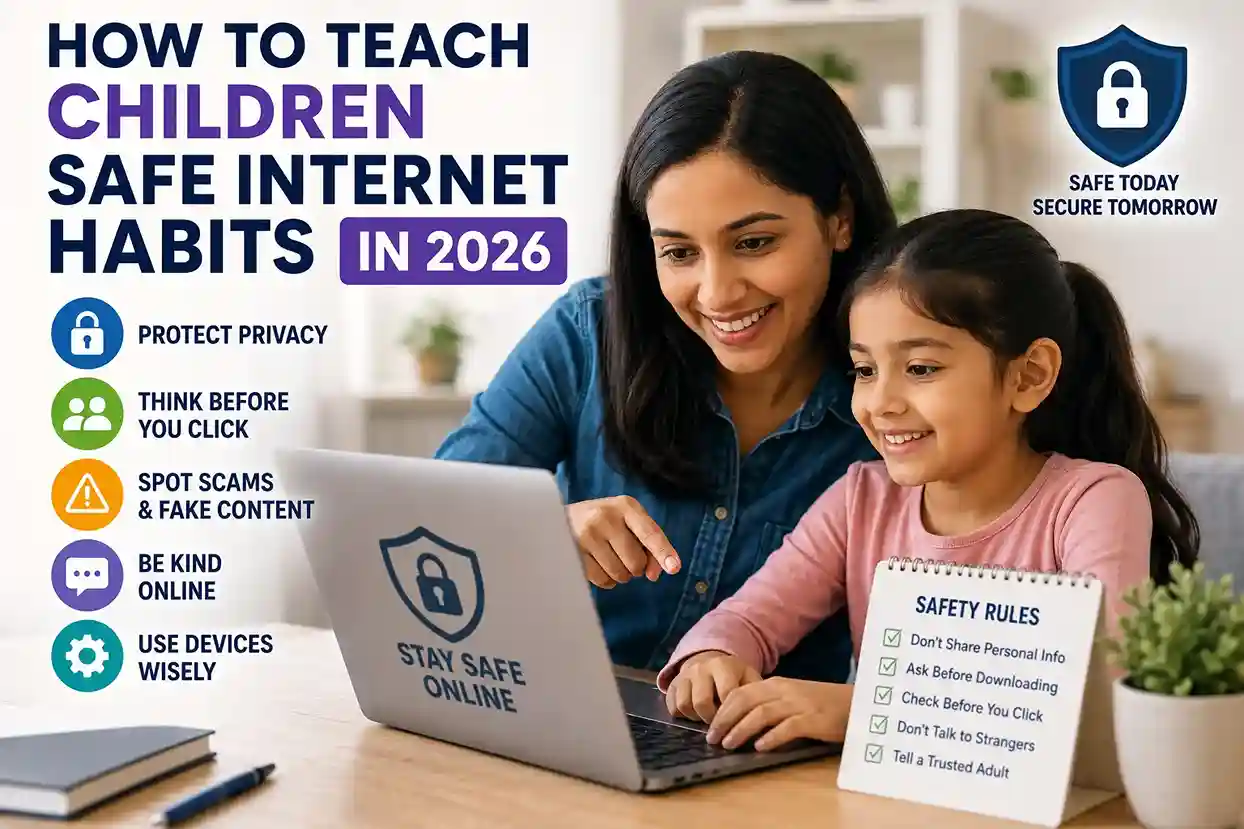
Instead, teach simple rules such as:
- Never share your address online.
- Never share passwords.
- Ask before downloading apps.
- Do not talk privately with strangers.
- Tell a parent if something feels strange or secret.
A common mistake people make is teaching too many rules at once. Children usually remember short, practical habits more effectively.
Families already applying the privacy habits discussed in How to Keep Your Personal Data Safe Online can use the same principles when teaching children.
2. Teach Children to Pause Before Clicking
One of the safest digital habits is learning to slow down before reacting.
Children should understand that:
- not every link is safe,
- not every message is real,
- and not every online reward is legitimate.
For example:
- “You won a free prize”
- “Click now”
- “Do not tell your parents”
- “Limited-time reward”
are all warning signs children should recognize.
This same verification mindset is explained in How to Verify an Image or Video Before Sharing It Online, where pausing before reacting helps reduce misinformation and manipulation.
The Cybersecurity & Infrastructure Security Agency (CISA) also warns that many online threats rely heavily on emotional reactions and impulsive behavior.
Source: https://www.cisa.gov/news-events/news/avoiding-social-engineering-and-phishing-attacks
3. Explain Online Scams Using Real Examples
Children often learn faster through practical demonstrations.
Parents can show:
- fake giveaway messages,
- suspicious links,
- fake login pages,
- or misleading videos
and explain why they are unsafe.
You do not need to create fear.
The goal is awareness.
Readers who already explored How to Spot Fake News Before You Share It will notice that children also need practice identifying misleading content online.
Teach Children About Privacy in Everyday Language
Privacy can feel abstract to children, so it helps to explain it using relatable examples.
For instance:
- not every photo should be public,
- not every friend request is trustworthy,
- and not every game chat is private.
A practical question parents can ask is:
“Would you feel comfortable showing this information to a stranger in real life?”
If the answer is no, it probably should not be shared online either.
Children should also understand that:
- usernames,
- locations,
- birthdays,
- school names,
- and voice clips
can sometimes be misused online.
Google’s Family Link platform also provides tools that help parents manage devices, app permissions, and screen-time settings responsibly.
Source: https://families.google/familylink/
Safe Internet Habits for Social Media and Online Games
Many children spend most of their online time on:
- social platforms,
- video apps,
- games,
- and messaging services.
That is where many online risks appear first.
Social Media Safety Habits
Teach children to:
- keep accounts private when appropriate,
- avoid sharing location details,
- and ask before accepting unknown followers.
A common mistake people make is assuming popular apps are automatically safe.
Popularity does not guarantee safety.
Gaming Safety Habits
Online games often include:
- voice chats,
- direct messages,
- friend requests,
- and fake reward scams.
Children should know:
- strangers in games are still strangers,
- and free rewards can sometimes be scams.
Families already working on broader digital awareness through Why Smart People Still Fall for Online Scams in 2026 will understand how emotional excitement can influence online decisions.
Messaging App Safety
Children should feel comfortable saying:
- “I need to ask my parent first.”
- “I do not know you.”
- “I cannot share that information.”
Children who feel safe asking questions are usually much less vulnerable online.
Best Practices for Parents Teaching Internet Safety
Parents do not need to become cybersecurity experts.
Consistency matters more than technical knowledge.
Make Internet Safety Part of Everyday Conversation
Do not treat online safety like a rare emergency discussion.
Instead:
- discuss suspicious messages naturally,
- explain why certain links are unsafe,
- and talk openly about online behavior regularly.
In real-world situations, children remember repeated short conversations better than one long lecture.
Praise Children for Asking Questions
If a child says:
“This message looks strange.”
that should be encouraged.
Positive reinforcement helps children build safer habits confidently.
Review Privacy Settings Together
Parents should regularly review:
- privacy settings,
- app permissions,
- screen-time tools,
- and account security together with children.
This helps children understand why the settings matter instead of viewing them as random restrictions.
Model Safe Behavior Yourself
Children copy adult behavior constantly.
If parents:
- overshare online,
- click suspicious links,
- or trust messages too quickly,
children often repeat the same habits.
That is why household consistency matters.
Families already practicing the habits from How to Create a Family Online Safety Plan in 2026 usually create stronger long-term digital behavior for children.
Common Mistakes Parents Make
Using Fear Instead of Guidance
Fear alone rarely teaches good judgment.
Children learn better through calm explanations and practical examples.
Waiting Until Something Goes Wrong
It is easier to build healthy habits early than fix unsafe habits later.
Giving Too Much Information at Once
Children usually remember:
- short,
- repeated,
- practical lessons
more effectively than complicated instructions.
Ignoring Emotional Manipulation
Modern scams increasingly use:
- excitement,
- fear,
- urgency,
- and emotional pressure.
Children should learn that online manipulation often targets emotions first.
Google’s online safety resources also emphasize helping families recognize misleading content and suspicious online behavior early.
Source: https://blog.google/technology/safety-security/how-were-keeping-people-safe-online/
A Simple Family Checklist for Children’s Internet Safety
Families can review these habits regularly:
- Ask before downloading apps.
- Never share passwords.
- Never click suspicious links.
- Avoid sharing personal details publicly.
- Tell parents about strange messages.
- Keep devices updated.
- Use strong passwords.
- Verify before trusting online information.
These habits become stronger when practiced consistently over time.
Frequently Asked Questions
How do I teach children safe internet habits in 2026?
Use simple rules, practical examples, regular conversations, and consistent family habits focused on privacy, verification, and online awareness.
What is the most important online safety habit for children?
Learning to pause before clicking, replying, or sharing information online is one of the safest habits children can develop.
Should children use social media?
That depends on age, maturity, parental guidance, and platform rules. Privacy and supervision remain important.
How do I explain online scams to children?
Explain that some people online pretend to be friendly or trustworthy while trying to trick others into sharing information or clicking unsafe links.
Why are children vulnerable online?
Children may trust people too easily, react emotionally, or fail to recognize manipulation and privacy risks.
How often should families discuss online safety?
Regular short conversations work best, especially when new apps, games, or devices are introduced.
Conclusion
Understanding how to teach children safe internet habits in 2026 is becoming increasingly important as children spend more time online for learning, entertainment, communication, and gaming.
The goal is not to create fear.
The goal is to help children develop:
- awareness,
- privacy habits,
- verification skills,
- and healthy digital judgment.
Children who learn:
- to pause before clicking,
- ask questions,
- recognize suspicious behavior,
- and communicate openly with parents
are usually much safer online over time.

Shiva S writes about AI, cybersecurity, online safety, Google Discover, and digital trends. His focus is creating practical, easy-to-understand guides that help readers stay informed and safer online.