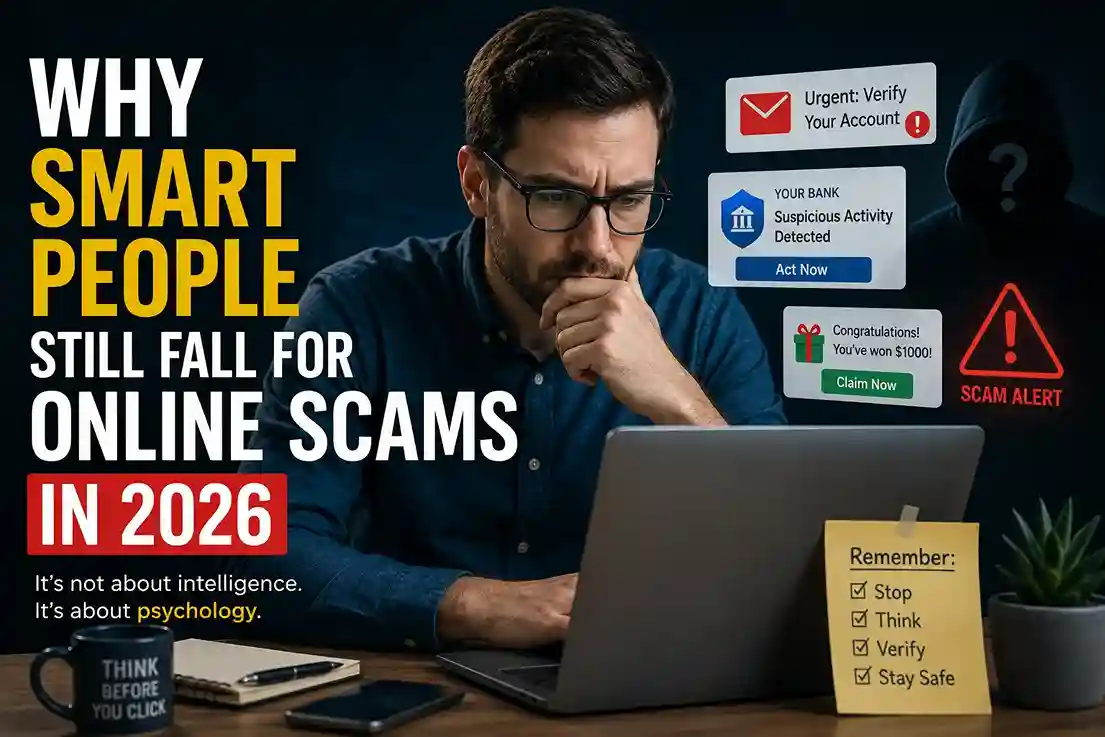
Understanding why smart people still fall for online scams in 2026 is becoming increasingly important because modern scams are no longer only about suspicious emails or obvious fake websites. Today’s online scams often combine psychology, emotional manipulation, urgency, and advanced technology to influence victims before they have time to think carefully.
A common mistake people make is assuming online scams only affect people who lack technical knowledge. In reality, intelligent and experienced individuals can also become victims when scammers create emotionally stressful situations.
For example:
- a fake emergency call can trigger panic,
- a fake investment opportunity can trigger excitement,
- a fake security warning can trigger fear,
- and a fake job offer can trigger urgency.
In many real-world situations, scammers succeed because victims react emotionally before verifying information logically.
This emotional pressure is closely connected to the scam psychology explained in How to Recognize Emotional Manipulation in Online Scams, where urgency and fear are commonly used to bypass critical thinking.
The FBI’s Internet Crime Complaint Center (IC3) continues warning that online fraud increasingly relies on social engineering and psychological manipulation rather than only technical hacking methods.
Source: https://www.ic3.gov/
Why Intelligence Alone Does Not Prevent Scams
Being intelligent does not automatically protect someone from emotional decision-making.
Human psychology affects everyone.
Scammers understand this very well, which is why many scams are designed around:
- stress,
- distraction,
- fear,
- urgency,
- trust,
- or emotional overload.
A person may be:
- educated,
- financially successful,
- technically skilled,
- and still fall victim during an emotionally overwhelming moment.
For example, someone who would normally recognize suspicious behavior may react differently if they believe:
- a family member is in danger,
- their bank account was compromised,
- or they are about to lose money.
This is why emotional awareness is just as important as technical awareness online.
Why Smart People Still Fall for Online Scams in 2026
Modern scams are becoming more convincing because scammers now combine:
- artificial intelligence,
- realistic impersonation,
- social engineering,
- and psychological pressure.
This creates situations that feel believable even to cautious people.
Emotional Reactions Happen Faster Than Logical Thinking
The brain often reacts emotionally before analytical thinking fully activates.
Scammers intentionally exploit this.
For example:
- panic encourages fast decisions,
- excitement lowers skepticism,
- and urgency discourages verification.
This is one reason why fake emergency scams are so effective.
Readers who explored How to Protect Your Parents From AI Phone Scams in 2026 will recognize how scammers use emotional urgency to pressure victims into acting immediately.
The FTC also warns consumers that scammers often create emotional pressure specifically to reduce careful decision-making.
Source: https://consumer.ftc.gov/articles/how-avoid-scam
People Naturally Trust Familiar Patterns
Humans are conditioned to trust:
- familiar brands,
- official-looking emails,
- authority figures,
- recognizable voices,
- and urgent security alerts.
Scammers imitate these trusted patterns very effectively.
For example:
- fake bank websites,
- cloned voices,
- fake package notifications,
- fake customer support calls.
A common mistake people make is assuming:
“This looks professional, so it must be legitimate.”
In reality, scammers often invest significant effort into making scams appear trustworthy.
Stress and Distraction Increase Vulnerability
People are more vulnerable to scams when they are:
- tired,
- busy,
- emotionally stressed,
- distracted,
- or multitasking.
In real-world situations, many scams succeed because victims:
- react quickly during work,
- check messages while distracted,
- or make rushed decisions late at night.
That is why slowing down before responding online is extremely important.
The Psychology Behind Online Scams
Most online scams rely heavily on social engineering.
Social engineering means manipulating people psychologically instead of technically hacking systems.
The Cybersecurity & Infrastructure Security Agency (CISA) explains that social engineering attacks often target human trust and emotional reactions rather than computer vulnerabilities alone.
Source: https://www.cisa.gov/news-events/news/avoiding-social-engineering-and-phishing-attacks
Fear-Based Scam Tactics
Fear is one of the strongest emotional triggers scammers use.
Examples include:
- fake fraud alerts,
- fake virus warnings,
- account suspension messages,
- fake legal threats,
- or fake emergency calls.
The emotional goal is immediate panic.
For example:
“Your account will be locked within 10 minutes.”
This pressure reduces careful thinking.
Urgency and Scarcity Tactics
Scammers frequently create artificial deadlines.
Examples:
- “Limited-time offer”
- “Immediate action required”
- “Respond now”
- “Only a few spots remaining”
Urgency encourages impulsive decisions.
This manipulation pattern is very similar to misinformation tactics discussed in How to Spot Fake News Before You Share It, where emotionally charged information spreads faster than verified information.
Sympathy and Emotional Attachment
Some scammers build emotional trust over long periods.
Examples include:
- romance scams,
- fake charity campaigns,
- fake crowdfunding stories,
- and long-term impersonation scams.
Victims may ignore warning signs because emotional attachment becomes stronger than skepticism.
Why AI Is Making Online Scams More Convincing
Artificial intelligence is significantly improving scam realism.
Scammers now use AI to create:
- fake voices,
- fake videos,
- fake images,
- realistic phishing emails,
- and convincing impersonation attempts.
For example, AI voice cloning scams can imitate family members during fake emergencies.
This connects directly with the risks explained in How to Verify an Image or Video Before Sharing It Online, where manipulated content may appear highly realistic at first glance.
Google also continues expanding online scam protection systems because AI-generated fraud and impersonation attempts are increasing rapidly.
Source: https://blog.google/technology/safety-security/how-were-keeping-people-safe-online/
Common Scam Situations Smart People Underestimate
Even cautious people sometimes underestimate emotionally convincing situations.
Fake Investment Opportunities
Scammers often promise:
- guaranteed returns,
- exclusive opportunities,
- or urgent investment access.
Excitement can reduce skepticism quickly.
A common mistake people make is focusing on potential rewards before verifying legitimacy.
Fake Technical Support Messages
Scammers may create:
- fake virus alerts,
- fake account warnings,
- or urgent security messages.
Victims panic because the warning feels immediate and serious.
Fake Package Delivery Alerts
Package scams work well because online shopping is common.
People often click quickly because:
- they expect deliveries,
- the message seems routine,
- and the timing feels believable.
Practical Ways to Stay Safer Online
Online safety is not about paranoia.
It is about creating habits that reduce impulsive reactions.
Slow Down Before Reacting
One of the safest habits online is:
pause before responding emotionally.
Before:
- clicking links,
- sending money,
- sharing passwords,
- or responding urgently,
take a moment to verify independently.
Verify Information Independently
If a message claims:
- account problems,
- emergencies,
- suspicious activity,
- or urgent warnings,
verify directly through:
- official websites,
- saved contact numbers,
- or trusted communication channels.
This verification mindset is similar to the editorial checking process discussed in How We Verify News Before Publishing.
Discuss Scam Awareness Openly
Families and workplaces that openly discuss scams are usually safer.
Awareness reduces shame and improves faster reporting when suspicious situations happen.
Protect Personal Information Online
Oversharing online can make scams more personalized and convincing.
Safer habits explained in How to Keep Your Personal Data Safe Online help reduce exposure significantly.
Why Scam Awareness Matters More Than Ever in 2026
Online scams are becoming more advanced because technology is improving rapidly.
However, the core scam strategy remains surprisingly consistent:
manipulate emotions before logical thinking takes over.
That means:
- awareness,
- emotional control,
- verification,
- and healthy skepticism
remain some of the strongest online safety tools available.
Frequently Asked Questions
Why do smart people still fall for online scams in 2026?
Modern scams use emotional pressure, urgency, fear, and realistic impersonation tactics that can affect almost anyone during stressful situations.
Are online scams becoming more advanced?
Yes. AI-generated content, voice cloning, social engineering, and impersonation tactics are making scams increasingly realistic.
What is social engineering in online scams?
Social engineering is the psychological manipulation of people to gain trust, steal information, or encourage risky decisions.
What is the safest response to suspicious online messages?
Pause, verify independently, and avoid reacting emotionally or urgently before checking legitimacy.
Can emotionally stressful situations increase scam risk?
Yes. Stress, distraction, fatigue, and emotional overload can reduce careful decision-making and increase vulnerability.
How can families improve scam awareness?
Families can openly discuss scam tactics, practice verification habits, and encourage slower decision-making during suspicious situations.
Conclusion
Understanding why smart people still fall for online scams in 2026 helps explain an important reality:
scams succeed because they target human psychology, not just technology.
Modern scammers use:
- emotional manipulation,
- urgency,
- fear,
- trust,
- and increasingly realistic AI-generated content
to pressure people into acting quickly.
The safest protection is not assuming:
“I would never fall for a scam.”
Instead, strong online safety comes from:
- slowing down,
- verifying independently,
- recognizing emotional pressure,
- and staying aware of modern scam tactics.
To strengthen your digital safety habits further, also explore:
- How to Recognize Emotional Manipulation in Online Scams
- How to Protect Your Parents From AI Phone Scams in 2026
- How to Keep Your Personal Data Safe Online
Staying emotionally aware online is becoming just as important as staying technically secure.

Shiva S writes about AI, cybersecurity, online safety, Google Discover, and digital trends. His focus is creating practical, easy-to-understand guides that help readers stay informed and safer online.