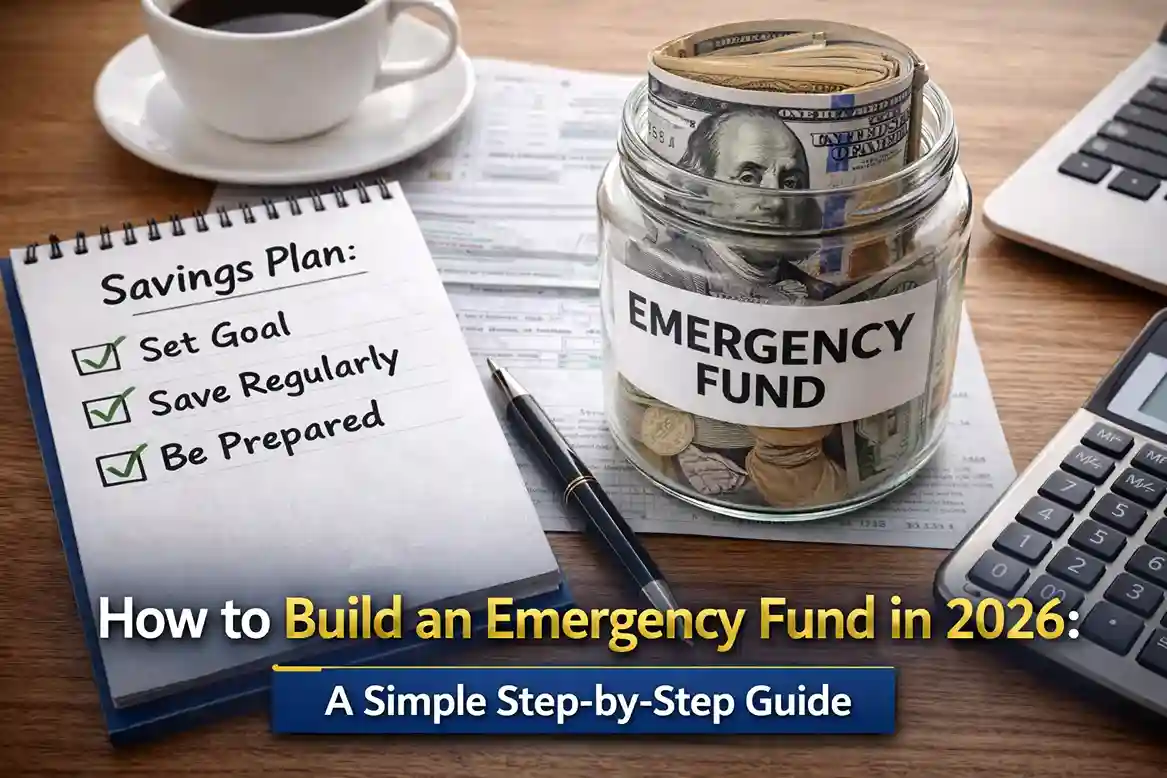
An emergency fund is one of the simplest financial tools you can build, but it is also one of the most powerful. The Consumer Financial Protection Bureau explains that an emergency fund is cash set aside for unplanned expenses or financial emergencies such as car repairs, home repairs, medical bills, or a loss of income. The FDIC also says financial experts generally recommend keeping emergency savings in a federally insured account and notes that a separate savings account can help reduce the temptation to spend it.
This article shows how to build an emergency fund in 2026 using a simple, realistic, step-by-step method that works for beginners, students, salaried workers, freelancers, and anyone trying to become more financially stable.
Why an emergency fund matters more than ever in 2026
Life is more unpredictable than people like to admit. A sudden hospital bill, job loss, phone replacement, car repair, or family expense can put pressure on even a well-planned budget. That is why an emergency fund is not a luxury. It is a financial buffer that protects your normal life from sudden shocks. The CFPB’s emergency-fund guide frames it as money reserved for unexpected expenses, and the FDIC emphasizes that emergency savings help people handle income loss or major surprise repairs.
If you are already reading money-related content on this site, you may also find our article on Why Do Gold and Silver Prices Fluctuate Daily? useful because it explains how inflation expectations, currency movement, and uncertainty can affect savings goals. Even when markets move, your emergency fund should stay boring, stable, and easy to access.
Step 1: Decide what your emergency fund is for
The first mistake people make is treating every savings goal as the same thing. An emergency fund is not for vacations, gadgets, or planned purchases. It is for real emergencies only. The CFPB defines it as a reserve for unplanned expenses and financial emergencies, which means your first job is to keep that purpose clear in your mind.
A practical way to think about it is this: if the expense is sudden, necessary, and not part of your regular monthly budget, your emergency fund should be there to help. That might mean covering a medical bill, urgent travel, rent during a gap in income, or an unavoidable repair.
If you are just starting your financial life, you do not need a perfect plan. You need a clear purpose. That purpose will help you avoid using your emergency savings for things that are inconvenient but not truly urgent.
Step 2: Choose a realistic target amount
Many people hear “emergency fund” and immediately assume they need a huge amount of money. That is not how most people should start. The FDIC says many financial experts recommend three to six months of living expenses in emergency savings, especially for major disruptions like job loss or large unexpected repairs. At the same time, the CFPB encourages building savings in a way that is manageable and sustainable.
A smart way to approach this in 2026 is to break the goal into stages:
First stage: ₹25,000 or ₹500–$1,000 if you want a starter cushion.
Second stage: one month of essential expenses.
Third stage: three months of expenses.
Fourth stage: six months or more if your income is unstable.
This staged approach is much easier than trying to save a giant amount all at once. For example, a freelancer with irregular income may aim for a larger emergency fund than someone with a stable salary. A single person with low fixed expenses may need less than a family with rent, school fees, and medical dependents. The exact number depends on your lifestyle, but the principle stays the same: start small, stay consistent, and build upward.
Step 3: Separate your emergency fund from daily spending money
One of the smartest suggestions from the FDIC is to keep emergency savings in a separate FDIC-insured savings account instead of mixing it with checking money. That separation makes it easier to resist the urge to use the money for everyday spending.
This is a crucial habit. If your emergency fund sits in the same account as your UPI spending, debit card purchases, or monthly bill payments, it becomes too easy to drain it. A separate account creates mental friction, and that friction is helpful.
A good setup in 2026 is:
- One main account for salary or income.
- One savings account for emergency money.
- One regular spending account if needed for monthly budgeting.
That small structure makes a big difference.
Step 4: Automate your savings
The easiest emergency fund is the one you do not have to think about every week. The CFPB recommends automatic deposits as one of the simplest ways to save for emergencies. The idea is to move money from your paycheck or main account into savings on a regular schedule so saving becomes a habit instead of a decision.
For example, if you receive your salary on the 1st of every month, set up an automatic transfer for the 2nd or 3rd. Even a small amount helps. If you can save only a tiny percentage at first, that still counts. Consistency is more important than the initial size of the deposit.
A practical example:
If you save ₹2,000 every month, you will have ₹24,000 after one year.
If you save ₹5,000 every month, you will have ₹60,000 after one year.
That is how an emergency fund starts: not with a huge leap, but with repeated action.
If you are also building your income or career foundation, you can read How to Write a Resume That Gets Interviews because better job opportunities and a stronger emergency fund often go hand in hand. A stronger income base usually makes saving much easier.
Step 5: Cut one or two money leaks
You do not always need to “earn more” to save more. Sometimes you can build an emergency fund faster just by stopping a few unnecessary expenses. That might include unused subscriptions, frequent food delivery, impulse shopping, expensive app purchases, or entertainment services you rarely use.
This does not mean living miserably. It means being intentional.
A realistic way to do this is to review your last 30 days of spending and ask:
- Which payments were useful?
- Which ones were automatic but not important?
- Which ones can be paused for 3 months?
Even small cuts matter. Saving ₹500 a week may not sound dramatic, but that becomes ₹26,000 in a year. For many beginners, that is the difference between having no cushion and having a meaningful safety net.
Step 6: Use windfalls and bonus income wisely
A tax refund, festival bonus, gift money, freelance payment, cashback reward, or side-income payout can become a major emergency-fund boost. Instead of spending every unexpected rupee immediately, direct at least part of it into savings.
This is especially useful for readers exploring multiple ways to improve their income. Our article on How to Build Multiple Income Streams in 2026 is not the same topic, but the broader lesson is useful: more income creates more flexibility, and flexibility makes saving easier. The website also regularly covers financial and money-related topics like New Income Tax Rules 2026 Explained, which can help readers think more strategically about cash flow.
A simple rule works well: save 50% of any unexpected income until your emergency fund is complete.
Step 7: Keep the money accessible, but not too accessible
An emergency fund should be easy to use in a real emergency, but not so easy that you spend it casually. The FDIC advises keeping emergency savings in an interest-bearing bank account such as a savings account or money market account that can be accessed easily without taxes or penalties.
That means you do not want to lock the fund into something too risky or too difficult to reach. At the same time, you do not want to keep it in your everyday spending account where it disappears too quickly.
The middle ground is ideal:
- safe,
- liquid,
- separated from spending,
- and easy enough to withdraw in an emergency.
That balance is what makes the fund useful.
Step 8: Rebuild the fund after you use it
An emergency fund is not a one-time project. If you use it, you should rebuild it. The FDIC recommends developing a plan to replenish any withdrawals from emergency savings. That is important because the fund only works if it is there when the next emergency happens.
For example, if you spend ₹15,000 on a medical emergency, your next savings goal should be to restore that amount as soon as possible. That might mean temporarily reducing discretionary spending or increasing savings transfers for a few months.
This habit makes the emergency fund a true financial shield instead of a drained account with a nice label.
Step 9: Match the fund to your real life
Not everyone needs the same emergency fund. A single professional with stable employment may not need the same cushion as a freelancer, parent, or self-employed person. The FDIC’s guidance around three to six months of living expenses is a general benchmark, but your personal reality matters too.
Ask yourself:
- Is my income stable?
- Do I have dependents?
- Do I rent or own?
- Are my medical costs high?
- Would a job gap be difficult to survive?
Your answers determine the size of your fund. The goal is not to impress anyone. The goal is protection.
Real-world example: how a beginner can build the fund in 12 months
Let us say a fresher in their first job earns ₹35,000 a month. They decide to build an emergency fund in 2026.
They could:
- save ₹3,000 automatically each month,
- skip one non-essential subscription,
- save half of any bonus or freelance payment,
- and keep the money in a separate savings account.
After 12 months, they may have over ₹36,000, not counting bonus income. That is enough to handle a small medical bill, travel emergency, or repair expense without going into debt.
Now compare that to someone who saves nothing. The difference is not just money. It is confidence.
That same financial discipline can also help with long-term goals like career growth. Readers who are still building their job profile may also find How to Write a Resume That Gets Interviews helpful because stronger job prospects often support stronger savings habits.
How to stay motivated when saving feels slow
Saving for emergencies can feel boring, especially when progress is slow. That is normal. The key is to stop measuring it against excitement and start measuring it against peace of mind.
A few ways to stay motivated:
- Track your savings monthly.
- Celebrate each milestone.
- Keep your emergency fund goal visible.
- Remind yourself what it protects you from.
A small emergency fund is better than none. A half-built fund is better than waiting forever. Progress matters even when it is not dramatic.
If you are also concerned about financial uncertainty in broader markets, articles like Why Do Gold and Silver Prices Fluctuate Daily? can help explain why prices and economic conditions change so quickly. That context makes it even more valuable to hold cash for emergencies instead of assuming everything will stay stable.
Frequently Asked Questions
1. What is the first step to build an emergency fund in 2026?
The first step is to define the purpose of the money. The CFPB says emergency savings should be reserved for unplanned expenses and financial emergencies, not regular spending.
2. How much emergency savings should I keep?
A common benchmark is three to six months of living expenses, which the FDIC says many financial experts recommend. If that feels too big, start with a smaller starter goal and grow it over time.
3. Where should I keep my emergency fund?
The FDIC recommends keeping emergency savings in a separate, insured, and easily accessible savings-type account rather than mixing it with everyday spending money.
4. Should I invest my emergency fund?
An emergency fund should usually be kept safe and liquid, not exposed to high risk. The FDIC notes that emergency savings are best kept in an accessible bank product rather than volatile assets that could lose value right when you need the money.
5. What if I can only save a small amount every month?
That is still a good start. The CFPB recommends automatic savings and small, regular steps because consistency matters more than perfect timing or large deposits.
6. Should I use bonus money for emergencies?
Yes, if your basic emergency fund is still under construction. Putting part of a bonus or extra income into savings can speed up the process significantly.
7. What should I do after I use my emergency fund?
Rebuild it as soon as possible. The FDIC recommends making a replenishment plan after withdrawals so the fund remains ready for the next emergency.
Final thoughts
How to build an emergency fund in 2026 is not really a complicated question. It comes down to a few simple habits: define the purpose, choose a realistic target, save automatically, keep the money separate, and rebuild it when needed. The CFPB and FDIC both emphasize that emergency savings should be practical, accessible, and set aside for real unplanned expenses.

Shiva S writes about AI, cybersecurity, online safety, Google Discover, and digital trends. His focus is creating practical, easy-to-understand guides that help readers stay informed and safer online.