

Managing money wisely is no longer optional — it is a life skill. With rising living costs, digital spending habits, and new investment options, building strong personal finance habits in 2026 can make a major difference in your long-term wealth. The good news is that you don’t need a huge salary to become financially secure. You only need the right system and consistent habits.
In this guide, we’ll break down practical, easy-to-follow personal finance habits that can help you save more, invest better, and grow your money steadily.
Track Every Rupee You Spend
Most people underestimate how much they spend each month. Small daily expenses — food delivery, subscriptions, impulse shopping — silently drain savings.
Start by tracking all expenses for 30 days. Use:
- A budgeting app
- A simple spreadsheet
- Your bank statement
- Notes on your phone
When you see your real spending patterns, you automatically begin to control them better. Awareness is the first step toward financial improvement.
Follow the 50-30-20 Budget Rule
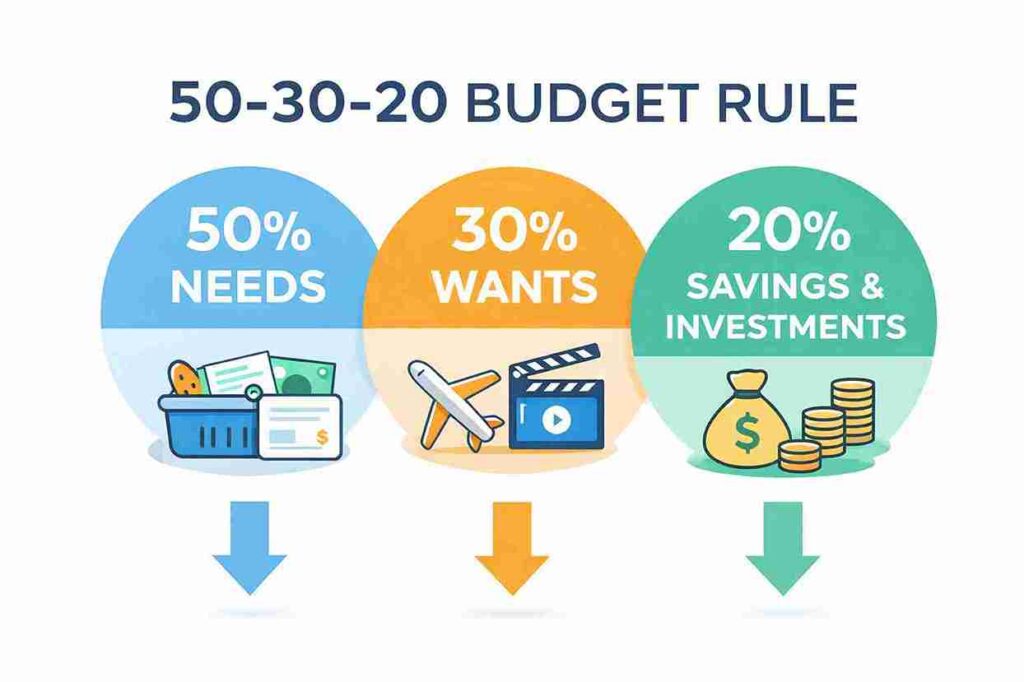
One of the simplest and most effective budgeting frameworks is the 50-30-20 rule:
- 50% — Needs: rent, groceries, bills, transport
- 30% — Wants: lifestyle, entertainment, travel
- 20% — Savings & investments
If 20% feels high, start with 10% and increase gradually. The key is consistency — not perfection.
Budgeting is not about restriction. It is about direction.
Build an Emergency Fund First
Before investing or taking financial risks, build a safety cushion.
Aim for 3 to 6 months of living expenses saved in:
- Savings account
- Liquid funds
- High-interest deposit accounts
This fund protects you from:
- Job loss
- Medical emergencies
- Urgent repairs
- Unexpected travel
Without an emergency fund, people often fall into high-interest debt. This one habit alone prevents major financial setbacks.
Automate Your Savings
Manual saving depends on mood and discipline. Automation removes both.
Set automatic transfers:
- Salary day → savings account
- Salary day → SIP investment
- Monthly → retirement fund
When savings happen automatically, you adjust your spending around what remains — not the other way around.
This is one of the most powerful wealth-building tricks used by financially successful people.
Start Investing Early — Even With Small Amounts
Many people delay investing because they think they need large capital. That’s a myth.
In 2026, you can start investing with very small amounts through:
- Mutual fund SIPs
- Index funds
- Retirement funds
- Government savings schemes
Time matters more than amount. Starting early allows compounding to work in your favor.
Example:
Investing a small amount monthly for 15 years often beats investing a big amount for 5 years.
Avoid High-Interest Debt
Not all debt is bad — but high-interest debt is dangerous.
Try to avoid:
- Credit card rollovers
- Instant loan apps
- Buy-now-pay-later misuse
- Payday loans
If you already have debt:
- List all loans
- Note interest rates
- Pay highest interest first
- Avoid adding new debt
Debt reduction gives a guaranteed return equal to your interest rate — which is often higher than investment returns.
Increase Income, Not Just Savings
Saving has limits. Income growth has fewer limits.
Work on:
- High-income skills
- Freelancing
- Side projects
- Certifications
- Digital skills
- Consulting
Even one extra income stream can dramatically improve savings rate and investment ability.
Modern personal finance focuses on earning power + saving discipline.
Review Subscriptions and Hidden Charges
Subscription creep is real in 2026.
People pay monthly for:
- Streaming services
- Apps
- Software tools
- Memberships
- Cloud storage
- Premium features
Review your bank and card statements every quarter and cancel what you don’t use. Many households recover thousands yearly from unused subscriptions alone.
Use Goals Instead of Random Saving
Saving works better when attached to goals.
Examples:
- Emergency fund target
- House down payment
- Child education
- Retirement corpus
- Travel fund
When money has purpose, discipline becomes easier. Name your savings accounts by goal — it psychologically reduces unnecessary withdrawals.
Learn Basic Investing Knowledge
You don’t need to be a finance expert, but basic knowledge is essential.
Understand:
- Risk vs return
- Diversification
- Inflation impact
- Long-term vs short-term investing
- Asset allocation
Avoid blind investing based on social media tips. Reliable financial knowledge protects your money better than quick profit promises.
Review Your Finances Every Month
Schedule a monthly “money review day.”
Check:
- Expenses
- Savings rate
- Investment progress
- Debt balance
- Budget gaps
This habit keeps your financial plan active and adaptable. Wealth building is not one decision — it is a monthly process.
Final Thoughts
Personal finance success in 2026 is not about luck or a high salary. It is about consistent habits — budgeting, saving automatically, avoiding bad debt, investing early, and growing income.
Small financial improvements repeated every month create life-changing results over time. Start with one habit today, then add another next month. Progress beats perfection.
Your future financial security depends on the habits you build now. You can also explore smart ways to make money online to create additional savings streams.
FAQ Section
Q1. How much should I save from my salary each month?
A good starting point is 20%, but even 10% consistently is powerful if increased gradually.
Q2. Is it better to save or invest first?
Build an emergency fund first, then start investing for long-term goals.
Q3. Can I start investing with a small amount?
Yes. Many investment options allow very small monthly contributions through SIPs.
Q4. How often should I review my budget?
At least once every month to stay on track and adjust spending.
By latestnewss.com Editorial Team
Updated 12 Feb 2026