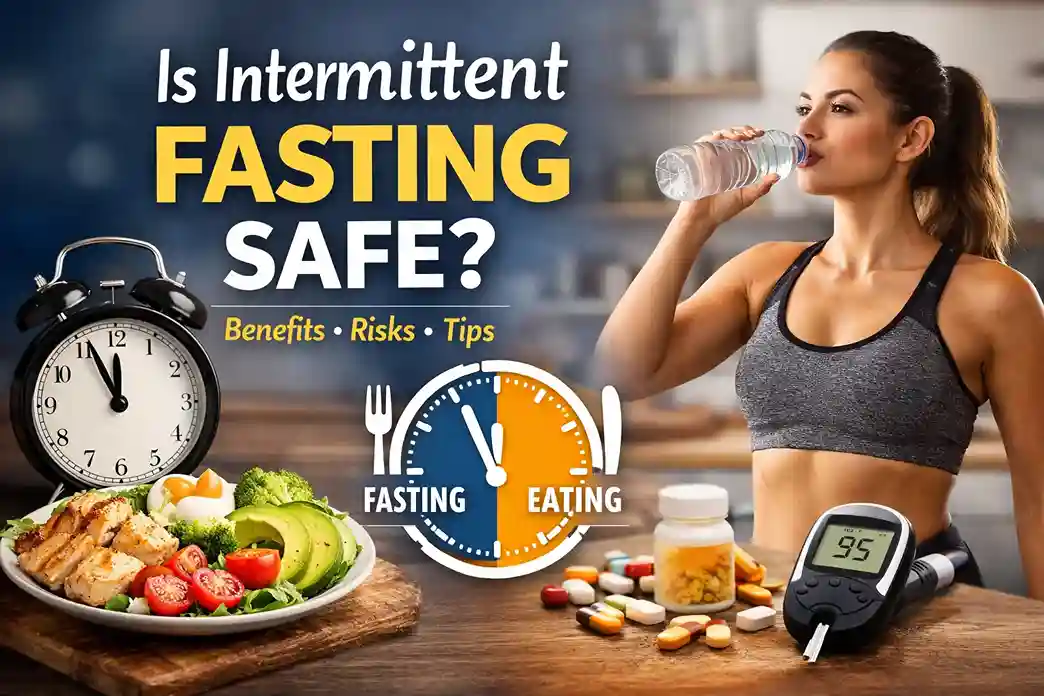
Introduction: Why Everyone Is Talking About Intermittent Fasting
Intermittent fasting (IF) has become one of the most searched health trends worldwide. From celebrities to fitness influencers, many claim it helps with weight loss, improved metabolism, and better energy levels.
But one important question remains:
👉 Is intermittent fasting safe for everyone?
With millions trying fasting methods like 16:8 or OMAD (One Meal a Day), it’s important to understand both the benefits and the risks before starting.
This detailed guide explains everything you need to know — backed by science, real-life examples, and practical safety tips.
⏳ What Is Intermittent Fasting?
Intermittent fasting is not a diet — it’s an eating pattern. It focuses on when you eat, not just what you eat.
Most Popular Fasting Methods:
- 16:8 Method – Fast for 16 hours, eat during 8-hour window
- 5:2 Diet – Eat normally 5 days, reduce calories 2 days
- OMAD – One meal per day
- Alternate Day Fasting
Many beginners start with 16:8 because it is considered the most sustainable. According to expert-reviewed safety insights from Harvard Health Publishing, intermittent fasting appears safe for many healthy adults when practiced responsibly.
✅ Potential Benefits of Intermittent Fasting
1️⃣ Weight Loss & Fat Burning
During fasting, insulin levels drop. This helps the body use stored fat for energy.
Real-Life Example:
Many office professionals report losing 3–5 kg within 2–3 months by combining 16:8 fasting with light exercise.
2️⃣ Improved Insulin Sensitivity
Intermittent fasting may help regulate blood sugar levels. This is particularly beneficial for people at risk of type 2 diabetes (under medical supervision).
3️⃣ Cellular Repair (Autophagy)
Some research suggests fasting may trigger a process called autophagy — where the body removes damaged cells and regenerates new ones.
4️⃣ Better Mental Clarity
Many individuals report improved focus during fasting hours. This may be due to stable blood sugar levels and reduced inflammation. Fasting may improve focus for some people, but overall lifestyle and mental health awareness in 2026 also play a major role in long-term wellbeing.
⚠️ Is Intermittent Fasting Safe for Everyone?
Here is the honest answer:
👉 Intermittent fasting is safe for many healthy adults, but not for everyone.
Safety depends on:
- Age
- Medical conditions
- Medication use
- Lifestyle
- Nutritional habits
Let’s break it down.
❌ Who Should Avoid Intermittent Fasting?
Intermittent fasting may NOT be safe for:
- Pregnant or breastfeeding women
- People with eating disorders
- Individuals with severe diabetes
- Those with low blood pressure
- Underweight individuals
- People taking certain medications requiring food
If you have chronic medical conditions, consult a healthcare professional before starting.
🚨 Possible Side Effects of Intermittent Fasting
When starting IF, some people experience:
- Headaches
- Dizziness
- Low energy
- Irritability
- Nutrient deficiencies (if meals are poor quality)
- Sleep disturbances
These symptoms usually reduce after the body adapts within 1–2 weeks.
🧠 Real Case Example: Safe vs Unsafe Approach
Unsafe Approach:
Ravi, 32, started OMAD immediately without proper hydration or balanced meals. Within days, he felt weak and stopped.
Safe Approach:
Anita, 29, started with 12:12 fasting (12 hours fasting). Gradually shifted to 16:8 while maintaining balanced nutrition.
Result:
- Lost 4 kg in 3 months
- No major side effects
- Improved digestion
👉 Gradual transition matters.
🥗 How to Practice Intermittent Fasting Safely
1️⃣ Start Slowly
Begin with 12-hour fasting before moving to 16 hours.
2️⃣ Stay Hydrated
Drink water, herbal tea, or black coffee (without sugar).
3️⃣ Eat Nutrient-Dense Meals
Your eating window should include:
- Protein
- Fiber
- Healthy fats
- Vegetables
- Whole grains
Avoid overeating junk food during eating hours.
4️⃣ Avoid Extreme Fasting
Long fasting periods (24+ hours) may not be suitable for beginners.
5️⃣ Listen to Your Body
If you feel persistent weakness, stop and consult a professional.
📊 What Research Says About Fasting Safety
Studies indicate that intermittent fasting can be effective for weight management and metabolic health in healthy adults when practiced responsibly.
However, extreme fasting or improper nutrition can cause hormonal imbalance and nutrient deficiency.
Moderation is key. Several studies analyzing the scientific evidence on intermittent fasting benefits suggest improvements in insulin response and metabolic markers.
🏋️♂️ Can You Exercise While Fasting?
Yes — light to moderate exercise is generally safe.
Recommended activities:
- Walking
- Yoga
- Light strength training
Avoid high-intensity workouts during initial adaptation phase. If you’re combining fasting with workouts, following structured at-home fitness routines for busy people can help you avoid overtraining.
🌙 Does Intermittent Fasting Affect Hormones?
For most men, fasting has minimal hormonal disruption.
For some women, especially those with hormonal sensitivity, long fasting windows may affect menstrual cycles.
Women should monitor body signals carefully.
🧾 Intermittent Fasting vs Traditional Dieting
| Intermittent Fasting | Traditional Dieting |
|---|---|
| Focus on timing | Focus on calorie counting |
| Simple structure | Complex meal tracking |
| May improve insulin response | Depends on diet quality |
| Not suitable for everyone | Generally flexible |
🔍 Common Myths About Intermittent Fasting
❌ “You must skip breakfast”
✔ You can adjust fasting around your schedule.
❌ “Fasting slows metabolism”
✔ Short-term fasting does not significantly slow metabolism in healthy adults.
❌ “You can eat anything during eating window”
✔ Food quality still matters.
❓FAQs
1. Is intermittent fasting safe for weight loss?
Yes, intermittent fasting can be safe and effective for weight loss when done correctly. It helps reduce calorie intake and improve fat burning. However, balanced nutrition and hydration are essential.
2. Can intermittent fasting cause health problems?
If done excessively or without proper nutrition, it may cause headaches, weakness, or hormonal imbalance. People with medical conditions should consult a healthcare professional first.
3. How long should I fast as a beginner?
Beginners should start with a 12-hour fasting window and gradually increase to 14 or 16 hours if comfortable. Sudden extreme fasting is not recommended.
4. Is intermittent fasting safe for women?
For many women, moderate fasting is safe. However, some may experience hormonal changes if fasting windows are too long. Monitoring health signals is important.
5. Can diabetics try intermittent fasting?
People with diabetes should only try intermittent fasting under medical supervision, as fasting can affect blood sugar levels significantly.
6. What are the biggest mistakes beginners make?
Common mistakes include:
- Not drinking enough water
- Overeating unhealthy foods
- Starting with extreme fasting
- Ignoring body signals
✅ Final Verdict: Is Intermittent Fasting Safe?
Intermittent fasting can be safe and beneficial for many healthy adults when done responsibly.
The key factors are:
✔ Gradual approach
✔ Balanced meals
✔ Proper hydration
✔ Avoiding extremes
✔ Medical consultation if needed
Fasting is not a magic solution — but when combined with healthy lifestyle habits, it can support weight management and metabolic health.
Always prioritize long-term sustainability over quick results. Managing health proactively through diet and fasting can reduce long-term medical costs, aligning with smart personal finance habits in 2026.
By latestnewss.com Editorial Team — Updated 26 Feb 2026