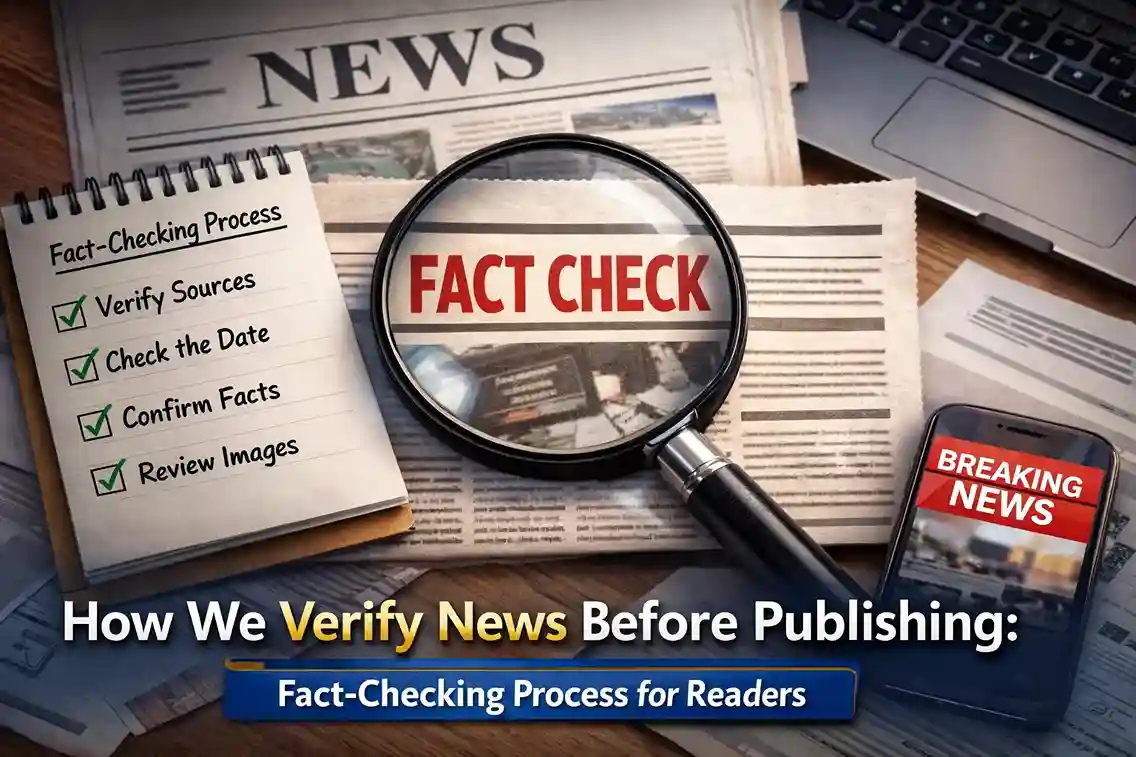
This article explains how we verify news before publishing, why that process matters, and how it helps us build editorial trust while keeping the site aligned with Google’s quality expectations. If you want to understand how the site is organized more broadly, you can also explore the Home page or browse the World News category to see how the content structure supports the publication.
Why fact-checking matters before publication
A breaking headline can spread quickly, but speed is never a substitute for accuracy. Readers want reliable information, not just fast information. When a claim is published without proper verification, it can mislead readers, damage trust, and weaken the credibility of the site that published it. That is why how we verify news before publishing is built around checking the source, checking the date, checking the context, and checking whether the claim can be confirmed by more than one reliable reference.
Google’s Search Essentials and helpful-content documentation both emphasize original, reliable, people-first content, while AdSense expects publishers to create pages that provide genuine value rather than copied or low-effort material. Google also notes that Discover content should be helpful, reliable, and policy-compliant.
For a site that wants long-term visibility, this matters just as much as headline writing or featured-image strategy. Google says Discover may surface content that is indexed and meets its content policies, and Search Console reporting helps publishers understand impressions, clicks, and Discover visibility. That means verification is not just an editorial preference; it is part of the foundation for sustainable discoverability.
Our fact-checking process in simple terms
We use a layered approach instead of relying on a single source. First, we identify where the story came from. Then we check whether the source is primary, secondary, or speculative. After that, we compare the claim with official information, direct evidence, or another reliable report. Only after those checks do we publish.
This matters especially for stories involving finance, technology, health, policy changes, platform updates, and social media rumors. A post based on a cropped screenshot, a vague repost, or a copied headline is not ready to go live until it has been checked carefully.
If you read our related guide How to Get Google Discover Traffic for News Websites in 2026, you will see the same editorial logic: useful content performs better when it is clear, specific, and trustworthy. Google’s helpful-content guidance also stresses that content should be created to benefit people, not to manipulate search rankings.
Step 1: Find the original source
The first question we ask is very simple: where did this claim begin?
A trustworthy news item usually starts with an official statement, a direct quote, a public record, a verified post from the organization involved, or reporting from a credible first-hand source. If the only version we can find is a recycled social post or a vague aggregator summary, we dig deeper before publishing. That helps us avoid repeating somebody else’s mistake and keeps the article tied to a real source instead of a rumor.
This same source-first mindset is why our content cluster around Google Discover and AI search works best when articles support one another. A headline strategy article, a traffic-tracking article, and an image-optimization article each play a different role. Together they build a more credible publishing structure than a random collection of posts.
Step 2: Check the date and context
A story can be technically true and still be misleading if it is old, out of context, or presented as something it is not. Before publishing, we always check the publication date, the time of the event, and the surrounding context.
For example, a policy change announced last month should not be written as if it happened today unless there is a genuine new development. A quote that appears on social media should be checked against the full interview or original post. A screenshot should be matched against the original page, not treated as proof by itself.
This is exactly why the site’s related articles are valuable. How to Track Google Discover Traffic in Google Search Console helps with performance tracking, while How to Optimize Featured Images for Google Discover in 2026 helps with presentation. Both depend on correct context, not just surface-level details. Google’s Search Console documentation explains that the Discover report helps publishers understand how content performs in Discover, which makes accurate timing and context even more important when reporting results.
Step 3: Cross-check with reliable references
One source is not enough for important claims. We look for confirmation from official pages, direct statements, public records, or at least one additional credible source before publication.
This is not just an internal preference. Google’s Search Essentials and helpful-content documentation both emphasize reliable, people-first publishing, while AdSense expects content that is original, useful, and worthy of an audience. If a story is based on a policy, a product launch, a software update, or a search feature, we verify it against the original source before it becomes an article.
For example, when a story is about Discover behavior or Search Console data, we do not rely on assumptions. Google’s Discover guidance says content can be eligible if it is indexed and meets Discover’s content policies, and Search Console guidance explains how Discover visibility can be evaluated from the report. That is why our posts on How to Get Google Discover Traffic for News Websites in 2026 and How to Find Trending News Topics Before They Peak in Google Discover (2026 Guide) focus on practical, verifiable steps rather than shortcuts.
Step 4: Separate facts from analysis
Good news writing should clearly separate what happened, what it means, and what someone thinks about it. Readers should never have to guess whether a line is a verified fact or an interpretation.
For example, if a platform launches a new feature, that launch is a fact. Whether the feature will improve traffic is analysis. Whether the feature is good or bad is opinion. We label those differences carefully so the article remains honest and useful.
That approach is also why articles like How AI Is Changing Google Search Results in 2026, How to Build Topical Authority for AI Search Results in 2026, and How to Add FAQ Schema for AI Search Results in 2026 matter to the site’s broader structure. They support clarity, search understanding, and user intent, which are all important when you want content to feel genuinely helpful rather than overly optimized. Google’s helpful-content guidance says content should be created for people first, and its AI content guidance says AI-generated material is not a problem by itself as long as the content is helpful and made for users.
Step 5: Verify images, screenshots, and quotes
Visuals can strengthen a story, but they can also create confusion if they are not checked carefully. A screenshot may be cropped. An image may be old. A quote may be accurate but attached to the wrong context. Before publishing, we check whether the image genuinely matches the story and whether the source is trustworthy.
If the visual is illustrative rather than documentary, we try to make that clear. If the quote is from a public announcement, we look for the full version. If the image is used to represent a trend rather than a specific event, we make sure it does not mislead the reader.
This also supports Discover-friendly publishing. Our article How to Optimize Featured Images for Google Discover in 2026 is built around the idea that images should reinforce the story instead of distracting from it. Google’s Discover guidance says content that is indexed and policy-compliant may be eligible to appear, but eligibility is not a guarantee of visibility, which is another reason image quality and relevance matter.
Step 6: Publish transparently
Transparency is part of trust. If an article is based on a developing situation, we say so. If a detail is still being checked, we say that too. If we update a story later, we revise the article and make the update meaningful rather than cosmetic.
Readers are usually more forgiving of uncertainty than they are of hidden mistakes. A clear correction or update note often builds more trust than pretending the original version was perfect. That is also why pages like Contact Us and the site’s policy pages should remain easy to find, because transparency should not stop at the article itself. The site also includes a visible DMCA Policy page, which is another useful trust signal for a publishing website.
Google’s Search guidance reminds publishers that their content should be created for users, not for search systems alone, and AdSense expects a site that feels genuinely useful and original. That is the same standard we apply when deciding whether a story is ready to publish.
Real-world example: how we would verify a viral claim
Imagine a viral post says a major platform changed its algorithm overnight. The claim spreads fast, and people begin repeating it as fact. Before we publish, we would look for an official announcement first. We would check the platform’s help center, newsroom, or developer documentation. We would compare the claim against at least one additional reliable source. We would verify whether the change is confirmed, limited, temporary, or misunderstood. Then we would write the story in a way that clearly shows what is known and what is not yet confirmed.
That process may take a little longer, but it protects the reader from misinformation and protects the site from publishing weak or misleading content. It also aligns with Google’s reminder that helpful content should be made for people, not for manipulating rankings.
How this process supports AdSense approval
If a site wants AdSense approval, it should offer unique, original, and interesting content, and it should be able to show that the pages are built for a real audience. Google’s eligibility guidance is direct about this: content should be high-quality, original, and able to attract an audience. AdSense also expects publishers to own the site and provide access to the HTML source code they submit.
A public fact-checking process helps in several ways. It shows editorial discipline. It signals that the site is not just recycling content. It supports reader trust. It also creates stronger pages that are easier for Google to understand and less likely to feel thin or generic. For a site that wants to submit to AdSense, that is exactly the kind of signal that matters.
If you are building topic depth across the site, the article cluster around Discover and AI search works best when the pages connect naturally. For example, How to Track Google Discover Traffic in Google Search Console, How to Optimize Featured Images for Google Discover in 2026, and How to Write Click-Worthy News Headlines for Google Discover in 2026 support one another and make the site feel more structured and trustworthy.
Why this matters for latestnewss.com specifically
latestnewss.com currently has a visible pattern of content around Google Discover, AI search, headline strategy, and featured image optimization. That is useful, but it also means the site needs strong trust signals to avoid looking like a collection of keyword-driven posts. A clear editorial standard helps the site look more like a real publication and less like a content factory. The site’s recent posts page and category pages show that this topic cluster is already active and interconnected.
If the site continues to grow, the best next step is to keep building interconnected articles that support one another. For example, How to Get Google Discover Traffic for News Websites in 2026, How to Find Trending News Topics Before They Peak in Google Discover (2026 Guide), and How to Add FAQ Schema for AI Search Results in 2026 work well together as a content cluster because they cover topic discovery, packaging, and technical enhancement.
Reader trust checklist
Before you trust any news story, ask these questions:
Is the original source identified?
Is the date current?
Is the context clear?
Are the facts confirmed by more than one reliable reference?
Does the article separate facts from analysis?
If several of those answers are unclear, it is smart to wait before treating the story as reliable.
Frequently Asked Questions
1. Why do you verify news before publishing?
We verify news before publishing to protect readers from misinformation, maintain editorial trust, and keep the content aligned with Google’s helpful, people-first standards.
2. How many sources do you use for a news article?
There is no fixed number for every story, but we always try to confirm important claims with the original source and at least one additional reliable reference when possible. That is an editorial standard based on Google’s emphasis on reliable, people-first content.
3. What type of news needs extra fact-checking?
Breaking news, finance, health, AI updates, policy changes, and platform announcements usually need the most verification because they move quickly and can be misunderstood easily.
4. Do you update articles after publication?
Yes. If new information appears, we update the story and keep the article aligned with the latest verified facts. That approach supports transparency and reader trust.
5. Why does this process help with AdSense?
Because AdSense asks for high-quality, original content that attracts an audience. A visible verification process helps demonstrate that the site is built around useful, trustworthy publishing rather than thin or copied material.
6. How does this relate to Google Discover?
Google Discover uses content that is indexed and meets Discover’s policies, and eligibility is not a guarantee of visibility. That makes verification, clarity, and originality especially important for Discover-focused publishers.
7. Where can readers contact you?
Readers can use our Contact Us page for questions, feedback, or suggestions.
Final thoughts
How we verify news before publishing is not just an internal process. It is part of the promise we make to readers every time they open an article on latestnewss.com. When we check the source, confirm the context, separate facts from opinion, and publish transparently, we create content that is more useful, more trustworthy, and more aligned with Google’s expectations for helpful, original pages.
That is the kind of foundation a site needs before submitting to AdSense, especially if it wants to grow into a credible publication with Discover visibility and long-term search value. For readers exploring the site further, the best companion pages are How to Track Google Discover Traffic in Google Search Console, How to Optimize Featured Images for Google Discover in 2026, How to Write Click-Worthy News Headlines for Google Discover in 2026, and World News.
Author: LatestNewss Editorial Team
Category: Technology
Published: April 11th, 2026