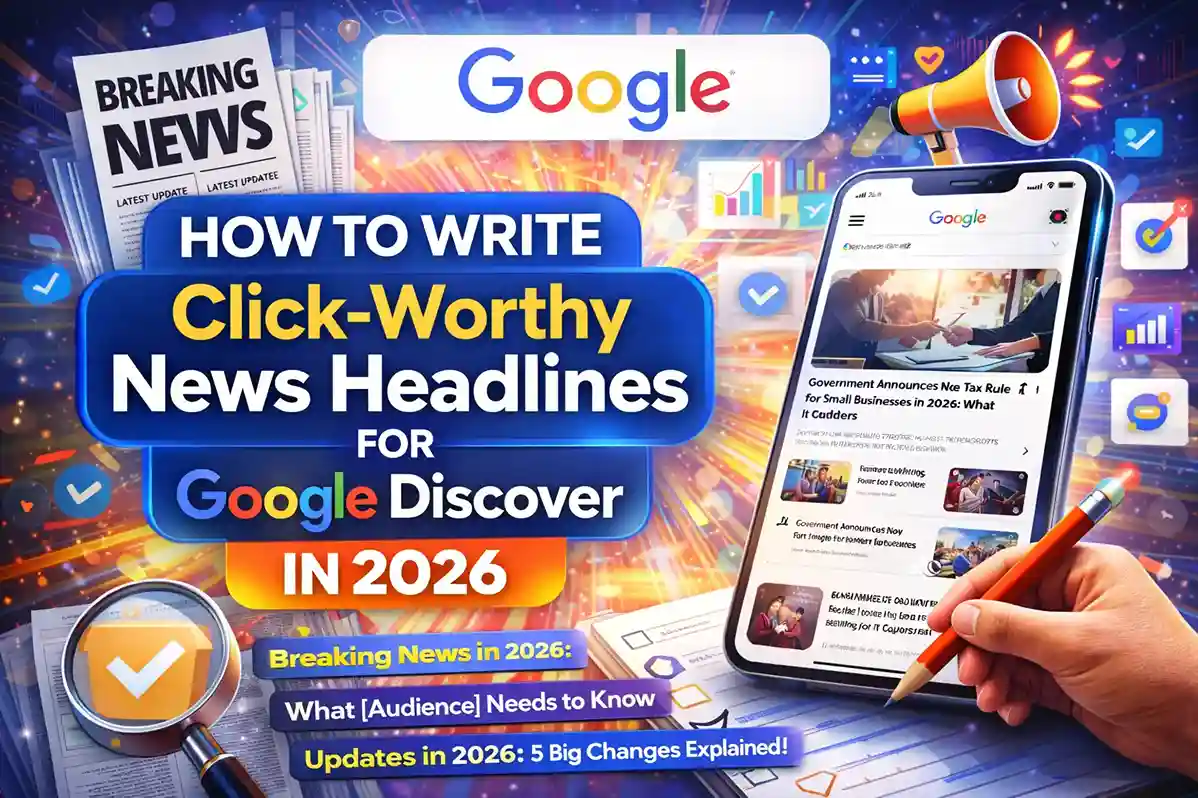
Click-worthy news headlines for Google Discover are one of the most important factors for getting traffic in 2026. As Google Discover continues to grow, users no longer search for content—they discover it through personalized feeds based on their interests.
That means your headline is no longer just a title. It is the first impression, the main trigger for clicks, and one of the strongest signals that determines whether your content gets noticed or ignored.
Google’s Discover system prioritizes helpful, relevant, and engaging content, while reducing sensational or misleading headlines. If your title is unclear, too generic, or overly clickbait-driven, your article may never reach the right audience.
That makes headline writing one of the most important skills for any news publisher. A click-worthy headline must be clear, specific, and interesting without misleading the reader. Google’s title-link guidance says the title link is the headline part of a result, and its snippet guidance says search results are built from page content and sometimes meta descriptions, while image SEO guidance recommends relevant, representative, high-resolution images that match the page.
What Google Discover Wants From Headlines in 2026
Google Discover is not a normal keyword search page. It is a personalized feed that shows content related to user interests, and Google’s documentation says you can monitor Discover traffic in Search Console. That means headlines have to work in a feed environment where a user is browsing quickly, not typing a query with a specific intent.
In practice, that means a strong headline must do three things at once: tell the reader what happened, give a reason to care, and stay faithful to the page content. If the headline is too vague, too dramatic, or too clickbait-heavy, it may get ignored or reduced in performance. Google’s February 2026 Discover update is a clear signal that publishers should favor depth, clarity, and original reporting instead of sensational packaging.
The Best Formula for Click-Worthy Discover Headlines
The best Discover headlines usually follow a simple structure:
[Topic] + [What changed] + [Why it matters]
For example:
- “New School Fee Rule in 2026: What Parents Need to Know”
- “WhatsApp Adds New Privacy Controls in 2026: 5 Changes Explained”
- “Stock Market Opens Higher After Inflation Update: What Investors Should Watch”
These headlines are effective because they are specific, timely, and useful. They also avoid empty hype words. A headline that says “You Will Not Believe This New Change” may attract curiosity, but it does not help the reader understand the story. Discover is more likely to reward a headline that feels helpful first and attention-grabbing second. That is an inference from Google’s current Discover direction and title/snippet guidance.
7 Rules for Writing Click-Worthy News Headlines for Google Discover
1. Be specific
Specific headlines perform better because they tell the reader exactly what the story is about. “Government Announces New Rule for Students” is better than “Big Update Announced.” Google’s title-link guidance also favors clear titles that help people decide whether to click.
2. Use real-world language
Write the way people actually speak. If your audience would say “tax rule change” or “phone price hike,” use those words. Google’s SEO starter guidance recommends descriptive titles and content that clearly communicate what the page is about.
3. Focus on one idea
A good Discover headline should not try to cover five different topics. One clean promise works better than a cluttered title. For example, “New Weather Alert Issued for Mumbai: What Residents Should Expect Today” is far stronger than a headline that mixes weather, traffic, and politics in one line. This is a practical writing principle based on Google’s emphasis on readable, accurate titles.
4. Avoid fake urgency
Words like “shocking,” “crazy,” and “unbelievable” can reduce trust. Google’s February 2026 Discover update explicitly says it is reducing sensational content and clickbait. That means the safest long-term strategy is to be interesting without sounding manipulative.
5. Match the headline to the image
Discover is heavily visual. Google’s image guidance recommends a relevant, representative image with high resolution and good metadata. The headline and featured image should tell the same story so the user gets one clear message instead of mixed signals.
6. Write for a curious reader, not a keyword robot
A headline should contain the core topic naturally, but it should still sound human. That is especially important if your article is later shared in Discover, where people are scrolling quickly and deciding in seconds. Google also says title links may be generated from page titles and headings, so readable language matters.
7. Keep it truthful
If the story is an update, say it is an update. If it is analysis, say it is analysis. If it is breaking news, make that clear. Search and Discover both reward trust, and misleading titles can damage performance over time. Google’s people-first content guidance supports that trust-based approach.
Real Examples of Better Discover Headlines
Here are simple examples showing the difference between weak and strong headlines:
Weak: “Major Update Announced”
Better: “Major Tax Update Announced for Small Businesses in 2026”
Weak: “Everyone Is Talking About This New Phone”
Better: “New Phone Launch in 2026: 5 Features Buyers Should Know”
Weak: “Important Changes for Users”
Better: “Instagram Adds New Privacy Tools in 2026: What Users Need to Know”
The improved versions work better because they are clearer, more useful, and more likely to match the article body. That alignment matters because Google’s title and snippet systems are built to help users quickly understand what a page is about.
Discover-Friendly Headline Templates You Can Reuse
You can use these headline patterns for future posts:
- [Brand or Topic] Adds New [Feature] in 2026: What It Means
- [Event] in [Location]: What People Should Know Today
- Why [Development] Matters for [Audience] in 2026
- [Number] Things to Know About [Breaking Update]
- [Topic] Explained: The New Change Everyone Is Talking About
These templates work because they are structured, readable, and aligned with real user intent. That also fits your existing site pattern, which already includes explainers like Why Your Website Is Not Showing in AI Answers and How to Write Content for AI Search.
Discover-Ready Article Model for News Websites
A click-worthy headline works best when the rest of the article supports it. For Google Discover traffic, use this article model:
1. Headline: clear, specific, timely
2. Featured image: strong, relevant, high-resolution
3. First paragraph: explain the main point immediately
4. Second paragraph: add context and why it matters
5. Body: give facts, examples, and implications
6. Internal links: connect to related stories on your site
7. FAQ: answer reader questions naturally
8. Conclusion: restate the key takeaway clearly
This model is consistent with Google’s guidance on people-first content, crawlable links, and good image presentation. Google says links should be crawlable and anchor text should help people and Google understand what a page is about.
For example, if you publish a story on Discover optimization, link it to How to Get Google Discover Traffic for News Websites in 2026 and How to Track AI Search Traffic in Google Search Console. If you write about content quality, connect it to How to Build Topical Authority for AI Search Results in 2026 and How to Optimize Content for AI Overviews in 2026. That kind of cluster gives your site a cleaner editorial structure.
A Simple Example of a Discover-Optimized News Story
Suppose a news website publishes a story about a new app privacy update. A weak version of the headline would be: “App Releases Update.” A better Discover headline would be: “App Releases New Privacy Update in 2026: What Users Need to Change Today.”
That better version works because it tells the reader what happened, who it affects, and why it matters. It also sets up a clean article body that can explain the update without overpromising. This is exactly the kind of clarity Google encourages in title links, snippets, and Discover presentation.
Common Mistakes to Avoid
The biggest headline mistakes are easy to spot:
- too vague
- too dramatic
- too long
- too many topics in one line
- no clear audience
- mismatch between headline and article body
- misleading emotional language
Google’s current Discover guidance and title-link documentation both point toward cleaner, more accurate headlines rather than aggressive clickbait. If your headlines are honest and your content is strong, you give Discover a better chance to surface the article to the right readers.
FAQs
What makes a news headline click-worthy in Google Discover?
A click-worthy Discover headline is clear, specific, useful, and relevant to the reader’s interests. It should promise value without sounding sensational.
Should I use emotional words in Discover headlines?
Use them sparingly. Google’s February 2026 Discover update says sensational content and clickbait are being reduced, so accuracy is safer than hype.
How long should a Discover headline be?
There is no fixed universal length in Google’s docs, but the headline should be short enough to scan quickly and long enough to be specific. That is a practical interpretation of Google’s title-link guidance.
Do images matter for Discover clicks?
Yes. Google’s image guidance recommends relevant, representative, high-resolution images, and the Discover docs now emphasize preferred image metadata as part of image selection.
Can I track Discover performance in Google Search Console?
Yes. Google says the Discover report in Search Console shows impressions, clicks, and CTR for content that appears in Discover.
Should every news post use the same headline formula?
No. Use a formula as a starting point, then adjust based on the story type, audience, and urgency. Different stories need different tones, but they should all stay clear and truthful. That is an editorial best practice consistent with Google’s guidance on helpful content.
Conclusion
Writing click-worthy news headlines for Google Discover in 2026 is about clarity, relevance, and trust. Google now places more weight on in-depth, original, timely content from sites with expertise, while reducing sensational clickbait. That means the best headlines are the ones that tell readers exactly what happened and why it matters, without overselling the story.
Author: LatestNewss Editorial Team
Category: Technology
Published: April 3rd, 2026