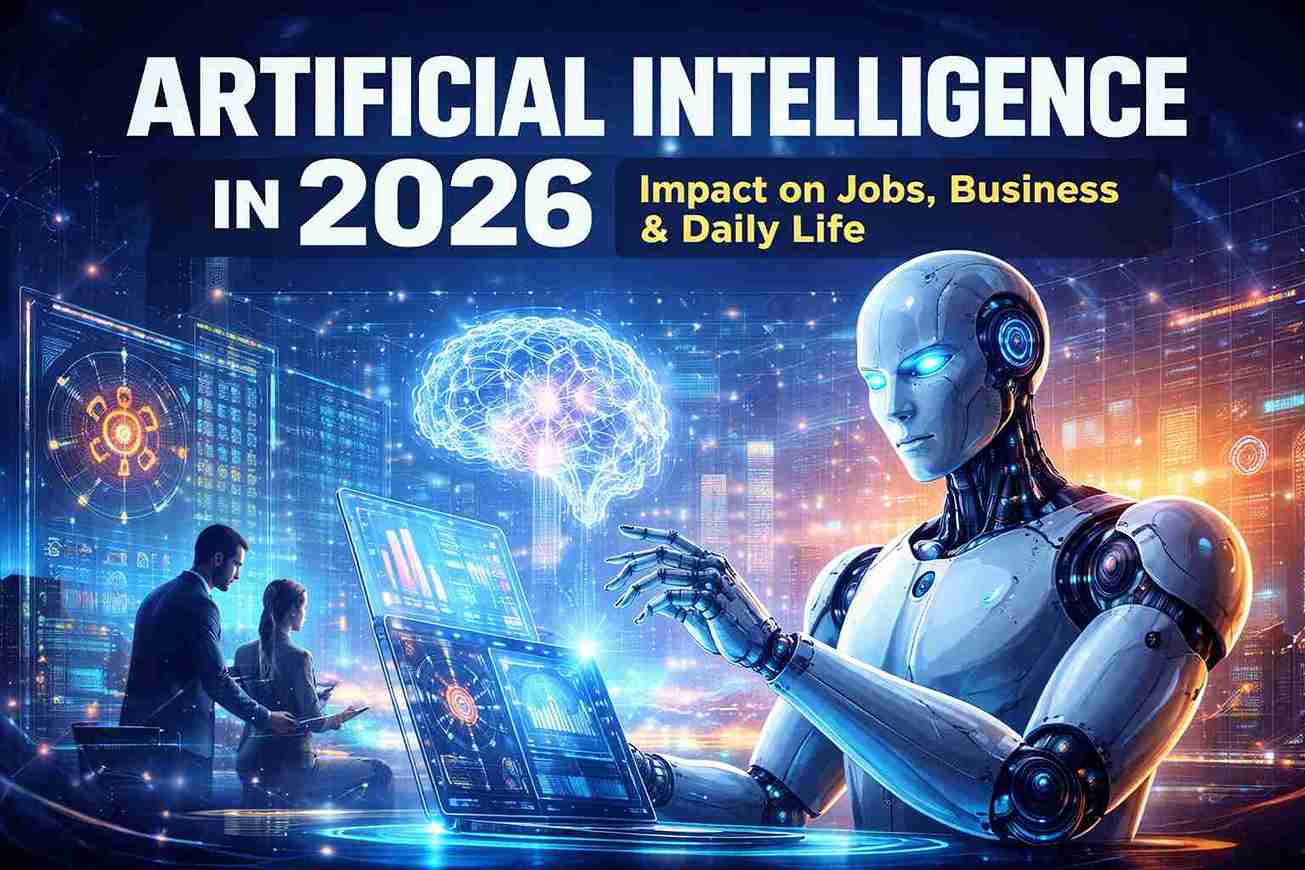
Artificial Intelligence in 2026 is transforming industries, reshaping job markets, and influencing everyday life at an unprecedented pace. From AI-powered healthcare systems to smart business automation tools, artificial intelligence in 2026 has become a core driver of global innovation.
As we move further into the digital age, artificial intelligence in 2026 is not only improving efficiency but also redefining how humans interact with technology. Businesses are adapting, employees are reskilling, and governments are building policies to regulate AI growth responsibly.
But what does this transformation truly mean for individuals, companies, and the global economy?
Let’s explore in detail.
What Is Artificial Intelligence?
Artificial Intelligence (AI) refers to computer systems designed to perform tasks that normally require human intelligence. These tasks include learning from data, recognizing patterns, understanding language, making decisions, and even predicting outcomes.
Modern AI in 2026 uses technologies such as:
- Machine Learning (ML)
- Deep Learning
- Natural Language Processing (NLP)
- Computer Vision
- Predictive Analytics
Unlike traditional software, AI systems improve over time by analyzing large amounts of data. This self-learning ability makes artificial intelligence in 2026 far more powerful than earlier generations of automation tools.
How Artificial Intelligence in 2026 Is Changing Jobs
One of the biggest concerns about artificial intelligence in 2026 is job security. Many fear that automation will replace human workers. While some roles are being automated, the overall impact is more complex.
Jobs Being Automated
AI is increasingly handling repetitive and rule-based tasks such as:
- Data entry operations
- Basic accounting processes
- Customer support chat responses
- Manufacturing assembly line monitoring
- Scheduling and administrative tasks
These automations reduce human error and increase productivity.
New Career Opportunities Emerging
At the same time, artificial intelligence in 2026 has created entirely new career paths:
- AI engineers and developers
- Machine learning specialists
- Data scientists
- AI ethics consultants
- Automation strategists
- Prompt engineers
- Cybersecurity analysts
Companies are not eliminating human workers entirely — they are upgrading roles. Employees who learn to work alongside AI tools are becoming more valuable and earning higher salaries.
The future of work is not about humans versus AI. It is about humans working with AI. Modern workplaces are evolving rapidly, and AI agents in 2026 are redefining workplace automation, enabling smarter task management and decision-making.
AI in Business: Smarter Decisions, Faster Growth
Businesses across industries are leveraging artificial intelligence in 2026 to gain competitive advantages.
Marketing and Customer Insights
AI tools analyze customer behavior patterns to:
- Predict buying decisions
- Personalize advertisements
- Improve conversion rates
- Optimize email campaigns
E-commerce companies use AI recommendation engines to suggest products based on browsing history, increasing sales significantly.
Financial Management
AI-powered systems help businesses:
- Detect fraudulent transactions
- Forecast revenue trends
- Automate expense tracking
- Improve risk assessment
These technologies reduce operational costs while improving accuracy.
Small Business Benefits
Even small businesses benefit from affordable AI tools such as:
- Automated social media management
- Chatbots for customer queries
- AI-based bookkeeping software
- Smart inventory management systems
Artificial intelligence in 2026 is no longer limited to big corporations. It is accessible to startups and entrepreneurs as well.
AI in Healthcare: Saving Lives Through Technology
Healthcare is one of the most revolutionary areas impacted by artificial intelligence in 2026.
AI is helping doctors:
- Detect cancer at earlier stages
- Analyze X-rays and MRIs with precision
- Predict disease risks based on patient data
- Personalize treatment plans
- Monitor chronic conditions remotely
Wearable health devices now use AI algorithms to detect irregular heart rhythms and send alerts before emergencies occur.
AI-driven robotic surgery systems are assisting doctors in performing complex procedures with improved accuracy and reduced recovery times.
This integration of artificial intelligence is improving patient outcomes worldwide.
AI in Education: Personalized Learning Revolution
Education systems are transforming rapidly with artificial intelligence in 2026.
AI-powered platforms now provide:
- Personalized study plans
- Real-time performance analysis
- Adaptive quizzes
- Language translation tools
- Virtual AI tutors
Students receive learning experiences tailored to their strengths and weaknesses. Teachers use AI tools to track progress and identify areas where students need additional support.
In developing regions, AI-driven educational apps are helping bridge the knowledge gap and improve accessibility.
Artificial Intelligence in Daily Life
Most people use artificial intelligence every day — often without realizing it.
Examples include:
- Voice assistants managing schedules
- Smart home systems controlling lights and appliances
- AI-powered navigation apps predicting traffic
- Streaming platforms recommending movies
- Online shopping suggestions
AI has become embedded in smartphones, cars, banking apps, and entertainment services. Artificial intelligence in 2026 is part of daily routines worldwide. Many entrepreneurs are leveraging useful AI tools in 2026 to automate operations and improve productivity.
Risks and Ethical Concerns of AI
Despite its advantages, artificial intelligence in 2026 raises serious concerns.
Data Privacy
AI systems rely on large datasets. Improper data handling can lead to privacy violations.
Cybersecurity Threats
Advanced AI tools can be misused for hacking, deepfake creation, and misinformation campaigns.
Job Skill Gaps
Workers without digital skills may struggle to adapt in an AI-driven economy.
Ethical Decision-Making
AI systems must be programmed carefully to avoid bias in areas like hiring, lending, and law enforcement.
Governments around the world are developing regulations to ensure responsible AI development and prevent misuse. Governments worldwide are developing frameworks for global AI regulation in 2026 to ensure responsible and ethical AI deployment.
The Economic Impact of AI in 2026
Artificial intelligence is contributing billions of dollars to global economic growth. Companies adopting AI technologies report:
- Higher productivity
- Reduced operational costs
- Improved customer satisfaction
- Faster innovation cycles
Countries investing heavily in AI research are positioning themselves as global technology leaders. Governments are aligning with OECD AI policy guidelines to ensure ethical and responsible development of artificial intelligence technologies.
The economic influence of artificial intelligence in 2026 continues to expand across sectors. According to World Economic Forum AI research, artificial intelligence is expected to significantly reshape global employment patterns in the coming years.
Preparing for the AI-Driven Future
The key to success in an AI-powered world is adaptability.
Individuals can prepare by:
- Learning digital skills
- Understanding AI tools
- Taking online technology courses
- Developing problem-solving abilities
- Staying informed about industry trends
AI is not eliminating human value — it is redefining it. Creativity, emotional intelligence, and critical thinking remain irreplaceable human strengths. Developing high-income skills for 2026 such as data analysis and automation expertise can increase career opportunities.
The Future of Artificial Intelligence
Experts predict that artificial intelligence will continue evolving rapidly beyond 2026.
Possible future developments include:
- More human-like AI assistants
- AI-driven scientific breakthroughs
- Smarter automation in transportation
- Advanced robotics in households
- Enhanced climate prediction systems
The future of AI depends on responsible innovation and collaboration between governments, businesses, and society.
Conclusion
Artificial intelligence in 2026 is transforming jobs, business operations, healthcare systems, education, and everyday life. While automation replaces repetitive tasks, it also creates new career opportunities and technological advancements.
The real challenge is not whether AI will grow — it already has. The real question is how society chooses to adapt and regulate it.
With responsible development and continuous learning, artificial intelligence can become one of humanity’s most powerful tools for progress.
Frequently Asked Questions
1. Is artificial intelligence replacing human jobs in 2026?
AI is automating repetitive and rule-based tasks, but it is also creating new high-skill roles. Workers who learn to use AI tools can increase their productivity and career growth opportunities.
2. How does artificial intelligence affect daily life?
AI powers voice assistants, navigation systems, smart home devices, personalized recommendations, and online services. It has become a core part of everyday digital experiences.
3. Which industries benefit most from AI in 2026?
Healthcare, finance, education, e-commerce, cybersecurity, and manufacturing are among the top industries benefiting from AI-driven innovation.
4. Is artificial intelligence safe and regulated?
Many governments are developing AI regulations to address data privacy, ethical use, and cybersecurity risks. Responsible AI development is a global priority.
5. How can students prepare for AI-driven careers?
Students should focus on digital literacy, coding, data analysis, critical thinking, and problem-solving skills to stay competitive in an AI-driven job market.
By latestnewss.com Editorial Team — Updated 23 Feb 2026