As AI tools continue to grow rapidly, many users are now seeing real changes in how they work and learn online. Here’s a detailed look at what’s happening in 2026.
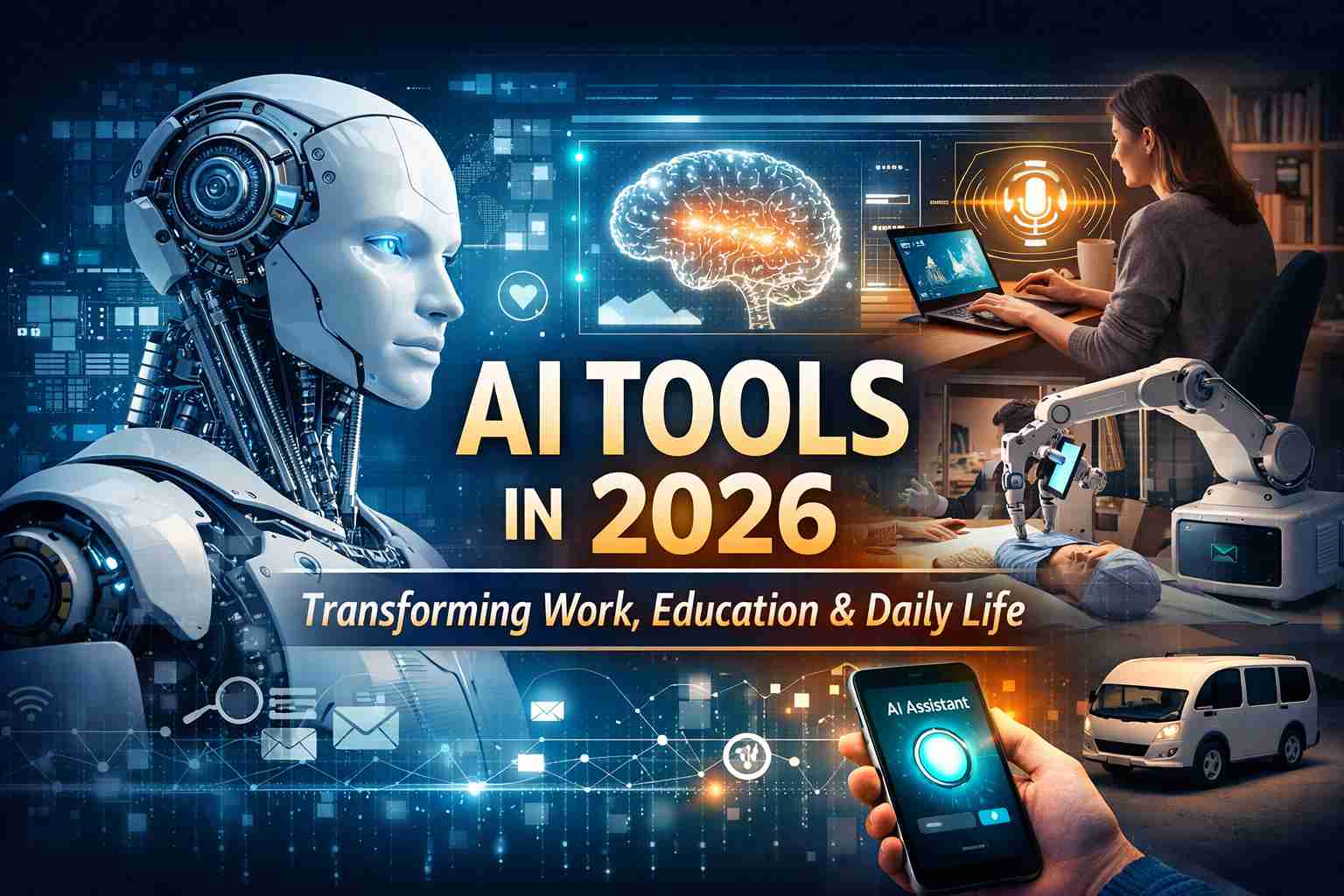
Artificial Intelligence is no longer a future concept — it has become a part of everyday life in 2026. From smartphones and customer support to education, healthcare, and business operations, AI-powered tools are rapidly transforming how people work and interact with technology.
Over the past year, AI adoption has accelerated across industries. What was once limited to large tech companies is now available to small businesses, students, content creators, and regular internet users. Experts believe this shift marks one of the biggest technology transitions since the rise of the internet itself.
AI Is Now Part of Daily Digital Activities
Many users interact with AI without even realizing it. Email spam filters, voice assistants, recommendation engines, navigation apps, and online chat support systems all rely on artificial intelligence. Newer AI systems are now capable of writing content, generating images, assisting with coding, summarizing documents, and providing research support.
Because of this, productivity levels have increased in many workplaces. Tasks that once required hours can now be completed in minutes with AI assistance — though human oversight is still essential for quality and accuracy.
Impact on Jobs and Work Culture
One of the most discussed topics around AI is its effect on jobs. While automation is reducing the need for some repetitive roles, it is also creating new opportunities. Companies are hiring AI trainers, prompt specialists, automation managers, and data reviewers.
Industry analysts say the biggest advantage goes to workers who learn how to collaborate with AI instead of competing against it. Digital skills, critical thinking, and creativity are becoming more valuable than routine task execution.
Rather than replacing entire professions, AI is reshaping job responsibilities and workflows.
Education and Learning Are Evolving
Schools and online learning platforms are also integrating AI tools. Students now use AI-based study assistants for explanations, practice questions, and language improvement. Teachers use AI to prepare lesson plans, generate quizzes, and track student progress.
However, educators emphasize responsible use. AI should support learning — not replace understanding. Many institutions are introducing AI usage guidelines to maintain academic integrity.
Business and Customer Experience Transformation
Businesses are increasingly using AI for customer service, marketing analysis, and personalization. AI chat systems now handle a large percentage of customer queries, reducing response time and improving user satisfaction.
E-commerce platforms use AI to recommend products based on browsing behavior. Financial institutions use it for fraud detection. Healthcare providers use AI-assisted diagnostics to support doctors in early disease detection.
The common factor across industries is efficiency and data-driven decision making.
Privacy and Ethical Considerations
With rapid AI growth comes increased concern about data privacy and ethical use. Governments and technology organizations are working on regulations to ensure transparency, safety, and accountability.
Users are advised to be cautious about sharing sensitive personal data with AI tools and to rely on trusted platforms only. Ethical AI development — including bias reduction and responsible training — is becoming a central focus worldwide.
What to Expect Next
Experts predict that AI tools will become more personalized, faster, and more integrated with daily devices. Voice interaction, smart automation, and AI-powered search are expected to grow further.
The future will likely belong to people and organizations that learn how to use AI responsibly and effectively. Instead of replacing human intelligence, the goal is to enhance it.
Conclusion
Artificial Intelligence in 2026 is not just a technology trend — it is a practical tool shaping how society works, learns, and communicates. While challenges remain, the benefits are significant when used thoughtfully. As adoption continues to grow, AI literacy will become an essential skill for the digital age.