Introduction
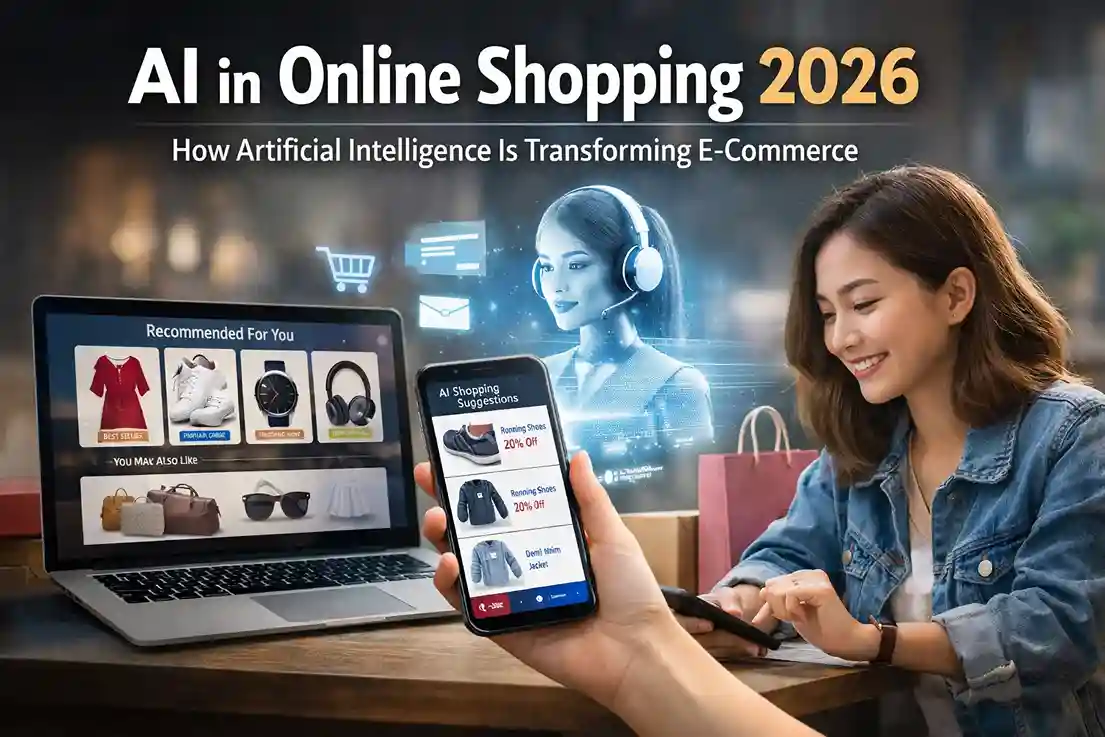
AI in online shopping 2026 is transforming how people discover, compare, and purchase products on the internet. Artificial intelligence is rapidly becoming the backbone of modern e-commerce platforms, enabling smarter product recommendations, personalized shopping experiences, and faster customer service.
In recent years, online stores have evolved from simple product listings into intelligent digital marketplaces. AI systems now analyze customer behavior, browsing history, and purchase patterns to deliver highly personalized shopping experiences. From smart product search to virtual try-on technology, artificial intelligence is reshaping the future of e-commerce. These developments reflect broader artificial intelligence trends in 2026 that are shaping industries across the digital economy. The rapid growth of e-commerce automation is largely driven by advancements in artificial intelligence technology that allow machines to analyze massive amounts of customer data.
Understanding AI in online shopping 2026 helps both businesses and consumers see how technology is making online shopping faster, more convenient, and more efficient.
The Rise of AI-Powered E-commerce
Artificial intelligence allows online stores to process massive amounts of customer data in real time. Every click, search, purchase, and browsing action provides insights that AI systems use to improve the shopping experience. Many online stores now rely on popular AI tools used in 2026 to analyze customer behavior and improve product recommendations. Understanding how modern search ranking systems work helps explain how AI analyzes user behavior and product data to deliver better shopping experiences.
Unlike traditional online stores that show the same products to every visitor, modern e-commerce platforms use AI algorithms to personalize each user’s experience.
For example, when a customer visits an online marketplace, AI technology can instantly analyze their previous purchases, browsing history, and preferences to recommend products that match their interests.
This level of personalization is one of the biggest reasons AI is transforming digital commerce.
Personalized Product Recommendations
One of the most visible examples of AI in online shopping 2026 is personalized product recommendations.
Major e-commerce platforms use AI algorithms to suggest products customers are most likely to buy.
Real-World Example
When a user searches for running shoes on an online shopping app, AI may recommend:
- similar shoes from other brands
- accessories like sports socks or fitness trackers
- products purchased by other customers with similar interests
These suggestions are generated instantly using machine learning models that analyze customer behavior patterns. According to industry research on future trends in artificial intelligence and automation, AI-driven personalization is becoming a key factor in modern e-commerce growth.
Personalized recommendations increase convenience for shoppers while helping businesses improve sales conversion rates. Many of these recommendation engines are powered by useful AI tools people are using today to analyze purchase history and browsing patterns.
AI-Powered Smart Search
Search technology within online stores has become much smarter thanks to artificial intelligence.
In the past, customers needed to type exact keywords to find products. Today, AI search systems understand natural language queries and user intent.
Real Example
A customer can search for:
“Affordable wireless headphones for travel”
AI-powered search tools analyze the request and display relevant products based on price, features, and customer reviews.
Some e-commerce platforms even allow image search, where users upload a photo and AI finds similar products available for purchase.
This technology makes product discovery faster and more intuitive. These innovations are part of the latest AI search technology updates that are transforming how users find products online.
Virtual Try-On Technology
Artificial intelligence is also changing how people evaluate products before buying them.
Virtual try-on technology allows customers to see how products might look on them without physically trying them.
Examples
- AI beauty apps that show how makeup products will appear on a user’s face
- Virtual clothing fitting rooms that simulate how outfits fit different body types
- Augmented reality tools that display furniture in a customer’s home
These tools reduce uncertainty when shopping online and help customers make more confident purchasing decisions.
AI Chatbots and Customer Support
Customer support has also improved dramatically due to AI-powered chatbots.
Modern chatbots can understand customer questions and provide helpful responses instantly.
Real-World Example
If a customer asks:
“Where is my order?”
an AI chatbot can instantly check shipping data and provide tracking updates.
These chatbots are available 24/7, which improves customer satisfaction while reducing operational costs for businesses.
More advanced AI systems can even handle complex requests like product returns, refunds, and technical support.
Fraud Detection and Secure Payments
Security is a critical aspect of online shopping, and artificial intelligence plays a major role in protecting customers.
AI systems analyze transaction patterns to detect suspicious activity and prevent fraud.
Example
If a user normally shops in one location but suddenly makes a large purchase from another country, AI fraud detection systems may flag the transaction and request verification.
This technology helps protect both consumers and businesses from financial risks. As digital commerce grows, cybersecurity and personal data protection in 2026 are becoming critical priorities for online retailers.
Inventory Management and Logistics
Artificial intelligence also helps businesses manage inventory and supply chains more efficiently.
AI systems analyze demand patterns and predict which products will sell the most in upcoming weeks or months.
Example
An online retailer may use AI to predict increased demand for winter clothing before the cold season begins. The system can automatically adjust inventory levels to ensure popular products remain available.
This predictive capability helps businesses reduce stock shortages and improve delivery speed.
Voice Shopping and AI Assistants
Voice technology is another area where AI is influencing online shopping.
Many consumers now use voice assistants on smartphones or smart speakers to search for products and place orders.
Example
A user might say:
“Order more coffee beans from my favorite brand.”
The AI assistant recognizes the previous purchase and completes the order automatically.
Voice shopping is expected to grow significantly as AI assistants become more advanced. Technology experts regularly publish latest artificial intelligence innovation research that highlights how machine learning is improving product discovery.
The Benefits of AI for Consumers
Artificial intelligence provides several advantages for online shoppers.
Faster Product Discovery
AI search and recommendation systems make it easier to find relevant products quickly.
Personalized Shopping Experience
Customers see products tailored to their preferences rather than generic listings.
Improved Customer Support
AI chatbots provide instant assistance without waiting for human support agents.
Better Security
Fraud detection systems help protect customers from suspicious transactions.
Challenges of AI in Online Shopping
Despite its advantages, AI also presents certain challenges.
Data Privacy Concerns
AI systems rely heavily on user data to personalize experiences. Customers may worry about how their information is collected and used.
Algorithm Bias
If AI systems are trained on biased data, they may unintentionally favor certain products or brands.
Dependence on Automation
Businesses must balance automation with human oversight to ensure fair and accurate decision-making.
The Future of AI in E-commerce
The influence of artificial intelligence in e-commerce will continue expanding in the coming years.
Experts predict that future online shopping experiences may include:
- fully personalized digital storefronts
- AI shopping assistants that help compare products
- predictive shopping suggestions based on lifestyle habits
- immersive virtual reality shopping environments
As technology evolves, AI will continue making online shopping faster, smarter, and more convenient.
Conclusion
Artificial intelligence is transforming the online shopping experience in ways that were unimaginable just a few years ago. From personalized recommendations and smart search to virtual try-ons and AI chatbots, technology is reshaping how consumers interact with digital marketplaces.
Understanding AI in online shopping in 2026 helps both customers and businesses take advantage of these innovations while preparing for future advancements in e-commerce technology.
The future of online shopping is not just digital — it is intelligent.
Frequently Asked Questions
How is AI used in online shopping in 2026?
AI helps online stores personalize product recommendations, improve search results, detect fraud, automate customer support, and analyze shopping behavior.
What are AI product recommendations?
AI product recommendations suggest items based on user browsing history, previous purchases, and similar customer behavior.
Is AI making online shopping easier?
Yes. AI technologies make product discovery faster, improve customer support, and personalize the shopping experience.
Can AI reduce online shopping fraud?
AI fraud detection systems analyze transaction patterns to identify suspicious activity and prevent unauthorized purchases.
Will AI replace human customer support?
AI chatbots handle routine queries, but human agents remain important for complex customer issues.
Author: LatestNewss Editorial Team
Category: Technology
Published: March 5th, 2026