
Introduction
Time management is one of the most important skills for professionals in the modern digital workplace. With remote work, online collaboration, and multiple digital tools being used every day, many people struggle to understand how their working hours are actually spent.
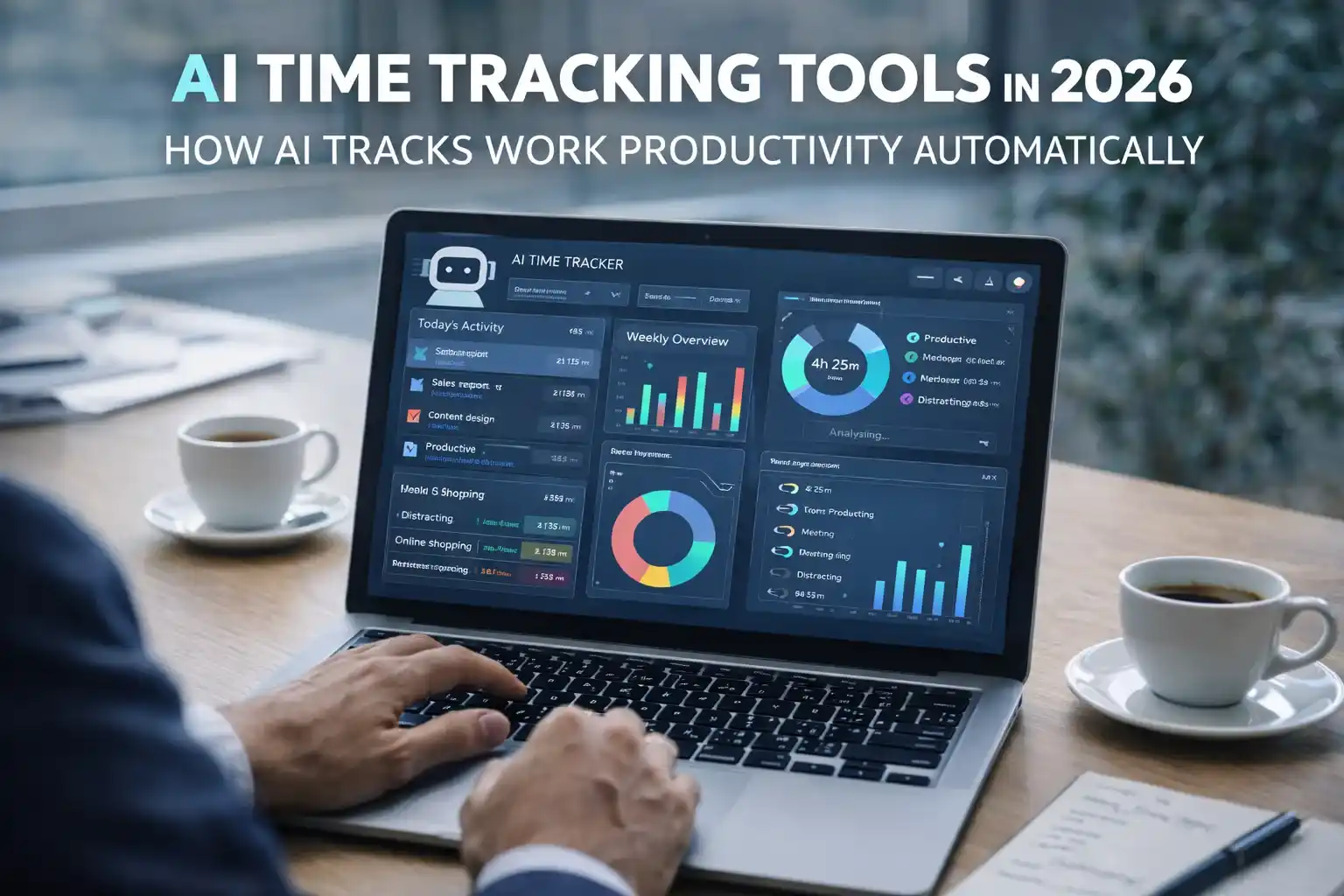
Traditional time tracking methods often require manual logging, which can be inconvenient and inaccurate. In 2026, AI time tracking tools are transforming productivity management by automatically monitoring work activities and generating insights about how time is used.
These intelligent systems analyze digital behavior, track tasks automatically, and provide productivity reports that help users understand where their time goes during the day. As a result, professionals can improve focus, reduce distractions, and optimize their work schedules.
In this article, we explore how AI time tracking tools work, their benefits, real-world applications, and some of the best AI-powered productivity tools available in 2026. Understanding how modern AI and search systems work helps explain how artificial intelligence analyzes user behavior and productivity patterns.
What Are AI Time Tracking Tools?
AI time tracking tools are productivity applications that automatically monitor and analyze how users spend their working time.
Unlike traditional time trackers that require manual input, AI-powered systems can detect work activities automatically by analyzing digital interactions such as:
- application usage
- keyboard activity
- document editing
- meeting participation
- project work sessions
These tools use artificial intelligence to categorize activities and generate reports showing how much time is spent on different tasks.
For example, if a user spends two hours writing reports and one hour attending meetings, the AI system automatically records this information and presents it in a productivity dashboard. Meetings often consume a significant portion of work time, which is why AI meeting notes tools in 2026 are becoming increasingly popular.
How AI Time Tracking Tools Work
AI productivity tracking platforms rely on several advanced technologies.
Machine Learning
Machine learning algorithms analyze user behavior and recognize patterns in work activities. Over time, the system learns how a user typically works and can classify tasks more accurately. Most AI productivity systems rely on machine learning and natural language processing technology to understand work activities.
Activity Recognition
AI tools detect which applications or websites are being used and automatically assign them to relevant tasks. Many professionals combine productivity tracking with AI task management tools in 2026 to organize work automatically.
For example:
- writing documents → content creation
- video calls → meetings
- design software → creative work
Data Analytics
AI tools analyze collected data and generate reports showing productivity trends, time allocation, and potential improvements.
Benefits of AI Time Tracking Tools
AI-powered time tracking tools offer several advantages for professionals and teams.
Automatic Time Tracking
Users do not need to manually start or stop timers. AI automatically tracks work activities in the background.
Better Productivity Insights
Detailed reports help users understand how their time is spent and identify productivity patterns.
Improved Time Management
AI recommendations help users prioritize tasks and avoid time-wasting activities.
Reduced Administrative Work
Automated tracking eliminates the need for manual time logging.
Best AI Time Tracking Tools in 2026
Several AI-powered productivity platforms are widely used by professionals and businesses.
RescueTime
RescueTime is a popular AI productivity tool that automatically tracks how users spend time on their computers. These systems often work alongside useful AI tools people are using today to help professionals optimize workflows.
Example:
The platform generates reports showing how much time is spent on productive tasks versus distractions.
Timely AI
Timely AI automatically records work activities and organizes them into a structured timeline.
Example:
Freelancers can see exactly how long they spent on different client projects.
Clockify AI
Clockify offers AI-powered time tracking and productivity analytics for teams and businesses.
Example:
Managers can analyze project time usage and identify workflow improvements.
Time Doctor
Time Doctor is designed for remote teams and employee productivity tracking.
Example:
Companies can monitor work activity while providing employees with productivity insights.
Real-World Examples of AI Time Tracking
AI productivity tools are widely used across different industries.
Remote Work
Remote teams rely on AI time trackers to understand how employees spend working hours across different locations.
Freelancers
Freelancers use AI tracking tools to record billable hours and improve project management.
Business Teams
Companies analyze productivity reports to improve team efficiency and workflow planning.
Students
Students use AI time tracking tools to manage study sessions and track learning productivity.
AI Time Tracking Tools for Businesses
Organizations increasingly use AI productivity tools to manage employee workflows.
Improved Productivity Monitoring
AI analytics help companies understand work patterns and identify inefficiencies.
Better Project Planning
Time tracking reports allow managers to estimate project timelines more accurately.
Transparent Workflows
Employees and managers gain visibility into task progress and productivity metrics.
Challenges of AI Time Tracking Tools
Although AI time tracking tools provide many benefits, there are also some challenges.
Privacy Concerns
Monitoring work activity may raise privacy concerns if employees feel overly monitored.
Accuracy Limitations
AI may sometimes misclassify activities or tasks.
Dependence on Technology
Over-reliance on automated systems may reduce personal responsibility for time management.
Users should always review reports and use AI insights responsibly.
The Future of AI Time Tracking
Artificial intelligence will continue improving productivity tools in the coming years.
Future AI time tracking systems may include:
- predictive productivity analysis
- automated task scheduling
- AI-powered focus coaching
- voice-controlled productivity assistants
These innovations will help professionals manage their time more efficiently and focus on meaningful work. International organizations are studying AI policy and governance frameworks to ensure responsible development of artificial intelligence technologies.
Conclusion
Managing time effectively is essential for productivity in today’s digital workplace. AI time tracking tools are transforming how individuals and teams monitor work activities by automatically recording tasks and providing detailed productivity insights. These productivity technologies are part of a larger shift toward AI agents shaping the future of work.
By analyzing work patterns and generating smart recommendations, these tools help users understand how their time is spent and improve daily workflows.
As artificial intelligence continues evolving, AI-powered productivity platforms will become even more advanced, helping professionals optimize their schedules and achieve better work-life balance.
Frequently Asked Questions
What are AI time tracking tools?
AI time tracking tools are productivity applications that automatically monitor work activities and analyze how users spend their time.
How do AI time trackers work?
They use artificial intelligence to detect work activities, categorize tasks, and generate productivity reports.
Are AI time tracking tools accurate?
Most AI time trackers provide highly accurate insights, but users should review reports to ensure accuracy.
Can AI time tracking tools improve productivity?
Yes. These tools help users identify time-wasting activities and optimize work schedules.
Are AI productivity tracking tools suitable for teams?
Yes. Many AI time tracking platforms support team collaboration and project management.

Shiva S writes about AI, cybersecurity, online safety, Google Discover, and digital trends. His focus is creating practical, easy-to-understand guides that help readers stay informed and safer online.