
Introduction
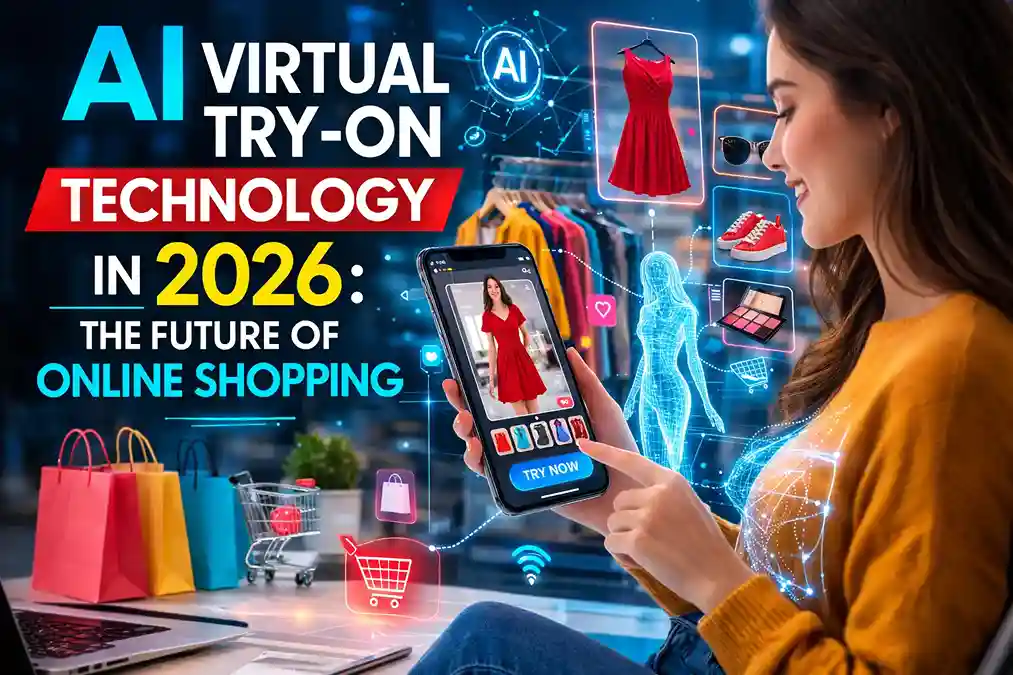
AI virtual try on technology is transforming the online shopping experience in 2026. One of the biggest challenges of buying products online has always been the inability to physically try items before purchasing them. Artificial intelligence is solving this problem by allowing shoppers to see how clothes, glasses, makeup, or accessories look on them digitally.
Using advanced computer vision, augmented reality, and machine learning, AI virtual try on systems can simulate real-world fitting experiences directly on smartphones or computers. This technology helps customers make better purchasing decisions while reducing product returns for retailers. Artificial intelligence is rapidly transforming many industries and reflects broader artificial intelligence trends in 2026 shaping the future of technology.
As e-commerce continues to grow worldwide, AI virtual try on technology is becoming an essential feature for many online stores and fashion brands. The rapid growth of digital commerce is largely driven by advancements in artificial intelligence technology that power modern online shopping platforms.
What Is AI Virtual Try On Technology?
AI virtual try on technology is a digital solution that allows users to visualize how products will look on them without physically wearing or using the item. Many online platforms use popular AI tools used in 2026 to power virtual fitting rooms and digital shopping assistants.
These systems combine several advanced technologies:
- artificial intelligence
- augmented reality (AR)
- computer vision
- 3D modeling
The technology scans a user’s face or body using a smartphone camera and overlays digital versions of products onto the image.
For example, if someone wants to buy sunglasses online, the AI system can analyze their facial structure and place the glasses on their face in real time. The user can rotate their head and see how the product looks from different angles.
This creates a highly interactive and realistic shopping experience. Understanding how modern search and AI systems work helps explain how artificial intelligence analyzes images and product data.
How AI Virtual Try On Technology Works
AI virtual try on systems rely on several technologies working together.
Computer Vision
Computer vision enables AI systems to detect facial features, body shapes, and movements from camera images. This allows the system to understand where to place the digital product.
For example, when trying on virtual glasses, computer vision identifies the position of the eyes, nose, and ears.
Augmented Reality
Augmented reality overlays digital objects onto the real world through smartphone cameras. This allows users to see virtual clothing or accessories in real time.
Machine Learning
Machine learning algorithms analyze large datasets of clothing designs, body shapes, and product images to improve fitting accuracy. These advanced systems rely on useful AI tools people are using today to analyze images and simulate product fitting.
Over time, these systems become better at predicting how products will look on different users. According to research on future trends in artificial intelligence and automation, AI technologies are transforming industries including retail and e-commerce.
Real-World Examples of AI Virtual Try On Technology
Many major brands are already using AI virtual try on systems to enhance the online shopping experience.
Virtual Makeup Try-On
Several beauty brands now allow customers to test makeup products digitally. Users can see how different lipstick shades or eyeshadow colors appear on their face before buying them.
Virtual Eyewear Try-On
Online eyewear stores often use AI to let customers try different glasses frames using their phone camera.
Virtual Clothing Fitting Rooms
Some fashion retailers provide digital fitting rooms where users can see how clothing items fit their body shape.
These tools help customers feel more confident when making online purchases. The rise of virtual try-on solutions is closely connected with AI in online shopping 2026 that improves digital retail experiences.
Benefits of AI Virtual Try On Technology
AI virtual try on technology offers several advantages for both consumers and businesses.
Improved Shopping Experience
Customers can visualize products before buying them, which improves confidence and satisfaction.
Reduced Product Returns
One of the biggest problems in online shopping is product returns due to incorrect sizing or expectations. Virtual try-on tools reduce these issues significantly.
Better Personalization
AI systems can recommend clothing styles or accessories based on user preferences and previous purchases.
Increased Sales for Retailers
Retailers that use AI try-on technology often see higher conversion rates because customers feel more comfortable purchasing products.
AI Virtual Try On in Mobile Shopping Apps
Mobile commerce is growing rapidly, and many shopping apps now integrate AI virtual try on features.
Some apps allow users to:
- try clothes using smartphone cameras
- test makeup shades digitally
- visualize furniture in their home
- experiment with hairstyles and accessories
For example, a customer shopping for sneakers can see how different colors look with their outfit using a mobile app.
These features make mobile shopping more interactive and engaging.
AI Virtual Try On for Fashion Retailers
Fashion retailers benefit greatly from virtual try-on technology.
Digital Fashion Fitting Rooms
AI-powered digital fitting rooms allow shoppers to experiment with different clothing combinations.
Smart Size Recommendations
AI systems can recommend the correct clothing size based on body measurements.
Personalized Styling
Some platforms offer AI styling assistants that suggest outfits based on trends and user preferences.
These features help brands provide a more personalized shopping experience. Many retailers also integrate AI personal shopping assistants in 2026 to recommend products based on user preferences.
Challenges of AI Virtual Try On Technology
Despite its advantages, AI virtual try on technology still faces some challenges.
Accuracy Limitations
Although the technology has improved significantly, some systems may not perfectly replicate real-world fitting experiences.
Privacy Concerns
Users must share camera images and personal data for accurate try-on simulations. Retailers must ensure this data is protected. Because these systems analyze customer images and personal data, cybersecurity and personal data protection in 2026 have become essential topics.
Technical Requirements
High-quality AR and AI systems require advanced hardware and software, which may not be available on older devices.
However, rapid technological improvements are gradually solving these challenges.
The Future of AI Virtual Try On Technology
The future of AI virtual try on technology looks extremely promising.
Experts predict several innovations in the coming years:
- fully personalized digital avatars
- AI styling assistants
- immersive virtual reality shopping experiences
- automated size prediction using body scans
As technology evolves, online shopping may eventually replicate the full experience of visiting a physical store.
AI virtual try on systems will play a central role in this transformation. Global organizations are also exploring AI policy and governance frameworks to ensure responsible use of artificial intelligence technologies.
Conclusion
AI virtual try on technology is changing the way people shop online in 2026. By allowing customers to digitally test products before purchasing them, artificial intelligence is making online shopping more interactive, convenient, and reliable.
For consumers, this technology reduces uncertainty and improves shopping confidence. For retailers, it increases sales and decreases product returns.
As artificial intelligence continues to evolve, virtual try-on systems will likely become a standard feature across many e-commerce platforms.
The future of online shopping is becoming more immersive, personalized, and powered by AI.
Frequently Asked Questions
What is AI virtual try on technology?
AI virtual try on technology allows users to digitally test products such as clothing, glasses, and makeup using artificial intelligence and augmented reality.
How does virtual try-on technology work?
It uses computer vision and augmented reality to overlay digital products onto a user’s face or body using a smartphone camera.
Is AI virtual try on technology accurate?
Most systems provide realistic simulations, but accuracy may vary depending on lighting, device quality, and product design.
Which industries use AI virtual try on technology?
Fashion, eyewear, cosmetics, and furniture industries widely use virtual try-on technology.
Does virtual try-on reduce product returns?
Yes. Customers can better visualize products before buying, which reduces the likelihood of returns.

Shiva S writes about AI, cybersecurity, online safety, Google Discover, and digital trends. His focus is creating practical, easy-to-understand guides that help readers stay informed and safer online.